

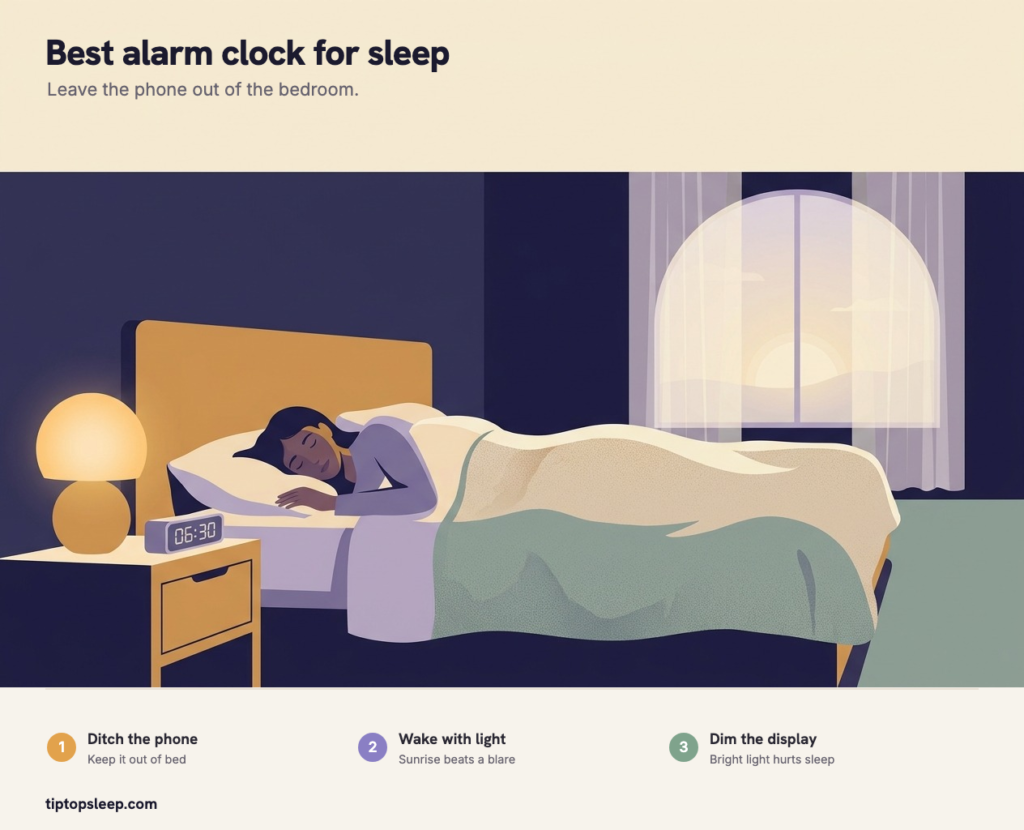
The best alarm clock for sleep is a dedicated device, not your phone - it keeps a screen out of your bedroom at night and off your nightstand in the morning. Look for a dim or dimmable display (bright numbers glowing all night work against sleep), a non-ticking mechanism, and either a gentle sunrise-style wake-up or a genuinely loud option if you sleep through normal alarms. Which one wins depends on whether your problem is falling asleep with a screen nearby or actually waking up.
I used my phone as an alarm clock for years, telling myself it was just for the alarm. It wasn't. It was also for "checking the time" at midnight, which turned into fifteen minutes of scrolling, which turned into a worse night's sleep than if I'd never picked it up. Swapping in a real alarm clock was one of the smallest changes I've made to my bedroom and one of the ones that actually stuck. Here's what I'd look for if you're doing the same.
Why swap your phone for a real alarm clock?
The alarm itself isn't really the problem. It's everything else the phone brings into bed with it.
- It removes the temptation to check it. A phone on the nightstand gets picked up "just to check the time" and turns into notifications, messages, or a few minutes of scrolling that delays sleep.
- It keeps a bright screen out of a dark room. Sleep Foundation notes that light exposure at night can interfere with your body's sleep signals, and phone, tablet, and laptop screens are common sources of that light.
- It gives you a wind-down cue. Physically putting your phone in another room (or across it) and picking up a dedicated clock is a small ritual that tells your brain the day is over.
If mornings are the harder part of your routine rather than falling asleep, it's worth reading about how to wake up without an alarm alongside this - the two problems often share the same root cause.
What features actually matter in a sleep-friendly alarm clock?
- Dim or dimmable display. A clock glowing at full brightness across the room all night is its own light-pollution problem. Look for auto-dimming, a low-brightness mode, or a physical dimmer.
- Non-ticking mechanism. Analog clocks with an audible tick can be surprisingly disruptive once a room is otherwise quiet. Digital or "silent sweep" analog movements avoid this entirely.
- Wake style that matches how deeply you sleep. Light sleepers often do better waking gradually with a sunrise-simulating light. Heavy sleepers may need something genuinely loud, or a bed shaker, to actually wake up rather than sleep through a gentle chime.
- No smart-speaker temptation. Devices that double as smart displays or speakers can reintroduce the same scrolling and notification problem you're trying to remove by ditching the phone in the first place.
What's the difference between a sunrise alarm and a regular one?
A sunrise (or "wake-up light") alarm clock gradually brightens a built-in light over 20 to 30 minutes before your set alarm time, simulating a natural dawn instead of jolting you awake with sound alone. Sleep Foundation explains that "in response to darkness, the pineal gland in the brain initiates production of melatonin," and that light exposure works the other way, signalling your body it's time to be alert. A gradual light before your alarm sound is trying to use that same mechanism gently, tapering melatonin down before the noise kicks in, rather than shocking you out of deep sleep.
Regular digital or analog alarms skip that step and rely on sound (or vibration) alone. They're simpler and usually cheaper, and for people who wake easily, that's often all you need.
Which alarm clock should I actually get?
There's no single best pick here, it depends on what's actually keeping you up or making mornings hard. These are the three situations I see most often.

Philips SmartSleep Wake-up Light
A well-established sunrise simulator with a colored dawn sequence, gentle natural sounds instead of a harsh beep, and a soft reading-lamp mode for winding down beforehand. Good for anyone whose main complaint is that regular alarms feel like being startled awake rather than waking up.

uscce Wooden Dimmable Digital Alarm Clock
No app, no smart speaker, no ticking, just large easy-to-read numbers with a dimmer so it doesn't light up the room at 2am. A straightforward, low-distraction replacement for a phone on the nightstand.

Sonic Bomb Dual Alarm Clock with Bed Shaker
If gentle light and a normal beep genuinely don't wake you, this pairs a very loud dual alarm with a bed shaker unit under your mattress or pillow. Not elegant, but it works for people who sleep through everything else, including a phone alarm across the room.
Still not sure which fits your setup? See more of what's on the nightstand in our Sleep Toolkit.
Frequently asked questions
Is it bad to use your phone as an alarm clock?
It's not the alarm function itself that's the problem, it's what having the phone within reach invites: checking notifications, scrolling before bed, and a bright screen in an otherwise dark room. A dedicated alarm clock removes that temptation without you having to rely on willpower.
Do sunrise alarm clocks actually work?
Many people find them genuinely easier to wake up with, especially light sleepers and people who wake up feeling groggy from sudden loud alarms. They work with your body's light-based wake signals rather than against them, though they're not a guaranteed fix for everyone, especially very heavy sleepers.
What alarm clock is best for someone who sleeps through everything?
Look for one with a bed shaker and a genuinely loud alarm, marketed specifically "for heavy sleepers." Sound alone often isn't enough for very deep sleepers, the vibration under the mattress or pillow is what actually breaks through.
Should my alarm clock display be bright or dim?
Dim, ideally dimmable or auto-dimming. A bright display glowing across the room all night adds to light exposure while you're trying to sleep, and can also be an unwelcome reason to check the time and start clock-watching if you wake up during the night.
Related reading:
- How to Wake Up Without an Alarm
- Best No Snooze Alarm Clocks
- Sleep Hygiene Checklist
- What Is the Best Color Noise for Sleep?
- Sleep Toolkit - the gear we actually recommend for better sleep and easier mornings
Sources & review: Light exposure and melatonin information checked against Sleep Foundation's guidance on light and sleep. This is general comfort and sleep-hygiene information, not medical advice, and product suitability depends on your own routine and how you sleep.
📥 Free: The Post-Surgery Sleep Recovery Kit
Our 2-page PDF - the safe sleep position for your surgery, how to set up your bed, a night-by-night recovery timeline, and the red flags worth calling your doctor about. We'll email you the download link.
By subscribing you agree to our Privacy Policy.