

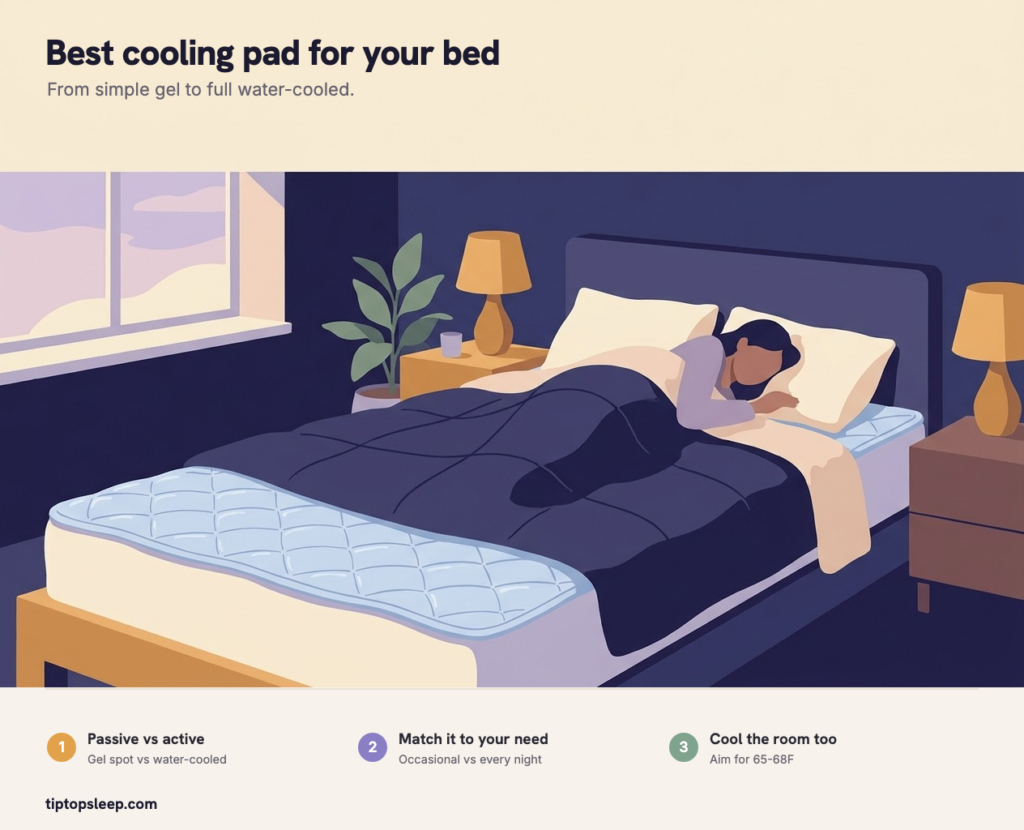
A cooling pad for bed comes in two very different types: passive gel pads (no power, feel cool to the touch, warm up again after 20-30 minutes) and active water-cooled mattress pads (plug in, circulate chilled water all night, actually lower your sleeping surface temperature - but cost far more and need a bit of setup). If you just run warm sometimes, a gel pad is enough. If you're dealing with night sweats, menopause, or a partner who runs hot while you run cold, an active system is the one that actually solves it.
I've bought both kinds over the years, and I wasted money on the first one before I understood the difference. A gel-infused pad felt wonderfully cool for the first twenty minutes and then quietly became just... a mattress pad, no different from any other, for the rest of the night. It wasn't broken. That's genuinely how passive cooling works - it's not a con, it's physics, and once you know that going in you can pick the right one instead of feeling let down by it.
What's actually the difference between cooling pad types?
"Cooling pad" gets used for two products that work nothing alike:
- Passive gel/PCM pads. These use gel beads, phase-change material (PCM), or cooling-fiber covers that pull heat away from your skin on contact. They feel noticeably cool when you first lie down. But they have no way to get rid of that heat - once the gel or fabric absorbs as much as it can hold, it's just insulating you like any other pad. Expect the cool feeling to fade within 20-30 minutes, then reset again if you get up and come back later.
- Active water-cooled systems. A pump unit (often called a "cube" or control box) circulates water through thin tubes woven into a mattress topper, chilled to a temperature you set. This is the same basic idea as chiliPad/Ojio-style systems - it doesn't just feel cool, it continuously removes heat all night because the water keeps recirculating and cooling. It's the only category that can meaningfully change your actual sleeping temperature for hours, not minutes.
Neither one is an air conditioner. If your whole room runs hot, see the best bed air conditioners or general tips on how to sleep when it's hot - a cooling pad manages your sleeping surface, not the air around you.
Who is a passive gel cooling pad actually right for?
- You run warm occasionally, not constantly. Summer nights, a workout before bed, or a slightly-too-warm bedroom - not a nightly medical symptom.
- You want something cheap to try first. Gel pads are inexpensive and low-commitment compared to a plumbed system.
- You don't want cords, water reservoirs, or a control unit near your bed. A gel pad is just fabric - no maintenance beyond washing it.
- You sleep in a moderate climate. Passive cooling has the most noticeable effect when the room itself isn't already hot; it can't fight a genuinely warm bedroom on its own.
The honest limitation: if you wake up at 3am overheated, a gel pad won't still be cool by then. It did its job at bedtime and stopped.
Who actually needs an active water-cooled mattress pad?
- Night sweats or hot flashes that wake you up repeatedly, not just make falling asleep uncomfortable.
- Couples with mismatched temperature preferences - most active systems sell a split/dual-zone size so each side of the bed can run at a different temperature.
- People for whom bedroom temperature is the main sleep obstacle, and who've already tried the cheaper fixes.
The tradeoffs are real: these systems cost several hundred dollars, need a nearby outlet, involve filling a water reservoir and running a hose to the topper, and make a very faint pump hum some people notice at first. They're also not a substitute for medical care - if night sweats are frequent or severe, that's worth mentioning to a doctor rather than solving with bedding alone.
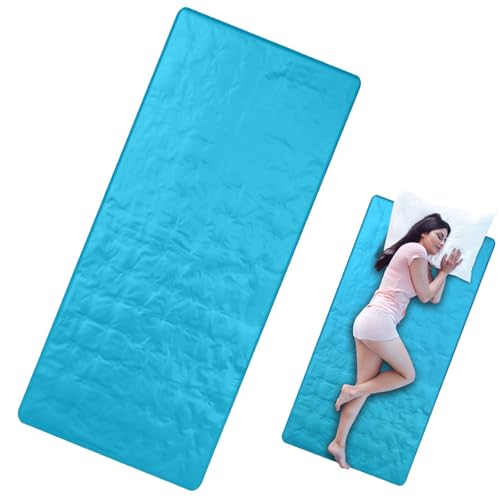
Drydiet Gel Cooling Pad Mat
A simple, no-power gel mat you lay under your sheet or take with you when traveling. Good for the person who just wants a cool surface at bedtime without committing to a full mattress pad or an electric system. Remember: it cools on contact, then behaves like normal bedding for the rest of the night.
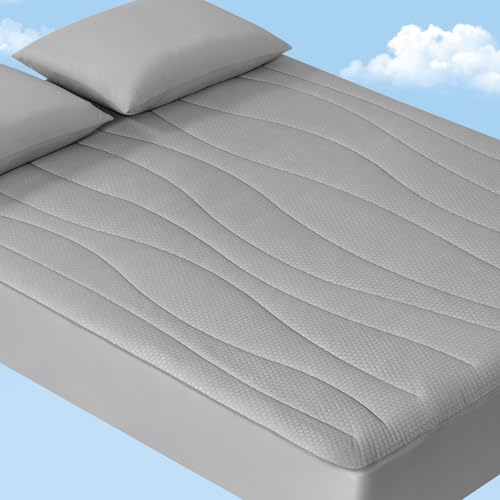
Elegear Cooling Mattress Pad
A full fitted mattress pad rather than a small mat, so the cooling surface covers where you actually sleep instead of one patch. Still passive - no power, no plumbing - but the PCM layer and mesh construction hold onto the cool feeling a bit longer than a basic gel mat, which makes it a reasonable step up if a small pad felt too limited.

Chilipad Cube Bed Cooling System
An actual active system - a control cube circulates water through a mattress topper, and you set the temperature with a remote (60 to 115°F range). This is the category that can genuinely change how warm your bed feels for hours, not minutes, which is why it's the one worth the extra cost and setup if a gel pad hasn't been enough. The half-size pad option lets one side of a shared bed run cooler than the other.
Not sure a cooling pad is even the right fix for your bedroom? Our Sleep Toolkit rounds up the gear we trust for specific sleep problems, cooling included.
What temperature should my bedroom actually be?
Before buying anything, it's worth checking whether the room itself is the real problem. The Sleep Foundation puts a number on it directly: "The best room temperature for sleep is approximately 65 degrees Fahrenheit (18.3 degrees Celsius). This may vary by a few degrees from person to person, but most doctors recommend keeping the thermostat set between 65 to 68 degrees Fahrenheit (15.6 to 20 degrees Celsius) for the most comfortable sleep." If your room regularly sits well above that range, a cooling pad is treating a symptom - fans, blackout curtains, and airflow matter too. We go through the reasoning in more detail in what is the best temperature for sleep.
Frequently asked questions
Do cooling pads actually work?
Passive gel pads work as advertised for a short window - they genuinely feel cool on contact - but they don't remove heat continuously, so the effect fades. Active water-cooled systems work for longer because they keep circulating chilled water all night rather than just absorbing heat once.
How long does a gel cooling pad stay cool?
Typically 20 to 30 minutes of noticeable coolness, depending on room temperature and how warm you run. After that it behaves like standard bedding until it's had time to reset, which is usually while you're up during the day.
Are water-cooled mattress pads worth the cost?
If a passive pad hasn't solved your problem, or you're dealing with night sweats, menopause symptoms, or a mismatched-temperature partner, the ongoing cooling from an active system is usually worth the higher price. If you just get warm occasionally, a gel pad is enough and a lot cheaper.
Can a cooling pad replace air conditioning?
No. A cooling pad manages the temperature of your sleeping surface, not the air in the room. In a genuinely hot bedroom, pair it with airflow and cooling strategies for the room itself rather than expecting the pad alone to fix it.
Related reading:
- How to Sleep When It's Hot
- Best Bed Air Conditioner
- What Is the Best Temperature for Sleep
- How to Sleep During Menopause
- Sleep Toolkit - the gear we actually recommend for situations like this
Sources & review: Bedroom temperature guidance checked against the Sleep Foundation. Product details reflect manufacturer-listed specifications. This is general comfort information, not medical advice - if night sweats or overheating are frequent, talk to your doctor about possible causes.
📥 Free: The Post-Surgery Sleep Recovery Kit
Our 2-page PDF - the safe sleep position for your surgery, how to set up your bed, a night-by-night recovery timeline, and the red flags worth calling your doctor about. We'll email you the download link.
By subscribing you agree to our Privacy Policy.