

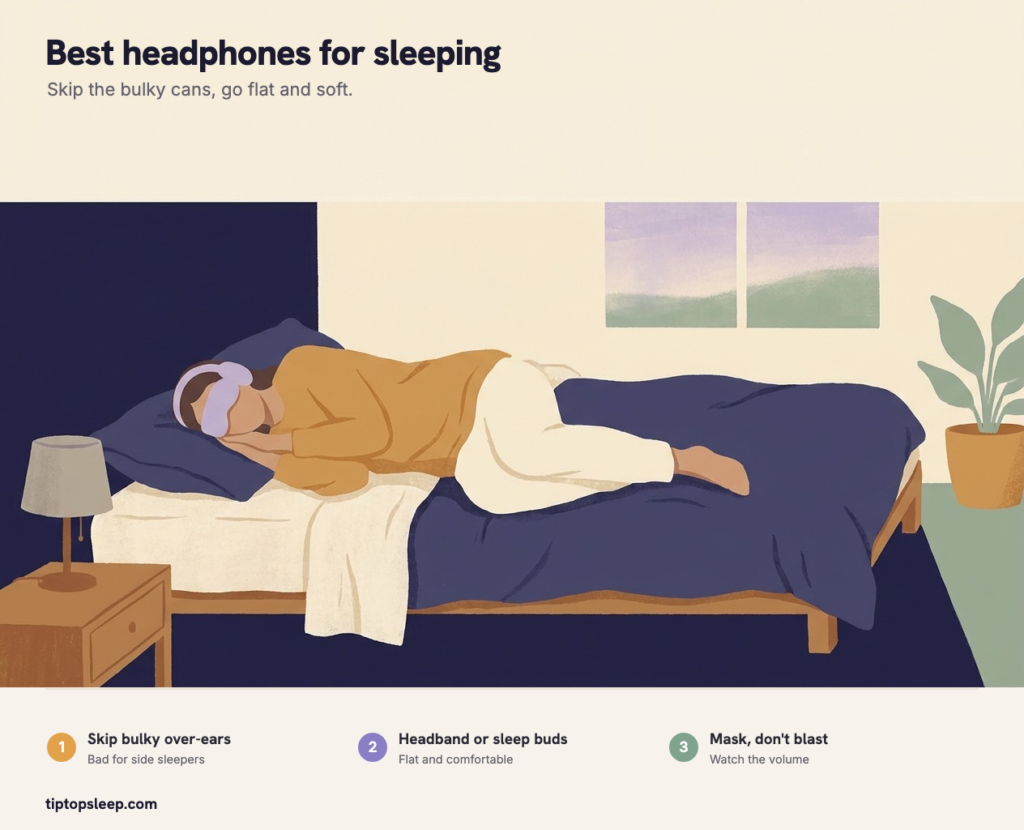
For actual sleep, skip the bulky over-ear ANC headphones and go for a flat sleep headband or a small, soft sleep earbud instead. Big cans like the Bose or Sony models are excellent for flights and offices, but they're miserable to lie on as a side sleeper. A thin headband speaker or a low-profile earbud gives you noise blocking without the pressure point against your pillow, and pairing it with white noise usually beats pure noise cancelling for sleep anyway.
I used to recommend the big-name noise cancelling headphones for sleeping, the same ones people wear on planes. Then I actually tried sleeping in a pair. Ten minutes in, my ear was folded against the cushion and I was wide awake again, fixing my head on the pillow like I was solving a puzzle. Over-ear ANC headphones are built to sit on your head while you're upright, not to survive six to eight hours of you rolling from side to side. If you're a side sleeper, that mismatch is the whole problem.
Why don't regular noise cancelling headphones work for sleep?
Most "best noise cancelling headphones" lists (including older versions of this one) just point you to whatever tops the general headphone charts: Bose, Sony, Sennheiser. Those are genuinely great headphones. They're just designed for sitting or standing, not lying down.
- Bulk. Over-ear cups are thick. Lying on your side presses the whole assembly into your head and pillow, which gets uncomfortable fast and can even leave marks.
- Hard parts. Headbands and hinges are rigid. A rigid headband under your skull all night is a recipe for a headache, not rest.
- They're not made to be slept in. Even "comfortable" travel headphones are rated for hours of wear while awake and mobile, not unconscious and shifting positions for a third of a day.
If you've ever tried sleeping with regular earplugs and found them uncomfortable too, the fix is usually the same: smaller, softer, flatter. Anything designed for daytime use is the wrong shape for a pillow.
What should I actually look for in sleep headphones?
Comfort while lying down matters more than spec-sheet noise cancellation numbers. A few things to prioritize:
- Low profile. Flat headband speakers or tiny earbuds that don't stick out past your ear.
- Soft, washable material against your face and ears, especially if you sleep on your side every night.
- A battery that outlasts your sleep cycle, or an auto-off timer, so you're not up at 3am to recharge something.
- Realistic volume control. Keep it at a moderate, background level rather than something you'd wear to a concert. Hours of loud audio every night, even quiet-sounding audio through earbuds sitting close to your eardrum, adds up over time.
Active noise cancelling vs. sound masking, which is better for sleep?
They solve different problems. Active noise cancelling (ANC) uses a microphone and inverse sound waves to cancel out steady, low-frequency noise like an air conditioner hum or plane engine. It's genuinely effective for that kind of constant drone. What it's not great at is unpredictable noise, a partner's snoring, a dog barking, someone talking in the next room.
That's where sound masking comes in. Playing consistent white noise, or a fan, doesn't remove the disruptive sound, it covers it, so a sudden noise doesn't stand out against silence. The Sleep Foundation notes that "adding a consistent background noise may mask or drown out the sounds you can't control and could help to counteract the harmful effects of noise exposure during sleep." If your problem is genuinely random noise rather than a steady drone, masking usually helps more than pure ANC. Some newer sleep earbuds now combine both: light active cancelling for steady noise, plus a masking sound layer for everything else.
Either way, the core issue the Sleep Foundation points to is fragmentation, not just being startled awake. As they put it, "noises at night might wake you up, and a fragmented night's sleep is less refreshing." Even noise that doesn't fully wake you can still nudge you out of deep sleep without you remembering it in the morning, which is part of why "I slept 8 hours but still feel wrecked" happens on noisy nights.
What are the best sleep headphones for side sleepers?
Here are two picks that are actually shaped for lying down, not just for sitting on a plane.
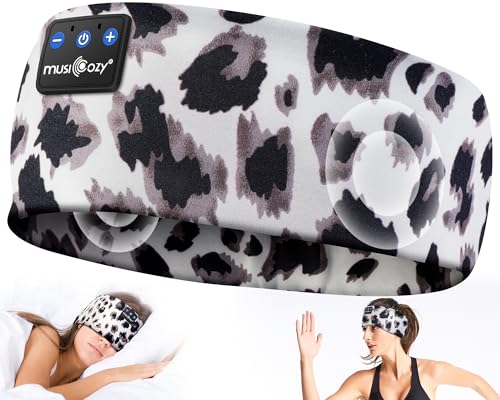
MUSICOZY Sleep Headphones Headband
A soft spandex-nylon headband with ultra-thin flat speakers sewn into the fabric instead of hard earcups. It stretches to fit different head sizes and there's nothing rigid to dig into your ear when you're lying on your side. This is the shape that actually makes sense for sleep: no bulk, no pressure point, just fabric against fabric.

Soundcore Sleep A30 by Anker
If a headband isn't your thing, this is a purpose-built sleep earbud from a brand with real audio pedigree, not a generic listing. Each earbud weighs about 3 grams and sits flush in the ear rather than sticking out, which is the actual test for "can I sleep on my side in these." It combines light active noise cancelling for steady background noise with a separate snore-masking sound layer, which is closer to how noise actually disrupts sleep than ANC alone.
Not sure which type of sleep gear fits your situation? Our Sleep Toolkit breaks down what's actually worth buying for different sleep problems, without the hype.
Is it safe to sleep with headphones or earbuds in every night?
Mostly yes, with a few sensible limits:
- Keep the volume moderate. Falling asleep to loud audio, then leaving it playing for hours, adds up to more cumulative noise exposure than most people realize.
- Avoid hard plastic earbuds pressed into your ear canal all night. That's more about comfort than safety, but repeated pressure on the same spot for hours can leave your ear sore by morning. This is exactly why shape matters more than brand name for sleep use.
- Give your ears a break occasionally. If you notice ear soreness, itching, or irritation becoming a pattern, skip a few nights and let your ears recover, or switch to a headband style that doesn't sit in the canal.
- Charge safely. Don't sleep with headphones plugged into a wall charger; use the battery.
Frequently asked questions
Can I sleep in regular noise cancelling headphones like the Bose or Sony ones?
You can, but most side sleepers find them uncomfortable after the first hour because of the bulk and rigid headband. They're better suited to sitting upright, like on a flight, than lying down for a full night.
Do sleep headbands actually block noise, or just play music over it?
Mostly the second. Sleep headbands generally don't have active noise cancelling, they work by playing white noise, music, or a podcast loud enough to mask other sounds. That's usually enough for snoring or household noise, though it won't cancel out a genuinely loud environment the way true ANC over-ear headphones can.
Is white noise better than noise cancelling for sleep?
For unpredictable noise, like a partner's snoring or a barking dog, yes, masking with white noise tends to help more than ANC, which is built for steady, constant sounds. For a constant hum like traffic or an air conditioner, true ANC can work well. Some of our other picks lean into this, see our guide on the best color noise for sleep if white noise alone isn't cutting it.
Are earplugs a better option than headphones for sleeping?
For pure noise blocking with nothing to charge or connect, yes, earplugs are simpler and often more effective at blocking sound. Headphones win if you specifically want to fall asleep to music, a podcast, or white noise. We compare both in our guide to the best earplugs to sleep with.
Related reading:
- Best Earplugs to Sleep With
- What Is the Best Color Noise for Sleep?
- How to Sleep in a Noisy Hotel
- How to Sleep on a Plane
- Sleep Toolkit - the gear we actually recommend for situations like this
Sources & review: Noise and sleep quality information checked against the Sleep Foundation's guide to noise and sleep. This is general comfort and product guidance, not medical advice; if noise-related sleep loss or ear discomfort is ongoing, talk to a doctor or audiologist.
📥 Free: The Post-Surgery Sleep Recovery Kit
Our 2-page PDF - the safe sleep position for your surgery, how to set up your bed, a night-by-night recovery timeline, and the red flags worth calling your doctor about. We'll email you the download link.
By subscribing you agree to our Privacy Policy.