

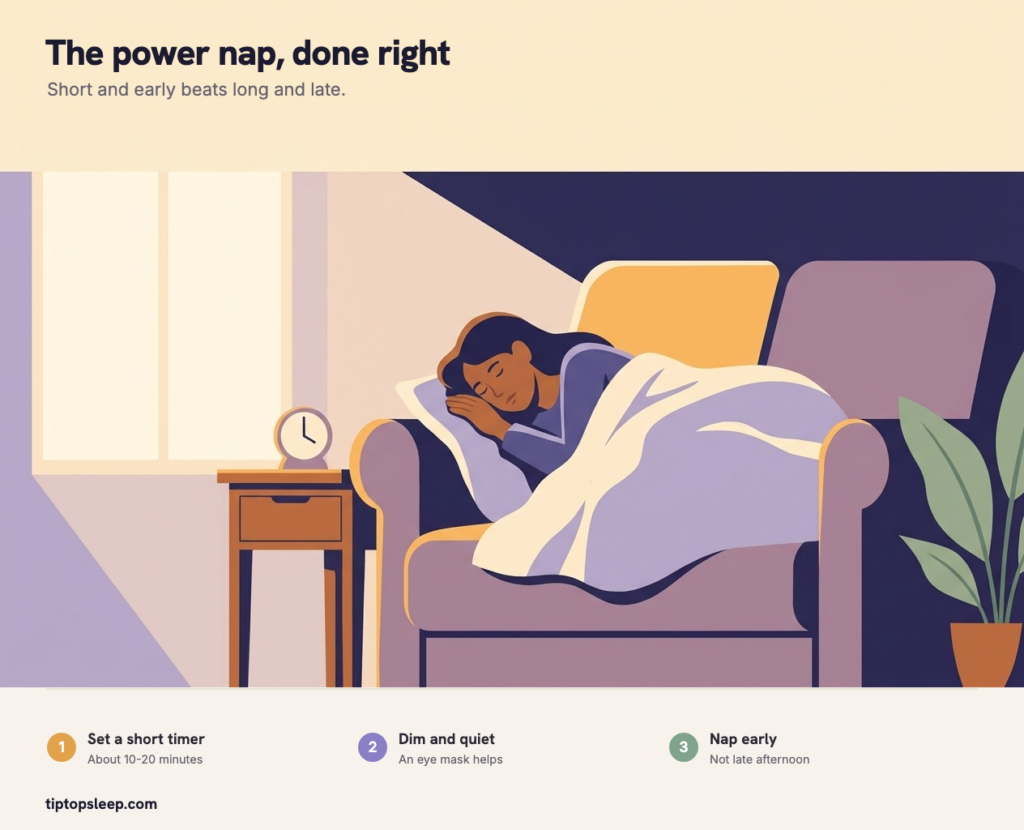
A literal five-minute nap can take the edge off, but it's usually too short to do much - most people barely settle before the timer goes off. The real sweet spot is 10 to 20 minutes: long enough to feel the benefit, short enough that you wake up clear-headed instead of groggy. Go past about 30 minutes and you risk falling into deeper sleep, which makes waking up harder, not easier.
I get asked about this a lot, usually by someone who's just tried to "power nap" on their lunch break and woken up feeling worse, not better. So let's be honest about it: the five-minute nap is a nice idea, but it's not really where the science points. I've napped badly for years - slumped in a chair, phone alarm set for five minutes, waking up more tired than when I lay down. Once I started timing it properly, everything changed. Here's what actually works, and why five minutes usually isn't quite enough.
Does a five-minute nap actually help?
A little, but not much. Five minutes is barely enough time to drift into the lightest stage of sleep, so you get a small dip in arousal and maybe a brief mental reset - but you haven't been asleep long enough to bank any real recovery. Napping researchers generally point to a longer, but still short, window as the one that actually delivers. According to the Sleep Foundation, "napping for less than 20 minutes improves alertness and functioning right away with little or no grogginess after waking up," and "research shows that 10- to 30-minute power naps are refreshing and can make a person feel more awake."
So the honest version of "the five-minute nap" is really "the ten-to-twenty-minute nap." If five minutes is genuinely all you've got, take it - a brief eyes-closed rest is still better than scrolling your phone. Just don't expect it to do the heavy lifting a proper power nap does.
Why doesn't a very short nap do more?
Sleep happens in stages, and your body doesn't skip to the good part. In the first few minutes you're only easing into stage 1 sleep - the drowsy, easily-disturbed stage. The muscle relaxation and mild mental "reset" you feel are real, but the deeper restorative stages that make a nap actually useful haven't kicked in yet. Give it another five to fifteen minutes and you settle into light stage 2 sleep, which is where most of the alertness benefit comes from - without tipping into the deep sleep that's hard to wake out of.
What's the best way to nap well?
A few small habits make the difference between a nap that helps and one that leaves you groggy for an hour:
- Nap early afternoon. Somewhere between 1pm and 3pm lines up with your body's natural post-lunch dip, and it's far enough from bedtime that it shouldn't interfere with tonight's sleep.
- Set an actual timer. Aim for 10-20 minutes. This is the single biggest fix if you're currently "just closing your eyes for a bit" and waking up 45 minutes later feeling awful.
- Get the room dim and quiet. You don't need blackout conditions, but cutting light and noise helps you drop off faster in a short window - a sleep mask does a lot of this work for you (more on that below).
- Try a "coffee nap." Drink a coffee right before you lie down, then nap for 15-20 minutes. Caffeine takes about that long to kick in, so you wake up just as it starts working - many people find this gives a bigger lift than either a nap or coffee alone.
- Don't fight to fall asleep. If you're not out within about 20 minutes, just resting with your eyes closed still helps. Napping isn't something you can force.
What happens if you nap too long?
Past about 30 minutes, you risk sliding into deeper sleep stages. Waking up out of deep sleep is where sleep inertia comes from - that heavy, disoriented, worse-than-before-you-napped feeling that can hang around for 15-30 minutes. If you do have time for a longer nap, the trick is to either keep it short (under 20 minutes) or go long enough to complete a full 90-minute sleep cycle, so you wake up between cycles rather than in the middle of one. Anything in between tends to backfire.
Who should be careful with naps?
If you already struggle to fall asleep at night, be cautious with daytime naps - especially long or late ones. Napping reduces your "sleep pressure," the buildup that helps you fall asleep at bedtime, so a late-afternoon nap can make insomnia worse, not better. If that's you, either skip naps altogether or keep them short and early (before 3pm). People with certain sleep disorders should also check with a doctor before making naps a habit, since excessive daytime sleepiness can sometimes be a symptom worth looking into rather than napping through.
Getting the setup right
Most of my bad naps weren't a timing problem, they were a comfort problem - too much light, a room that wasn't quiet, or a chair that wasn't actually restful. A proper eye mask solves the biggest one: light is one of the fastest ways to keep your brain half-awake, and blocking it out helps you get to sleep in that narrow ten-to-twenty-minute window instead of spending half the nap just trying to drop off.

MZOO Contoured Sleep Eye Mask
The molded eye cups block light without pressing on your eyes, so you can lie back at your desk or on the sofa and actually drop off in a short window, instead of lying there squinting at the light. Good for a proper power nap or a longer night's sleep.
Want more of what's in my own nap-and-sleep kit? See the full Sleep Toolkit for the masks, sound machines and other gear I actually use.
Frequently asked questions
Is a 5 minute nap better than no nap?
Usually yes - a brief eyes-closed rest can take a small edge off fatigue and is generally better than pushing through with none at all. Just don't expect the same lift you'd get from a full 10-20 minute power nap.
What is the ideal nap length?
Most sleep researchers point to 10-20 minutes as the sweet spot: long enough to feel refreshed, short enough to avoid grogginess. A 90-minute nap that completes a full sleep cycle is the other option that tends to work well, if you have the time.
Why do I feel worse after a nap sometimes?
That groggy, foggy feeling is sleep inertia, and it usually happens when you wake up from deeper sleep - most often after napping for more than 30 minutes but less than a full 90-minute cycle. Shortening or lengthening the nap usually fixes it.
What time of day is best for a nap?
Early-to-mid afternoon, roughly 1pm to 3pm, works well for most people. It lines up with your body's natural dip in alertness and leaves enough hours before bedtime that it shouldn't disrupt your night's sleep.
Related reading
- How to Nap at Work Without Getting Caught
- Is It Good to Have Naps After Lunch?
- How Long Does Coca-Cola Keep You Awake?
- Learning to Sleep on Your Back (In 3 Easy Steps)
- Sleep Toolkit - the gear I actually use
Sources & review: Nap-length guidance here is researched against the Sleep Foundation's power nap guide. It's general information, not medical advice - if you have ongoing sleep problems or excessive daytime sleepiness, talk to your doctor.
📥 Free: The Post-Surgery Sleep Recovery Kit
Our 2-page PDF - the safe sleep position for your surgery, how to set up your bed, a night-by-night recovery timeline, and the red flags worth calling your doctor about. We'll email you the download link.
By subscribing you agree to our Privacy Policy.