

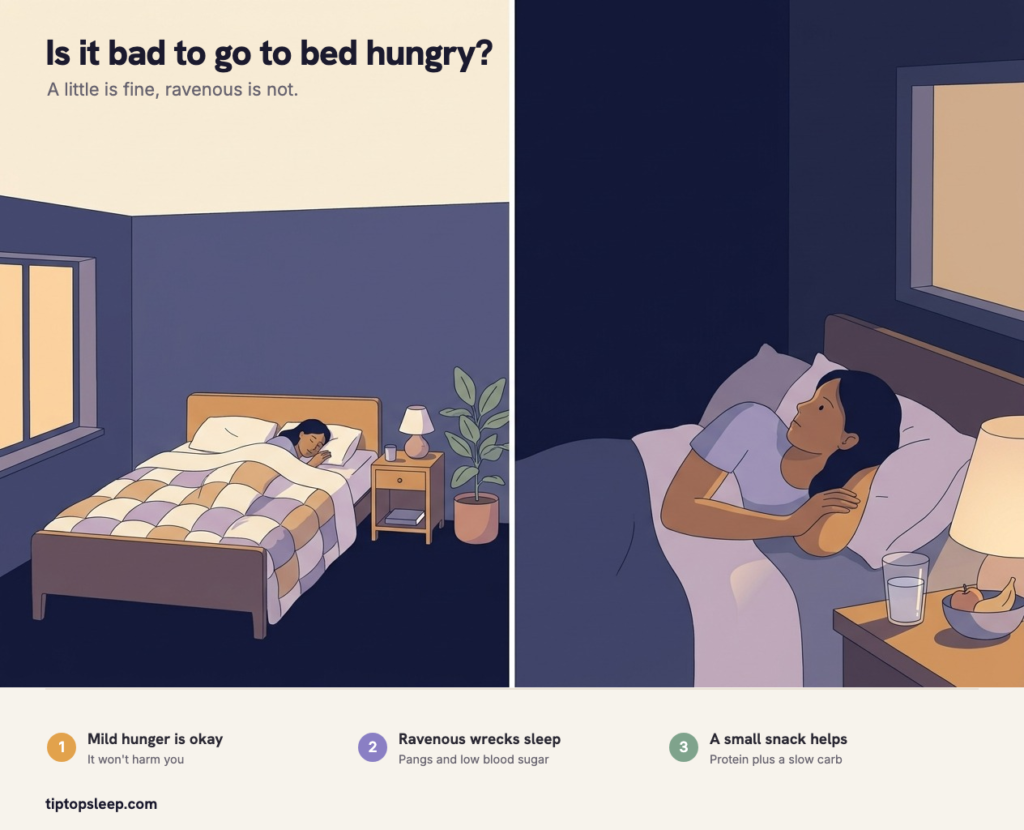
A little hunger at bedtime is normal and not dangerous. Genuinely going to bed hungry, though, can make it harder to fall and stay asleep - hunger pangs, a growling stomach, and dropping blood sugar are all things your brain notices right as you're trying to wind down. The fix isn't a big meal before bed; it's a small, balanced snack if you actually need one, and better meal timing so you don't end up ravenous at 10pm in the first place.
I used to think being "good" meant skipping anything after dinner, full stop. Then I spent a week lying awake with my stomach growling louder than my white noise machine, and I realized discipline that wrecks your sleep isn't actually discipline. There's a real difference between mild, ignorable hunger and the kind that keeps you staring at the ceiling - and knowing which one you're dealing with changes what you should do about it.
Is it bad to go to bed hungry?
Not automatically. If you ate a reasonable dinner a few hours earlier and you feel a light edge of hunger at bedtime, that's a normal part of digestion and not something to fix. Plenty of people fall asleep fine in that state, and there's nothing unhealthy about your stomach being empty overnight.
Where it becomes a problem is when "a little hungry" turns into "genuinely hungry" - the kind where your stomach is audibly growling, you feel a bit shaky or foggy, or hunger is the main thing your brain keeps circling back to. A dietitian quoted by Cleveland Clinic put it simply: "If you're going to bed hungry, that can also be disruptive to your sleep which can have some negative effects." That's the version worth addressing, and it usually just needs a small snack, not a rule change about never eating at night.
Why does hunger disrupt sleep in the first place?
- Physical discomfort. Hunger pangs and stomach growling are hard to sleep through, especially in the quiet minutes right before you drift off.
- Blood sugar dips. Going too long without eating can let blood sugar drop, which some people experience as restlessness, waking in the night, or feeling shaky - not dangerous for most people, but disruptive.
- Mental focus on food. A busy, hungry brain doesn't wind down easily. If you're mentally planning breakfast, you're not relaxing into sleep.
- Next-day knock-on effects. Poor sleep from hunger can make you hungrier and less choosy about food the next day - your appetite hormones and your sleep are closely linked in both directions.
What should a bedtime snack actually look like?
If you're genuinely hungry, not just slightly peckish, a small snack 30 to 60 minutes before bed is a reasonable move. The goal is to take the edge off, not to have a second dinner. A few things matter more than others:
- Keep it small. Think a handful of nuts or a small bowl, not a full plate.
- Pair protein with a complex carb. A little protein plus a slow-digesting carb keeps you satisfied without a sugar spike-and-crash. Greek yogurt, a slice of whole-grain toast, a banana with a few nuts, or vegetables with hummus all fit this.
- Skip anything heavy, greasy, or very sugary. Rich or sugary food close to bedtime is more likely to disturb sleep than help it, and it can also trigger reflux if you lie down soon after eating.
- Skip anything spicy. Same reason - it raises the odds of heartburn right as you're lying flat.
If you'd rather build this into your evening rather than treat it as a last-minute fix, our sleep hygiene checklist covers the broader wind-down routine this fits into.

PLANTERS NUT-rition Individual Nut Pouches
What I like about pre-portioned pouches is that they solve the "how much is too much" problem for you. One pouch is a real portion, not an invitation to eat straight from the canister at 10pm, and a mix of cashews, almonds and macadamias gives you protein and healthy fat without anything sugary. Keep a box in the kitchen for nights when you're genuinely hungry, not just bored.
For more picks like this, our Sleep Toolkit rounds up the gear and small essentials we actually trust.
What about intermittent fasting or dieting?
If you're intentionally restricting calories or fasting, some hunger before bed is expected, and that's a choice you're allowed to make. But there's a difference between "a bit hungry, that's fine" and "so hungry I can't sleep." If hunger is costing you sleep most nights, it's worth reconsidering your eating window rather than treating poor sleep as an unavoidable price of the diet - bad sleep tends to undercut whatever the diet was trying to achieve anyway, partly by making you hungrier and more likely to overeat the next day. A small, planned snack inside your eating window (even a late one) is a reasonable trade if it means you actually sleep.
What about eating too much before bed instead?
It's worth saying the other side of this clearly: the fix for hunger isn't a big meal right before you lie down. Eating a large or heavy meal close to bedtime brings its own problems - indigestion, reflux, and a stomach that's still working when your brain is trying to shut down. Sleep Foundation notes that most experts recommend eating a meal two to four hours before bedtime, and that lying down soon after a big meal is what tends to trigger reflux, not eating in general. The goal is a small buffer against hunger, not a second dinner.
When is night hunger worth mentioning to a doctor?
Occasional hunger before bed is normal. It's worth a conversation with your doctor if you notice a pattern like:
- Waking up hungry most nights, especially if it's a new pattern.
- Hunger paired with shakiness, sweating, or feeling unwell overnight, which can point to blood sugar swings.
- Needing to eat at night because of a medication you're taking - some medications affect appetite or blood sugar, and a doctor can tell you whether nighttime eating is something to plan around.
- Hunger that's part of a bigger pattern of disordered eating or restriction, where the answer isn't "eat a snack" but a broader look at your eating patterns.
None of that means something is wrong - it just means a pattern is worth understanding rather than working around indefinitely.
Frequently asked questions
Is it OK to go to bed a little hungry?
Yes. Mild hunger after a reasonably sized dinner is normal and not harmful. It only becomes worth addressing when hunger is strong enough to actually keep you awake.
What's the best snack before bed if I'm hungry?
Something small that pairs a little protein with a complex carb - Greek yogurt, a banana with a few nuts, whole-grain toast, or vegetables with hummus. Avoid heavy, greasy, spicy, or very sugary food close to bedtime.
Does going to bed hungry help you lose weight?
Not reliably. Poor sleep from hunger tends to increase appetite and cravings the next day, which can work against weight-loss goals. A small, sensible snack is usually the better trade than a hungry, restless night.
Can hunger wake you up in the middle of the night?
Yes, especially if your last meal was small or early. If this happens regularly, a slightly larger dinner or a planned bedtime snack is a reasonable fix.
Related reading:
- Best Foods to Eat Before Bed
- Sleep Hygiene Checklist
- Best Magnesium for Sleep
- Fear of Not Sleeping - Stop Worrying About Not Sleeping
- Sleep Toolkit - the gear and essentials we actually recommend
Sources & review: Guidance here is general nutrition and sleep information, checked against Cleveland Clinic and the Sleep Foundation. It is not medical or nutrition advice and doesn't replace guidance from your doctor or a registered dietitian, especially if night hunger is a new or persistent pattern for you.
📥 Free: The Post-Surgery Sleep Recovery Kit
Our 2-page PDF - the safe sleep position for your surgery, how to set up your bed, a night-by-night recovery timeline, and the red flags worth calling your doctor about. We'll email you the download link.
By subscribing you agree to our Privacy Policy.