

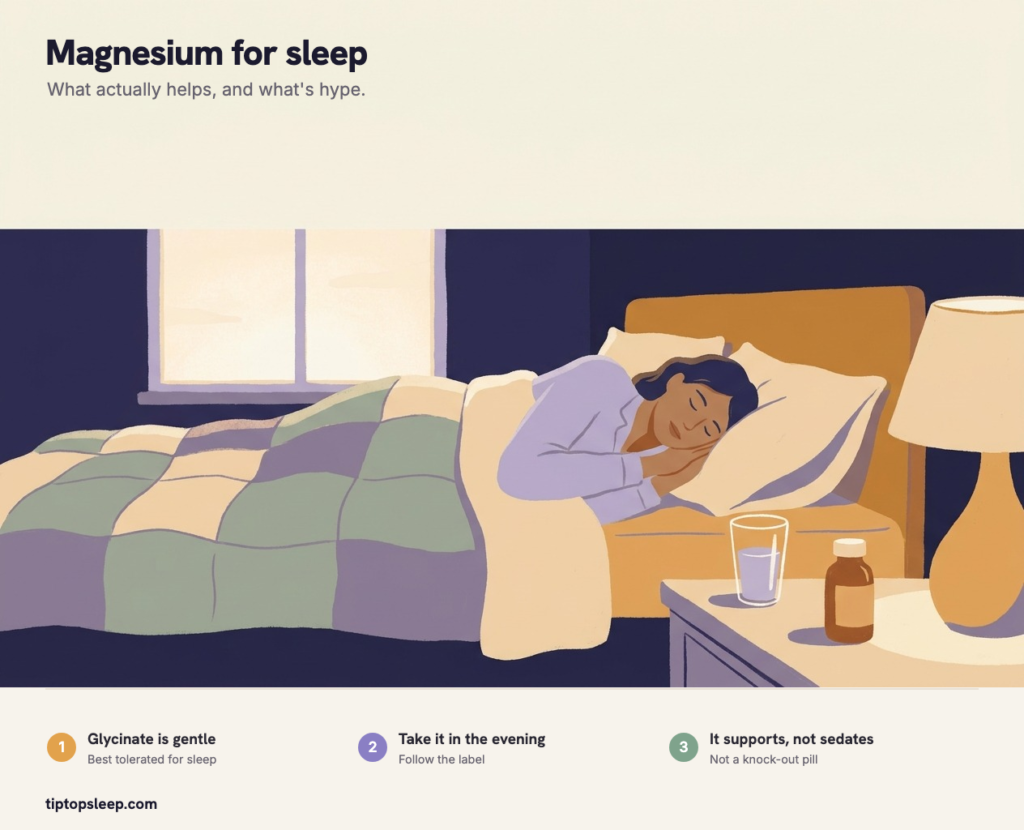
Magnesium glycinate is usually the best-tolerated form to try for sleep - it's well absorbed and gentle on the stomach. But be honest with yourself about the evidence: research on magnesium and sleep is limited and mixed, and it seems to help most when you're actually running low on magnesium. It's a gentle support, not a sedative, and it won't fix insomnia on its own.
I get asked about magnesium more than almost any other supplement on this site, so let's be straight about it. I'm not a doctor - I'm someone who has spent years reading the research and trying things myself during my own stretches of bad sleep. Magnesium is not the miracle cure some product pages make it sound like. But it's cheap, generally safe for most healthy adults, and worth understanding properly before you buy anything.
Does magnesium actually help you sleep?
Honestly - the evidence is thinner than the marketing suggests. Magnesium plays a real role in nerve and muscle function and in regulating the body's stress response, and low magnesium has been loosely linked to poorer sleep in some studies. But large, well-controlled trials proving that magnesium supplements fix insomnia in generally healthy people just don't exist yet. The Sleep Foundation puts it plainly: "A few studies suggest that magnesium supplementation may help with symptoms of insomnia," but "experts haven't yet found the exact ways in which magnesium impacts sleep problems."
Where magnesium seems to help most is when someone is actually deficient. The NIH Office of Dietary Supplements notes that adults need somewhere between 310 and 420 mg a day depending on age and sex, and that dietary surveys consistently show many people in the US fall short of that. If you're one of them, topping up may genuinely help you feel calmer and settle more easily. If your diet already covers your needs, don't expect a supplement to sedate you - it isn't built to.
What's the best form of magnesium for sleep?
Not all magnesium supplements are the same, and the form matters more than the marketing on the label:
- Magnesium glycinate - the one I'd point most people toward first. It's bound to the amino acid glycine, it's well absorbed, and it's gentle on the digestive system. It's also the form most commonly recommended for sleep and relaxation.
- Magnesium citrate - also reasonably well absorbed and inexpensive, but it has a more noticeable laxative effect at higher doses. Fine for some people, less pleasant for a bedtime routine.
- Magnesium oxide - cheap and common in budget multivitamins, but poorly absorbed. Most of it passes straight through you, which is part of why it's used as a laxative.
- Magnesium threonate - marketed heavily for brain health and sleep quality, with some early studies looking promising. It's also considerably more expensive, and the research is still limited. I wouldn't pay the premium expecting guaranteed results.
If you're recovering from surgery or dealing with a specific sleep disruption, magnesium is one small piece of the puzzle - it won't replace the basics that matter more, like getting your sleep environment and routine right during menopause or following your post-surgery sleep guidance after an operation.
How much should you take, and when?
Follow the dose on the label of whatever product you choose - typical over-the-counter doses run from about 100 mg to 350 mg of elemental magnesium. Most people take it in the evening, thirty to sixty minutes before bed, alongside food to reduce the chance of an upset stomach. Give it a couple of weeks of consistent use before deciding whether it's doing anything for you; this isn't a same-night effect like a sleeping pill.
Can you get enough magnesium from food instead?
Often, yes - and it's the better place to start. Good dietary sources include leafy greens like spinach, nuts and seeds, legumes, whole grains, and dark chocolate. If you're eating a varied diet with plenty of plants, you may already be close to the recommended intake and a supplement may add little.
Is magnesium safe? What should you watch for?
For most healthy adults, magnesium from food and standard supplement doses is safe. The most common side effect is a loose stomach or diarrhea, especially with citrate or oxide forms or at higher doses - glycinate tends to be the gentlest here. Magnesium supplements can also interact with certain antibiotics, diuretics, and other medications, and people with kidney disease need to be especially careful, since impaired kidneys can't clear excess magnesium properly. If you're on regular medication, pregnant, or have any kidney concerns, talk to your doctor or pharmacist before adding a magnesium supplement - this is exactly the kind of decision where a two-minute conversation with someone who knows your history is worth more than anything you read online.

Nature Made Magnesium Glycinate 200mg
A well-tolerated glycinate from an established, widely-trusted supplement brand - a reasonable one to try if you want to test whether topping up your magnesium helps you settle. Not a sedative and not a cure for insomnia; just a gentle, evidence-modest option worth a fair trial.
Looking for the fuller picture? See our Sleep Toolkit for what's actually proven to help - and what's popular but weak, like magnesium.
Frequently asked questions
Is magnesium glycinate really the best magnesium for sleep?
It's the form most commonly recommended, mainly because it's well absorbed and gentle on the stomach compared with citrate or oxide. "Best" here means best-tolerated, not proven-most-effective - head-to-head sleep trials between forms are limited.
How long does magnesium take to help with sleep?
If it's going to help, most people notice a difference over two to several weeks of consistent nightly use, not overnight. It works quietly in the background rather than sedating you the way a sleep medication would.
Can you take too much magnesium?
Yes. Beyond the safe upper limit, magnesium from supplements (not food) can cause diarrhea, nausea and cramping, and in people with kidney problems it can build up to dangerous levels. Stick to labeled doses and check with your doctor if you have any health conditions.
Does magnesium work as a sleeping pill replacement?
No - it isn't a sedative and shouldn't be treated as one. It may gently support relaxation, especially if you're low in magnesium, but it's not a substitute for treating an underlying sleep disorder or for medical advice if you have chronic insomnia.
Related reading
Sources & review: Researched against the NIH Office of Dietary Supplements magnesium fact sheet and the Sleep Foundation's guide to magnesium and sleep. This is general information, not medical advice, and doesn't replace guidance from your own doctor or pharmacist - please check with them before starting any new supplement, especially if you take medication or have kidney concerns.
📥 Free: The Post-Surgery Sleep Recovery Kit
Our 2-page PDF - the safe sleep position for your surgery, how to set up your bed, a night-by-night recovery timeline, and the red flags worth calling your doctor about. We'll email you the download link.
By subscribing you agree to our Privacy Policy.