

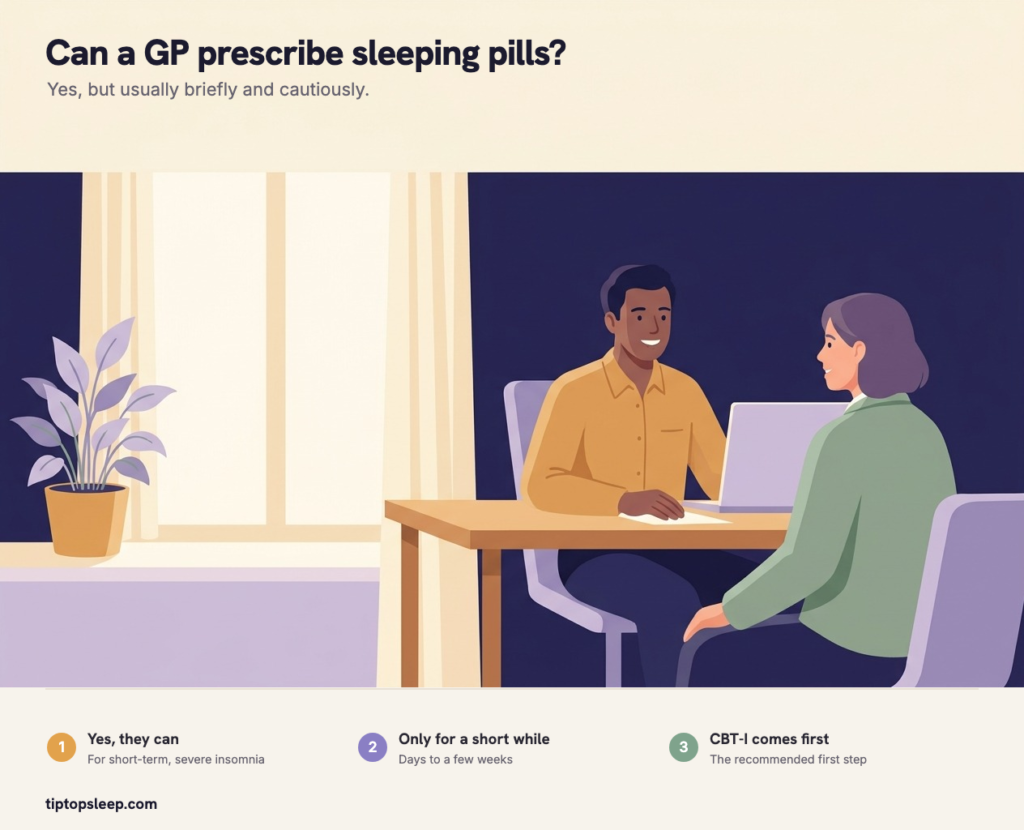
Yes - a family doctor (GP) can prescribe sleeping pills, but most are cautious about it. In practice, GPs now rarely reach for a prescription first. They're more likely to check for an underlying cause, suggest sleep hygiene changes or cognitive behavioural therapy (CBT-I), and reserve medication for short courses when insomnia is severe or other approaches haven't helped. If your case is complicated, they may refer you to a sleep specialist.
I get asked this a lot, usually by someone who has had three or four terrible nights in a row and is wondering whether it's even worth booking a doctor's appointment. The honest answer is yes, it's worth it - but it helps to know what that appointment will probably look like, so you're not disappointed if you don't walk out with a prescription. Here's what I've learned researching this, checked against the NHS and Mayo Clinic.
Can a GP actually prescribe sleeping pills?
Yes. A family doctor is medically able to prescribe sleep medication, the same as any other GP-level treatment. But the reality is more cautious than most people expect. The NHS is blunt about it: "GPs now rarely prescribe sleeping pills to treat insomnia." That's not because they don't believe you're struggling - it's because the evidence on long-term use doesn't support it, and because there are usually better first steps. So it's realistic, but it's typically a later step in the conversation, not the first thing offered.
Why do doctors limit sleeping pill prescriptions?
Three reasons come up again and again when you look at the guidance doctors are working from:
- Dependence. Several classes of sleep medication can lead to physical or psychological reliance, especially with regular use beyond a few weeks.
- Side effects. Next-day grogginess, dizziness, and impaired coordination are common, and some medications carry more serious risks like memory problems or unusual sleep-related behaviours.
- Tolerance. Many sleep medications lose effectiveness over time, meaning they help less the longer you take them, which can tempt people toward higher doses.
Mayo Clinic frames the bigger picture plainly: "Behavior changes learned through cognitive behavioral therapy are generally the best treatment for ongoing insomnia." Medication has a role, but doctors tend to see it as a bridge, not a destination.
If you're already on a prescribed sleep medication and you're worried about how it's affecting you, it's worth reading up on whether sleeping pills can cause memory loss - and raising anything you notice with your prescriber rather than stopping on your own.
What might a family doctor prescribe, and when
I'm not going to tell you what to take - that's between you and your doctor, and it depends on your health history, other medications, and how long you've been struggling. But it helps to know the broad categories a GP might discuss:
- Short-term hypnotics ("Z-drugs"). Designed for short courses to help you fall or stay asleep during a rough patch - not intended for ongoing nightly use.
- Sedating antidepressants, at low doses. Sometimes used off-label for sleep, particularly when insomnia is tangled up with anxiety or low mood.
- Melatonin. Sometimes considered, especially for older adults or circadian issues, though NHS guidance limits routine use in younger adults.
Whatever's discussed, the NHS is specific about the timeframe: "Sleeping pills are only prescribed for a few days, or weeks at the most, if: your insomnia is very bad [or] other treatments have not worked." That's a deliberately narrow window, not an open-ended prescription.
What to expect at the appointment
A good insomnia appointment covers more than just "can I have something to help me sleep." Expect your GP to ask about:
- How long it's been going on - a few rough nights and months of chronic insomnia are treated very differently.
- What your nights actually look like - when you go to bed, how long it takes to fall asleep, whether you wake in the night.
- Underlying causes - pain, menopause, anxiety, depression, shift work, caffeine or alcohol habits, and conditions like sleep apnoea can all masquerade as "just insomnia."
- What you've already tried - sleep hygiene changes, over-the-counter aids, or supplements like magnesium.
Be honest and specific. "I can't sleep" gives a doctor very little to work with. "It takes me over an hour to fall asleep most nights, and I've been like this for two months" gives them somewhere to start.
Why CBT-I usually comes before a prescription
If your GP mentions cognitive behavioural therapy for insomnia (CBT-I) before medication, that's not a brush-off - it's the recommended first-line approach for chronic insomnia in current clinical guidance. CBT-I works directly on the thoughts, habits, and body clock patterns that keep insomnia going, rather than sedating you through it. It can be delivered face-to-face, in a group, or through an online programme, and it doesn't carry the dependence risk medication does.
It also tends to work for longer. Where a sleeping pill can help you get through a rough stretch, CBT-I is aimed at fixing the underlying pattern - part of why doctors often try it first, or alongside a short course of medication rather than instead of it entirely. If lying awake worrying about sleep itself has become part of the problem, that's worth naming too - we've written about the fear of not sleeping and how to stop the spiral, which is often exactly what CBT-I addresses.
When you might be referred to a specialist
Family doctors handle most insomnia cases, but they'll usually refer you onward if insomnia has gone on for months despite sleep hygiene changes and/or CBT-I, if there are signs of another sleep disorder like sleep apnoea or restless legs, if your medical history makes prescribing riskier, or if standard treatments simply haven't worked. A referral isn't a failure on your part or your GP's - it often means a more detailed sleep assessment is what's needed next.
Working with your doctor, not around them
None of this is a reason to white-knuckle it alone. If sleep problems are affecting your work, your mood, or your health, it's worth the appointment - even if the outcome is "let's try CBT-I and sleep hygiene first" rather than a prescription. That's not your doctor dismissing you; it's them trying to actually fix the problem rather than cover the symptom for a few weeks.
And if you do end up with a prescription, treat it as intended: a short-term tool, taken as directed, with follow-up. Never start, stop, or adjust a sleep medication on your own - always go back to whoever prescribed it with questions or concerns.
While you're working with your doctor on the medical side, it's worth building the non-drug habits that support any treatment plan. Our Sleep Toolkit rounds up non-drug approaches - wind-down routines, light and noise control, the basics that make CBT-I and good sleep hygiene actually stick.
Frequently asked questions
Will my GP just give me sleeping pills if I ask?
Not usually. Most GPs first ask about your sleep patterns and possible causes, and are likely to suggest sleep hygiene changes or CBT-I before considering a prescription.
How long will a family doctor prescribe sleeping pills for?
Typically a few days to a few weeks at most. Ongoing nightly use isn't the intended purpose of most prescription sleep medications.
Do I need a sleep specialist instead of my family doctor?
Not necessarily to start. Family doctors manage most insomnia cases and will refer you if your case is complex, hasn't responded to treatment, or another sleep disorder is suspected.
What should I try before asking my doctor for sleeping pills?
Consistent sleep hygiene is a reasonable first step, and mentioning it to your doctor helps them see the full picture. CBT-I, where available, has the strongest track record for lasting improvement.
Related reading
- Can sleeping pills cause memory loss?
- Best magnesium for sleep
- How to stop worrying about not sleeping
- The Sleep Toolkit
Sources & review: Researched and checked against guidance from the NHS and the Mayo Clinic. This article is general information, not medical advice, and does not replace a consultation with your own doctor. Never start, stop, or change a sleep medication without speaking to the prescriber first.
📥 Free: The Post-Surgery Sleep Recovery Kit
Our 2-page PDF - the safe sleep position for your surgery, how to set up your bed, a night-by-night recovery timeline, and the red flags worth calling your doctor about. We'll email you the download link.
By subscribing you agree to our Privacy Policy.