

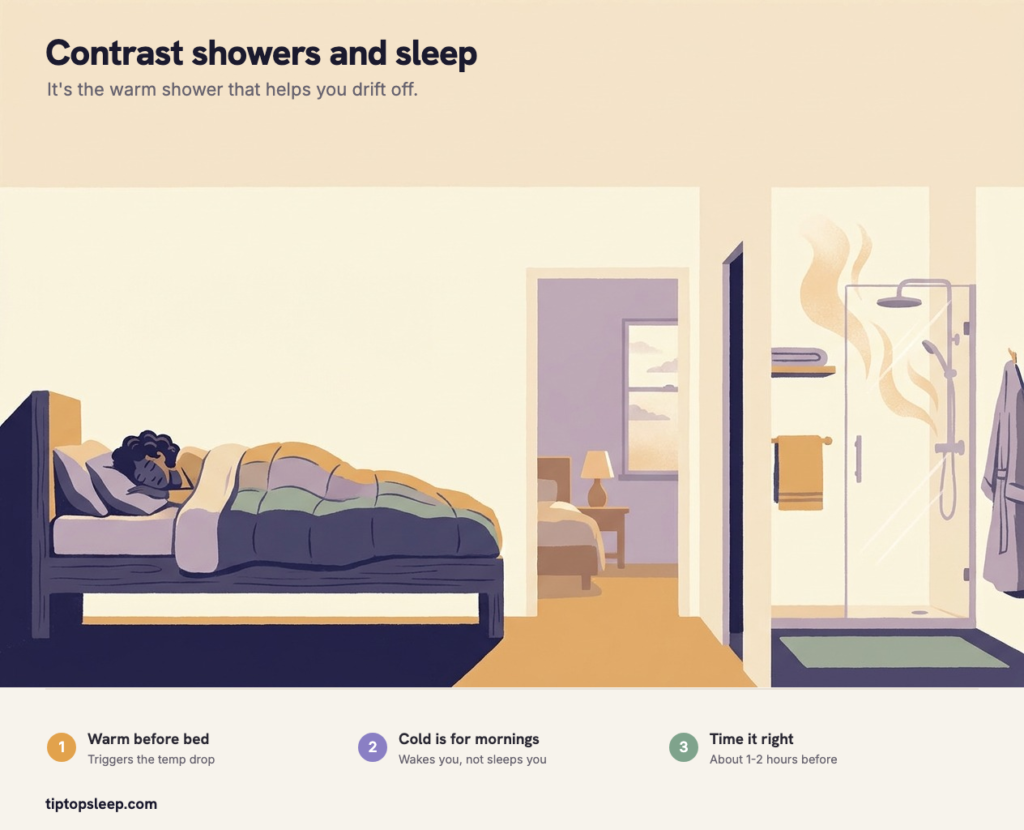
If your goal is better sleep, the shower science actually points to warm, not cold. A warm shower or bath one to two hours before bed helps you fall asleep faster by triggering your body's natural pre-sleep temperature drop. Contrast showers (alternating hot and cold) and cold showers are genuinely useful for circulation, alertness, and recovery - just not right before bed, since the cold part is more likely to wake you up than wind you down.
I get asked about contrast showers a lot, usually by people who've seen them recommended for "everything" - energy, immunity, recovery, even weight loss - and are wondering if they should add one to their nightly routine. I get why it's tempting to stack a trendy wellness habit onto your evening. But when I actually looked into what a contrast shower does to your body versus what a warm shower does, the sleep case for them pointed in opposite directions. Here's the honest version.
What is a contrast shower?
A contrast shower means alternating between hot and cold water in the same session, usually over several cycles - a minute or two of hot, then 20 to 30 seconds of cold, repeated three or four times, typically finishing on cold. It's borrowed from contrast water therapy, a recovery technique used by athletes and physical therapists to alternate blood vessel dilation and constriction.
The theory is that the temperature swings act like a pump for your circulatory system: heat dilates blood vessels and relaxes muscles, cold constricts them and reduces inflammation, and cycling between the two is supposed to flush blood through tissue more effectively than either temperature alone.
Does a contrast shower actually help you sleep?
Here's the part that gets skipped in a lot of "benefits of contrast showers" content: the temperature effect that's actually proven to help sleep is the opposite of what a contrast shower ends on.
Sleep Foundation explains the mechanism behind the well-established "warm bath effect": "In the hours before bedtime, a human's core body temperature naturally cools, while skin temperatures of the hands and feet increase. Scientists hypothesize that immersing the body in warm water aids this natural temperature regulation process, improving sleep as a result." In other words, a warm shower speeds up a temperature drop your body is already trying to do before sleep, and that drop is part of what signals it's time to wind down.
A cold shower does close to the opposite. Cold exposure spikes alertness and triggers a stress-hormone response, which is exactly why people take cold showers to wake up in the morning or to feel sharper before a workout. If a contrast shower finishes on cold, as most guides recommend for the circulation benefit, that's not the signal you want your body getting at 10pm. For sleep specifically, the honest recommendation is a warm shower before bed, not a contrast or cold one.
When should I actually take a warm shower for sleep, and how warm?
- Timing: Sleep Foundation notes that "those who bathe or shower one to two hours before bedtime also fall asleep faster," and that this window "gives the body enough time to reach the right temperature for sleep." A shower taken right at lights-out doesn't give your body time to complete the cool-down.
- Temperature: A meta-analysis Sleep Foundation cites found that "taking an evening shower or bath in water between 104 and 108.5 degrees Fahrenheit improves sleep quality." That's a comfortably hot shower, not scalding.
- Duration: You don't need a long soak. Ten to fifteen minutes is enough to raise skin temperature and kick off the cooling response afterward.
If you're also dialing in your bedroom temperature, it's worth pairing this with the best room temperature for sleep - the shower does the internal work, the room needs to support it afterward.
So when are contrast or cold showers actually worth it?
Contrast and cold showers have real, reasonable use cases - they're just morning or midday tools, not bedtime ones.
- Alertness. The jolt of cold water is a legitimate way to feel more awake, which is useful first thing in the morning but works against you at night.
- Circulation. Alternating vessel dilation and constriction is a real physiological effect; people use it to feel less stiff or sluggish during the day.
- Post-workout recovery. Contrast water therapy is popular with athletes for perceived muscle soreness relief, though the research on how much it actually speeds recovery (versus how much is placebo and just feeling more alert) is mixed. If you're timing a shower around a workout, our guide on sleeping after a workout covers how to keep evening exercise from wrecking your sleep too.
- Mood. Plenty of people report feeling more energized and positive after a cold or contrast shower. That's a legitimate benefit - it's just an argument for morning, not night.
- Immune and weight-loss claims. These are the two you'll see oversold the most. Evidence that cold exposure meaningfully boosts immune function or burns significant fat in humans is thin and largely inconclusive. Treat these as "maybe, modestly" rather than proven benefits.
The simplest way to think about it: cold and contrast showers wake you up, warm showers wind you down. Use each one where it actually helps.
What kind of shower head makes a warm bedtime shower easier?
None of this requires special gear, but if your current shower head has weak pressure or your water is hard, it can make a 10 to 15 minute warm shower feel like a chore instead of something relaxing. A better shower head doesn't change the sleep science, but it can make the habit easier to stick to.

MakeFit Filtered Rainfall Shower Head with Handheld
A wide rainfall head paired with a filtered handheld wand, built for the kind of slow, full-coverage warm shower that actually gives your body time to warm up before bed. The filter cartridge is a nice bonus if you're dealing with hard water that leaves skin dry and hair dull. Nothing fancy required to get the sleep benefit, but a shower that feels good is a shower you'll actually take at the right time.
Building out a full wind-down routine? Our Sleep Toolkit rounds up the gear we trust for better sleep, night after night.
Frequently asked questions
Is a cold shower before bed good or bad for sleep?
It's not ideal. Cold water triggers alertness and a stress-hormone response, which works against the wind-down your body is trying to do before sleep. Save cold showers for mornings or post-workout, and take a warm one before bed instead.
What temperature shower is best before bed?
Research cited by Sleep Foundation points to water between 104 and 108.5 degrees Fahrenheit, taken one to two hours before bedtime, as the range linked to improved sleep quality.
Do contrast showers help with sleep at all?
Not directly, and if the shower ends on cold, it can work against sleep. The proven sleep benefit comes from the warm phase alone, not the hot-cold alternation.
How long before bed should I shower?
One to two hours before bedtime is the window that gives your body enough time to warm up and then cool back down, which is the drop that helps you fall asleep faster.
Related reading:
- What Is the Best Temperature for Sleep?
- Sleeping After a Workout
- Sleep Hygiene Checklist
- How to Sleep When It's Hot
- Sleep Toolkit - the gear we actually recommend for a better wind-down
Sources & review: The body-temperature mechanism, timing, and water-temperature guidance here are checked against Sleep Foundation's review of showers before bed. This is general sleep-hygiene information, not medical advice, and doesn't replace guidance from your doctor - talk to them about what's right for you, especially if you have a cardiovascular or circulatory condition before trying cold or contrast showers.
📥 Free: The Post-Surgery Sleep Recovery Kit
Our 2-page PDF - the safe sleep position for your surgery, how to set up your bed, a night-by-night recovery timeline, and the red flags worth calling your doctor about. We'll email you the download link.
By subscribing you agree to our Privacy Policy.