

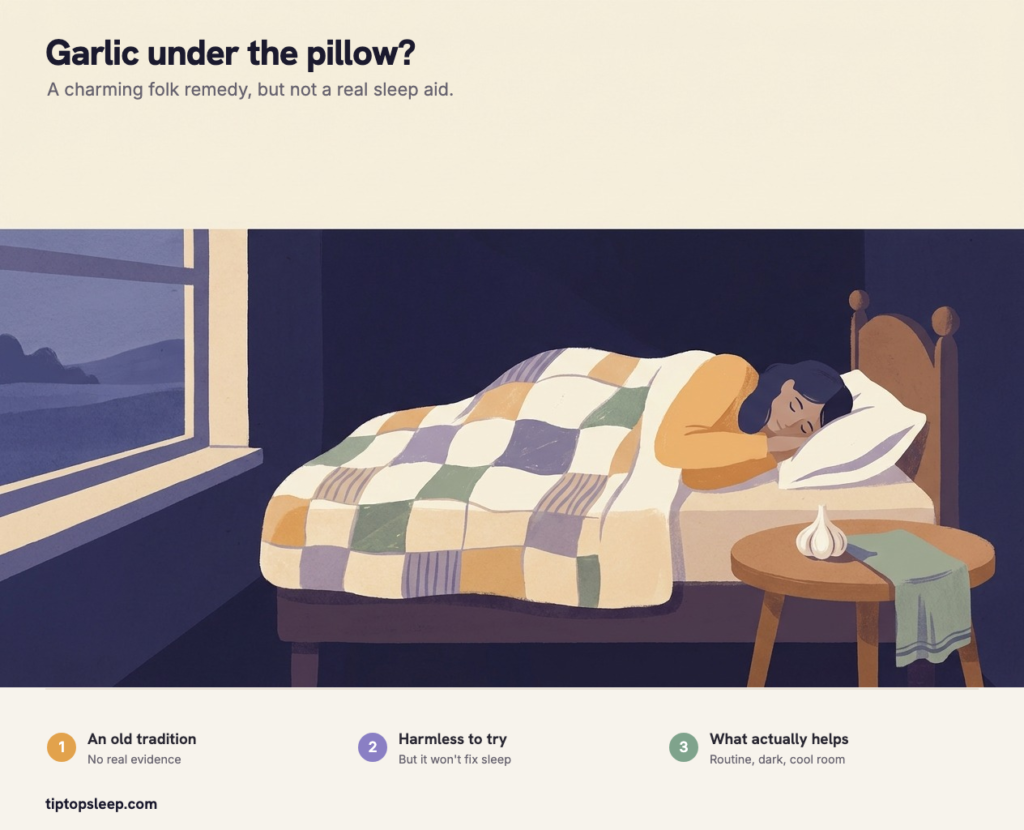
Putting a clove of garlic under your pillow is old folk wisdom, not sleep science - there's no research showing it improves sleep. What it can do is give you a calming little bedtime ritual, and a ritual itself is worth something. If you actually want better sleep, the evidence points somewhere much less romantic: a consistent schedule, a cool dark room, and winding down properly before bed.
My grandmother tucked a clove of garlic under her pillow most of her life, right next to a small dish of salt on the windowsill "for luck." She swore by it, and I'm not going to stand here and tell you she was foolish - people have done this for generations, across more cultures than you'd expect. But I write a sleep site for a living, which means I owe you honesty over nostalgia. So let's talk about where this one actually came from, and what to do instead if you want your sleep to change.
Where does the garlic-under-the-pillow idea come from?
It's an old folk remedy, really two or three older beliefs stitched together. In parts of Europe, garlic was hung in doorways and tucked into bedding as protection against evil spirits and bad dreams - the same folklore that gave us garlic-repels-vampires. Separately, garlic has a long history as a home remedy for colds and congestion, so slipping a clove under the pillow got passed along as a way to "breathe it in" overnight and wake up less stuffy. The smell itself - strong, sulfurous, unmistakable - probably helped the belief stick. If you can smell something working, it feels like it must be doing something.
None of that makes it a bad tradition. It makes it exactly what it is: folklore, not medicine.
Does garlic under your pillow actually help you sleep?
No - there's no clinical evidence that a clove of garlic near your head does anything to your sleep. Nobody has run a trial putting garlic under one group's pillows and a plain object under another's and found a measurable difference in how people slept. The pungent-smell-clears-your-sinuses idea doesn't hold up as a sleep aid either; a strong smell a few inches from your face is just as likely to wake a light sleeper as help one. Garlic's real, researched health properties - heart health, immune support - come from actually eating it, not from smelling it while you sleep.
So if you've tried it and slept fine, that's genuinely worth something to you - it just isn't the garlic doing the work.
So why does it feel like it helps some people?
Because the ritual around it is doing something real, even if the clove itself isn't. Placing something under your pillow before bed, the same way, every night, is a small act of intention - it's a signal to your brain that the day is done and sleep is coming next. That's not nothing. The Sleep Foundation is blunt about how much routine matters generally: "Strong sleep hygiene means having both a bedroom environment and daily routines that promote consistent, uninterrupted sleep." A calming pre-bed habit, garlic clove included, can be part of that - it's the consistency and the wind-down effect that helps, not anything chemical passing from the clove into your skull overnight.
I'd put it in the same drawer as a bedtime cup of chamomile tea or a favourite blanket: harmless, comforting, and worth keeping if it makes bedtime feel calmer to you. Just don't expect it to fix a real sleep problem.
What actually helps you sleep (the less charming, more effective list)
If you're dealing with real trouble sleeping, this is where the evidence actually lives:
- Keep a consistent sleep schedule. Going to bed and waking up at roughly the same time, even on weekends, trains your body's clock far more reliably than anything you place near your head.
- Make the room dark, cool and quiet. Around 65°F (18°C) is the commonly cited sweet spot; blackout curtains or a sleep mask and earplugs or white noise handle the rest.
- Build a real wind-down routine. Twenty to thirty minutes of something calm and screen-free - reading, stretching, a warm shower - signals your brain that sleep is next, the same way that clove-under-the-pillow habit does, just with better odds behind it.
- Watch caffeine later in the day. It lingers in your system far longer than it feels like it does; the CDC notes that avoiding caffeine, especially in the afternoon and evening, is one of the practical steps that supports healthy sleep.
- Put the phone down before bed. A device-free buffer of thirty to sixty minutes before lights-out helps far more than any smell ever could.
None of that is as charming as a clove of garlic tucked into a pillowcase. But it's what actually moves the needle, and you can layer your favourite ritual on top of it rather than instead of it.
What about eating garlic - does that help sleep?
This is where garlic earns its reputation, just not the way the folk tale has it. Eaten regularly, garlic has real, well-documented health benefits - supporting heart health and blood pressure, and giving a boost to immune function. A body that's generally healthier tends to sleep somewhat better too, in the same indirect way that eating well and moving daily support sleep. But that's a general-health effect from eating garlic, not a bedtime hack from smelling it. If you like garlic, eat it with dinner. Just give your pillow the night off.

MZOO Contoured Sleep Mask
If you want something to actually change your sleep tonight, blocking light does far more than any smell under your pillow - the contoured cups keep it off your eyes without pressing on them.
For the fuller list of things worth trying, see our Sleep Toolkit - it's built around what actually has evidence behind it, not folklore. And if magnesium has come up in your own research into sleep aids, our honest look at whether magnesium really helps sleep covers the same ground: real evidence, no miracle claims.
Frequently asked questions
Is it bad to sleep with garlic under your pillow?
No - it's harmless for most people. The main downsides are practical: it can smell strong enough to bother a partner, and a clove left in a pillowcase can bruise, leak, or leave an oily mark over time. There's no health risk to having it nearby while you sleep.
Does garlic repel bad dreams?
That's the folklore version of the tradition, tied to garlic's older reputation for warding off evil spirits. There's no evidence garlic affects dreaming one way or the other - what changes your dreams is more likely to be stress, screen time before bed, or what you ate that evening.
Can smelling garlic help a cold or stuffy nose at night?
Not in any proven way. Eating garlic is linked to general immune support, but a clove sitting near your face isn't shown to clear congestion. For an actually stuffy nose at bedtime, a warm shower, a humidifier, or an extra pillow to prop your head up will do more.
What should I do instead if I want a bedtime ritual that helps sleep?
Keep the ritual, change what's in it. Try the same calming sequence every night - dim the lights, put the phone away, maybe read a few pages - at the same time each evening. The consistency is what helps; the specific object is optional.
Related reading
- Best magnesium for sleep
- The power nap, done right
- How to stop worrying about not sleeping
- The Sleep Toolkit
Sources & review: This is a folklore topic with no clinical research behind the practice itself; the sleep-hygiene guidance here is researched against the Sleep Foundation and the CDC. It is general information, not medical advice - if poor sleep is a persistent problem for you, it's worth talking to your doctor.
📥 Free: The Post-Surgery Sleep Recovery Kit
Our 2-page PDF - the safe sleep position for your surgery, how to set up your bed, a night-by-night recovery timeline, and the red flags worth calling your doctor about. We'll email you the download link.
By subscribing you agree to our Privacy Policy.