

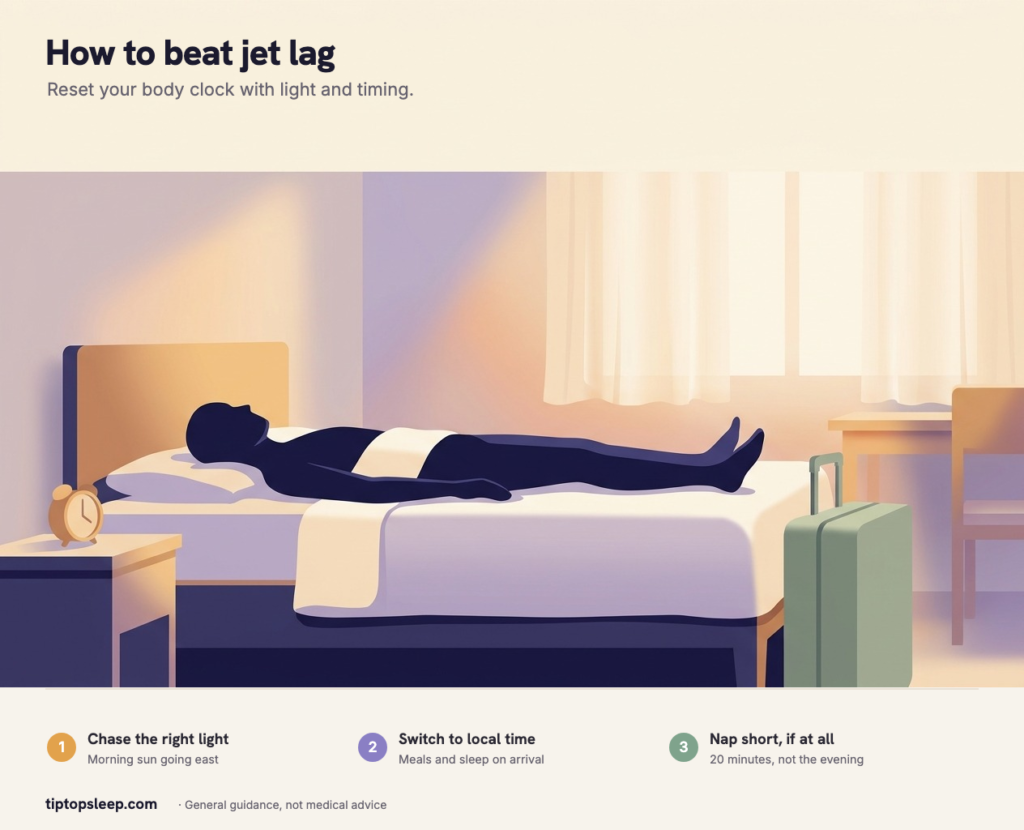
Jet lag fades faster when you manage light, not just sleep. Flying east, get bright light in the morning at your destination; flying west, get light in the evening. Switch your meals and bedtime to local time the moment you land, keep naps short (20-30 minutes, early in the day), go easy on alcohol and caffeine, and drink plenty of water. As a rough rule, budget about a day per time zone crossed before you feel normal again.
I've done the maths-teacher stare into an airport ceiling at 4am more times than I can count, wide awake while everyone around me is asleep on the floor by the gate. Jet lag isn't really about being tired - it's about your body being convinced it's the wrong time of day, and no amount of willpower argues it out of that. The good news is there's a small set of things that genuinely help, and they're mostly about when you let light in, not what pill you take. Here's what actually works.
Why jet lag happens (and why east is worse)
Your body runs on an internal clock, tucked in the brain, that expects light and darkness at roughly the same time every day. The Sleep Foundation describes jet lag as "a circadian rhythm sleep-wake disorder that occurs when your 24-hour internal clock does not match the local day-night cycle." Cross a few time zones by plane and your clock is suddenly hours out of step with the sun outside your hotel window - hence the fog, the 3am wide-awakes, and the afternoon slump.
Most people find eastward travel harder. The Sleep Foundation notes that roughly 75% of people find jet lag worse travelling east than west, though this varies from person to person. Flying east asks your body to fall asleep earlier than it's used to - a harder ask for most internal clocks than the westward version, which just means staying up later, closer to what an ordinary late night already feels like.
As a rough rule of thumb, expect symptoms to ease over roughly a day per time zone crossed. Fly six zones east and it's reasonable to feel off for the better part of a week.
What actually works
Sleeping pills and sheer stubbornness don't reset a body clock - light does. In order of impact:
- Time your light exposure to the direction you're flying. East, get bright morning light at your destination to move your clock earlier; west, seek evening light to move it later. Light at the wrong time can push your clock the wrong way, so this matters more than anything else here.
- Switch meals and bedtime to local time the moment you land, not gradually. It gives your body a clear cue to follow, even before it's fully caught up.
- Keep naps short and early - 20 to 30 minutes, not a long afternoon sleep that eats into the sleep pressure you need for your first proper local night.
- Stay hydrated and go easy on alcohol and caffeine, especially in the air. Cabin air is drying, and both disrupt the sleep you're trying to bank.
- Build in a buffer if you can. The CDC suggests arriving at least two days before anything important, giving your body a head start.
Before you fly, on the plane, and your first days there
Jet lag recovery isn't one trick - it's a handful of small, well-timed habits stacked across your trip:
- Before you fly: If you have a few days' notice, start nudging your bedtime toward your destination's time - later for westbound trips, earlier for eastbound ones. Even an hour or two of head start helps.
- On the plane: Set your watch to destination time as soon as you board. The CDC's practical advice: "Drink plenty of water," avoid alcohol since it disrupts sleep, and use caffeine "strategically," avoiding it in the evening hours relative to where you're headed.
- First days at your destination: Get outside during the day - the CDC notes it "might help to stay in well-lit areas at your destination during the day." Eat on local mealtimes, keep any naps to 20-30 minutes and take them early, and go to bed at your new local bedtime even if you don't feel sleepy yet.
What about melatonin?
Melatonin has a real, if narrower, role here: it can help some travellers reset their clock, especially flying east, when taken at the right time. It's a circadian tool rather than a general sleep aid - taken at the wrong time of day, it can shift your clock the wrong direction, and it isn't the right choice for everyone. Supplement quality varies a lot too, particularly where melatonin is sold over the counter. If you want to try it, talk to a doctor or pharmacist first about dose and timing for your trip.
Your travel sleep kit
Since light timing is your strongest lever, the most useful gear is whatever lets you grab sleep when your body clock is fighting you - on the plane and in an unfamiliar room. Three things do most of the work.

MZOO Contoured Sleep Eye Mask
Controlling light is the strongest lever for resetting your body clock - a contoured blackout mask lets you sleep on the plane and in a bright hotel room when your body says it's daytime.

Loop Quiet 2 Ear Plugs
Strange rooms, thin hotel walls and early-morning street noise all wake a jet-lagged brain that's only lightly asleep. Soft reusable earplugs take the edge off so you can hold onto the sleep you do get.

Zionclicks Memory Foam Travel Neck Pillow
Sleeping on the plane at your destination's night-time is one of the fastest ways to arrive already adjusted - a firm neck pillow keeps your head steady so that flight sleep actually happens.
Want the full kit for travel and beyond? See our Sleep Toolkit for the masks, earplugs and other gear worth packing.
Common mistakes
- Napping for hours on arrival. It feels wonderful and wrecks your first local night's sleep. Keep it short and early, or skip it if you can hold out until bedtime.
- Getting bright light at the wrong time. Flying east and soaking up evening sun can nudge your clock the wrong way. Match your light exposure to your direction of travel.
- Staying on "home time" out of habit. Delaying meals and bedtime to match your old clock only delays the adjustment. Switch as soon as you land.
- Assuming melatonin fixes everything. It can help in the right circumstances, but it's not a substitute for managing light, meals and sleep timing - and it isn't right for every traveller.
Frequently asked questions
Is jet lag worse flying east or west?
For most people, yes - flying east is harder because it asks your body to fall asleep earlier than usual, which is a tougher adjustment for most internal clocks than the "stay up later" demand of westward travel.
How many days does jet lag last?
As a rough guide, expect roughly a day of adjustment per time zone crossed, though this varies by person and by how well you manage light, meals and sleep timing on arrival.
Should I nap when I land?
A short nap - 20 to 30 minutes, earlier in the day - can help without undermining your first night's sleep at the new local time. Long or late naps tend to make the adjustment slower.
Is melatonin safe for jet lag?
It can help some travellers, particularly flying east, but timing matters and it isn't the right choice for everyone. Talk to a doctor or pharmacist before trying it, especially if you're on other medication.
Sources & review: Guidance here is general travel-comfort advice, researched against travel health information from the CDC and educational content from the Sleep Foundation. It is not medical advice - if you have a health condition or take medication, check with your doctor before changing your sleep schedule or trying melatonin.
📥 Free: The Post-Surgery Sleep Recovery Kit
Our 2-page PDF - the safe sleep position for your surgery, how to set up your bed, a night-by-night recovery timeline, and the red flags worth calling your doctor about. We'll email you the download link.
By subscribing you agree to our Privacy Policy.