

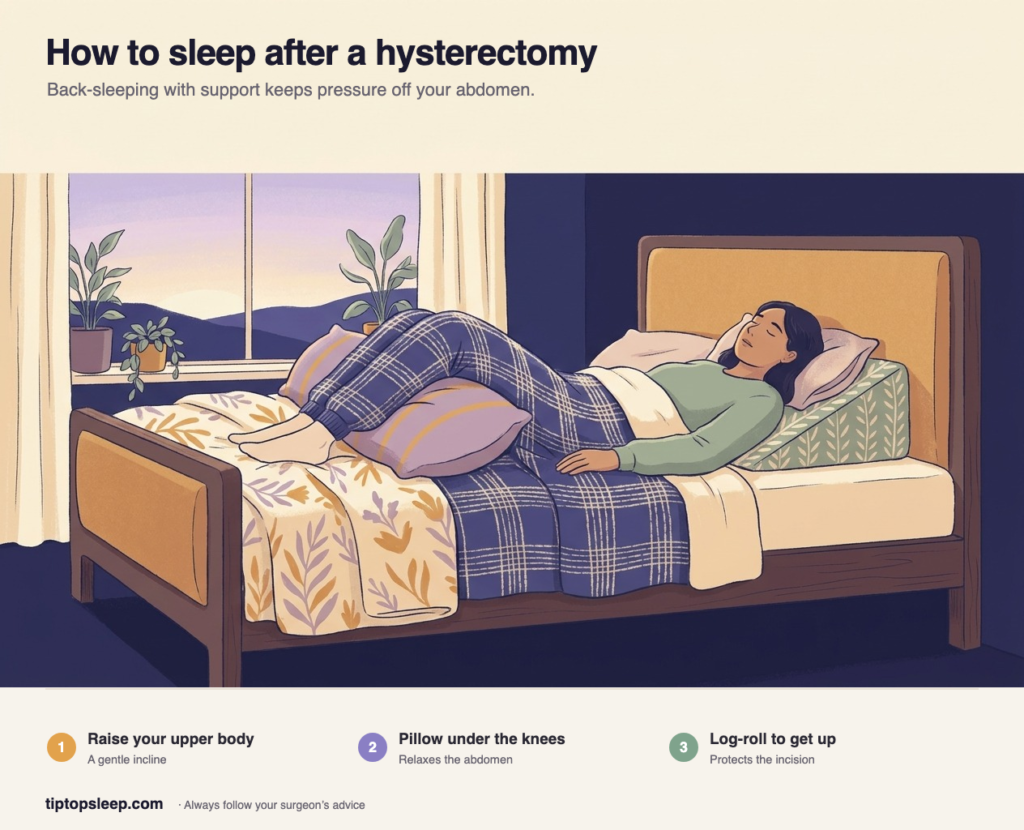
In the first days after a hysterectomy, sleep on your back with your upper body gently raised and a pillow under your knees, or on your side with a pillow supporting your abdomen - whichever keeps pressure off your belly. To get up, log-roll: turn onto your side, push up with your arms, then let your legs drop off the bed rather than sitting straight up. The right setup depends a little on which type of hysterectomy you had, so follow your surgeon's specific instructions alongside this.
A hysterectomy is a big operation, however it's done, and the first nights afterward can feel like a puzzle - how do you lie down, or get up, without pulling at something that's still healing? I've sat with family members through this recovery and heard from countless readers about those same tender first weeks. The good news is that a few deliberate changes to how you set up your bed make a real difference. Here is exactly what to do.
The best position: propped on your back, or on your side with support
Whether your incision is across your lower abdomen (abdominal hysterectomy), tucked inside with no visible cut (vaginal hysterectomy), or a few small cuts (laparoscopic, including robotic-assisted), the goal is the same: keep your core relaxed and avoid stretching or bearing weight through the area that's healing. Two positions tend to work best:
- On your back, upper body gently raised. Prop yourself up on a wedge pillow or a stack of firm pillows so you're at a mild incline instead of lying completely flat. This keeps your abdominal wall relaxed rather than stretched.
- A pillow under your knees. Slightly bending your knees takes tension off your lower abdomen and pelvic area.
- Or, on your side with a pillow hugged against your abdomen. Many people find this just as comfortable, and it can make getting up a little easier than rolling from flat on your back.
To get out of bed, use the log-roll: roll onto your side first (lead with your arms, not your abdominal muscles), then push yourself up into a sitting position while letting your legs swing off the edge of the bed. Avoid sitting straight up from flat on your back - that pulls directly on healing tissue. If you had an abdominal incision, holding a small pillow against it when you cough or laugh gives it support and eases the discomfort.
One important note: recovery advice genuinely varies by the type of hysterectomy you had. An abdominal hysterectomy involves a real incision through the abdominal wall and tends to need more of the propping-up approach above, for longer. Vaginal and laparoscopic hysterectomies have little or no external abdominal incision and often feel more comfortable sooner - but the log-roll still helps everyone. Always follow your surgeon's specific instructions for your procedure.
Your first weeks, night by night
Recovery timelines vary by surgical approach and by person, but there's a general shape to it. Cleveland Clinic notes that "most people recover from a hysterectomy in about four to six weeks," adding that "vaginal and laparoscopic recoveries take about two to four weeks." Your sleep tends to follow a similar arc:
- Days 1-5: Mostly propped up on your back or side-lying with abdominal support. Time your pain relief so a dose covers your longest stretch of sleep, and log-roll every time you get up.
- Week 1-2: Many people feel steadier getting in and out of bed, though bending, twisting or sitting straight up can still pull. Walking a little more each day is usually encouraged and helps circulation.
- Weeks 3-6: Soreness gradually eases and normal side-sleeping starts to feel natural again. The NHS notes it "can take about 6 to 8 weeks to fully recover after having an abdominal hysterectomy," with vaginal and laparoscopic recovery generally shorter - most people are cleared for their usual activities and sleeping positions around this point, at a follow-up check.
Positions and moves to avoid at first
- Sitting straight up from flat on your back - this uses your core muscles directly against the healing area. Log-roll instead, every time.
- On your stomach - direct pressure on your abdomen and pelvic area; most people find it too uncomfortable in the early weeks anyway.
- Twisting at the waist - reaching for a phone or a glass of water from bed can pull at the incision. Turn your whole body instead.
- Lying completely flat with no support - fine once healed, but early on it can make getting up harder and gives a sore abdomen no relief.
- Heavy lifting of any kind - including hauling yourself up by your abdominal muscles. Rest is genuinely part of healing here, not a sign of weakness.
The one thing that makes this easier
Pillows alone tend to slip and flatten through the night. A proper bed wedge holds a steady incline so you're not rebuilding your setup every time you wake - readers recovering from abdominal surgery consistently tell me it's the single most useful thing by the bed.

Kölbs Bed Wedge Pillow
A firm wedge holds a gentle upper-body incline so getting in and out of bed is easier and your abdomen stays relaxed - the most useful single item for the first tender weeks after abdominal surgery.
Want the full kit? See our Sleep Toolkit for the wedge pillows, cooling pads and other helpers worth having during recovery.
When to call your doctor
Some soreness and disrupted sleep is expected. These signs are not - contact your doctor or seek urgent care if you notice:
- Heavy vaginal bleeding, soaking a pad within an hour, or passing large clots.
- Increasing redness, swelling, warmth, or drainage from an incision (possible infection).
- A fever, or pain that keeps getting worse instead of better.
- Pain or swelling in one leg (calf pain is a common early sign), or chest pain and shortness of breath - these can signal a blood clot and need urgent attention.
When in doubt, call. You've just had major surgery and you're allowed to ask for help.
Frequently asked questions
What is the best sleeping position after a hysterectomy?
Most people find it most comfortable on their back with the upper body gently raised and a pillow under the knees, or on their side with a pillow supporting the abdomen. Which one suits you best can depend on whether you had an abdominal, vaginal, or laparoscopic procedure, so let comfort guide you and check with your surgeon if something feels wrong rather than just sore.
How do I get out of bed after a hysterectomy without hurting myself?
Use the log-roll: turn onto your side using your arms, then push yourself up to sitting while letting your legs drop off the edge of the bed. Avoid sitting straight up from flat on your back, which pulls directly on healing tissue.
How long until I can sleep normally after a hysterectomy?
It varies by surgical approach - vaginal and laparoscopic hysterectomies often feel more comfortable within two to four weeks, while recovery from an abdominal hysterectomy tends to take longer, up to six to eight weeks for full recovery. Everyone heals at a different pace, and your surgeon's guidance for your specific procedure is what matters most.
Is it safe to sleep on my side after a hysterectomy?
For many people, yes, once the first very tender days have passed, especially with a pillow supporting the abdomen. Ease into it gradually and stop if it pulls or feels wrong, and check with your surgeon if you're unsure.
Sources & review: Guidance here is general comfort advice, researched against post-operative recovery information from the NHS and Cleveland Clinic. It is not medical advice and does not replace your surgeon's instructions - always follow the specific guidance you were given for your type of procedure, and contact your care team with any concerns.
📥 Free: The Post-Surgery Sleep Recovery Kit
Our 2-page PDF - the safe sleep position for your surgery, how to set up your bed, a night-by-night recovery timeline, and the red flags worth calling your doctor about. We'll email you the download link.
By subscribing you agree to our Privacy Policy.