

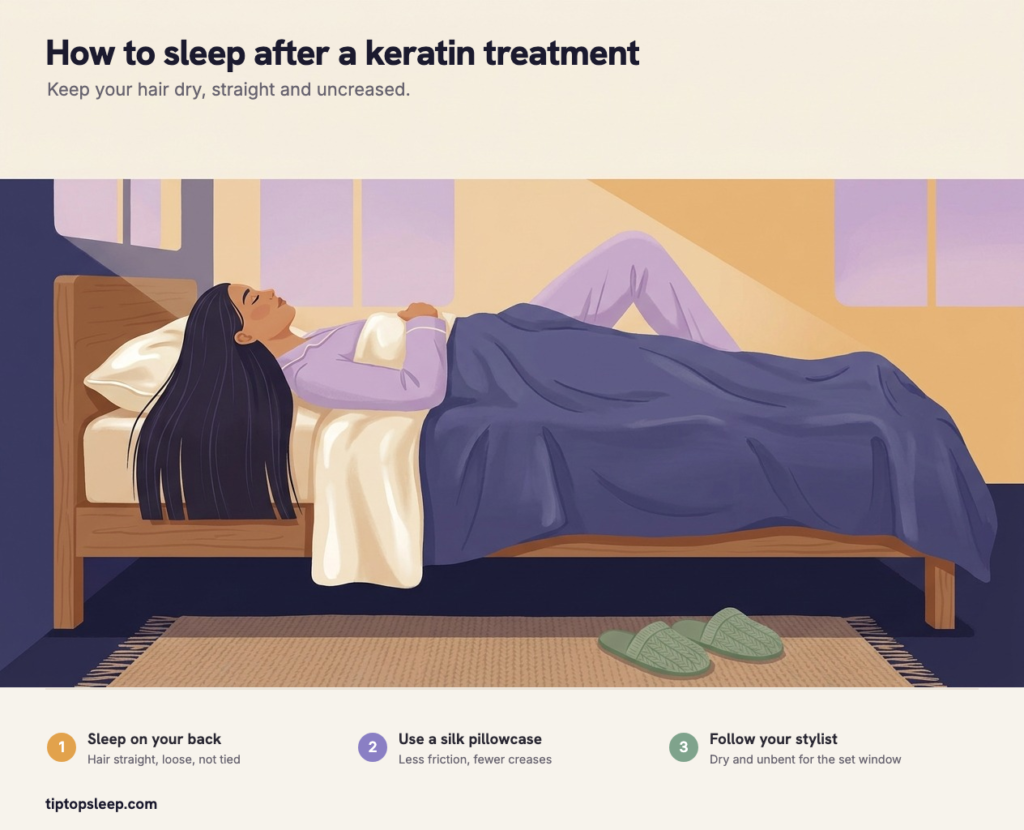
Sleep on your back with hair down and straight for however long your stylist tells you to keep it dry (commonly 48-72 hours). Skip the ponytail, the clip, and the messy bun - any bend or tie can leave a crease or dent while the keratin is still bonding. A silk or satin pillowcase helps too, since it lets hair glide instead of catching and creasing against the fabric.
I got a keratin treatment years ago mostly because I was tired of fighting frizz every morning, and nobody warned me that the first two nights of sleep would be the hardest part of the whole process. You walk out of the salon with flat, glossy hair and then realize you have to somehow keep it that way through eight hours of unconscious tossing and turning. It's doable, it just takes a bit of planning before bed rather than during it.
Why does sleeping mess up a fresh keratin treatment?
A keratin or Brazilian blowout treatment works by using heat to bond a protein formula into the hair shaft, and that bond needs time - and dryness - to fully set. Until it does, your hair is essentially still "wet" on a molecular level even if it feels dry to the touch. Three things at night work against that setting process:
- Moisture. Sweat, humidity, or even damp air from a shower can interfere with the keratin bonding to the hair shaft, which is why stylists ask you to keep hair completely dry for the first 48-72 hours.
- Creasing. Any tie, clip, headband, or even tucking hair behind your ears can leave a bend or dent that sets into the hair while it's vulnerable, sometimes lasting until your next wash.
- Friction. Rolling around on a regular cotton pillowcase all night creates rubbing that can add texture and waviness right where you don't want it.
The exact waiting window depends on the specific formula your stylist used - some newer formaldehyde-free treatments allow washing sooner, while traditional ones ask for the full 72 hours. Your stylist's instructions for your specific treatment always override anything general you read here.
What's the best sleeping position after a keratin treatment?
Back-sleeping is the easiest option because it lets your hair lie flat and straight beneath your head with nothing pulling it in different directions.
- Back sleepers: the natural winner. Spread your hair out straight rather than letting it bunch under your neck.
- Side sleepers: try to keep the hair on your "down" side straight rather than folded, and switch sides partway through the night if you can manage it. It's an adjustment, similar to learning to sleep on your back for the first time.
- Stomach sleepers: this is the position most likely to crease hair against the pillow, since your face and hair are both pressed down for hours. If you can't switch positions entirely, at least make sure hair is pulled straight above your head rather than trapped underneath.
Whatever position you land on, the goal is the same: no bends, no ties, no fabric bunching hair up on itself.
Does a silk pillowcase actually help after keratin treatment?
Yes, and it's one of the simplest changes you can make. Cotton fibers are rougher and grip hair as you move, which is exactly the friction and creasing you're trying to avoid in the first few nights. Silk and satin are smoother, so hair slides across the surface instead of catching, which means fewer creases when you wake up and less frizz being worked into freshly treated hair. It won't undo a bad sleeping position, but paired with sleeping on your back it makes a real difference.

ZIMASILK 100% Pure Mulberry Silk Pillowcase
Real mulberry silk on both sides, not just a satin blend, so hair actually glides instead of dragging as you shift positions overnight. Good for the first few fragile nights after a keratin treatment, and worth keeping around afterward since it's gentler on color-treated hair long-term too.
Looking for other low-effort gear that actually earns its spot on the bed? Our Sleep Toolkit rounds up what we trust for situations like this one.
How do I keep my hair dry and straight overnight?
- Keep the bedroom cool. Overheating leads to sweating, and sweat is moisture your hair can't afford right now. A fan or lower thermostat setting helps more than you'd think.
- Skip the shower before bed if you're still inside the dry window - even steam from a hot shower in the bathroom can add humidity to hair that's supposed to stay bone-dry.
- Leave hair completely loose. No ponytails, no buns, no clips holding it back "just for sleep." Anything that bends the hair can leave a mark.
- Don't tuck it behind your ears repeatedly through the night either, if you can help it - it's a small habit but it adds up to the same kind of crease.
- Lay it flat or straight down rather than piling it on top of your head, where it can fold on itself.
What if my hair gets creased anyway?
It happens, and it's not usually a disaster. If you wake up with a slight bend or wave from sleeping, a light pass with a flat iron on a low setting can smooth it back out, since the keratin bond is still there underneath. What you want to avoid is repeated heat styling to fix repeated creasing, since that starts to work against the treatment rather than with it. If creasing keeps happening night after night, it's worth going back to your stylist for a quick touch-up rather than reaching for the iron every morning.
Frequently asked questions
How many nights do I need to sleep carefully after a keratin treatment?
Most salons ask for 48-72 hours of keeping hair dry, straight, and untied, which usually covers 2-3 nights of sleep. Some formaldehyde-free formulas shorten this window. Always follow your stylist's specific timeline for the product they used.
Can I put my hair in a bun to sleep after keratin treatment?
Not during the initial setting window. A bun, ponytail, or clip can leave a crease or dent that sets into the hair. Keep it loose and straight until your stylist clears you to style it normally again.
Is a satin bonnet as good as a silk pillowcase?
A bonnet can help with frizz, but it typically bunches hair together under the fabric, which works against the "keep it straight" rule. A silk or satin pillowcase with hair spread flat and loose is generally the better choice for the first few nights.
What happens if water touches my hair too early?
Moisture from sweat, rain, or steam before the treatment has fully bonded can weaken or undo the straightening effect, meaning the treatment may not last as long or look as smooth. This is why stylists are strict about the dry window - follow their specific timing for your formula.
Related reading:
- How to Sleep With Earrings Comfortably
- How to Sleep With a New Piercing
- Learning to Sleep on Your Back (In 3 Easy Steps)
- How Often Should You Change Your Pillowcase?
- Sleep Toolkit - the gear we actually recommend for situations like this
Sources & review: General aftercare timing checked against professional salon guidance on keratin and Brazilian blowout treatments, including All Things Hair's keratin treatment maintenance tips. Waiting windows vary by formula and salon, so this is general comfort information, not a substitute for your own stylist's specific instructions - always follow what they tell you for your treatment.
📥 Free: The Post-Surgery Sleep Recovery Kit
Our 2-page PDF - the safe sleep position for your surgery, how to set up your bed, a night-by-night recovery timeline, and the red flags worth calling your doctor about. We'll email you the download link.
By subscribing you agree to our Privacy Policy.