

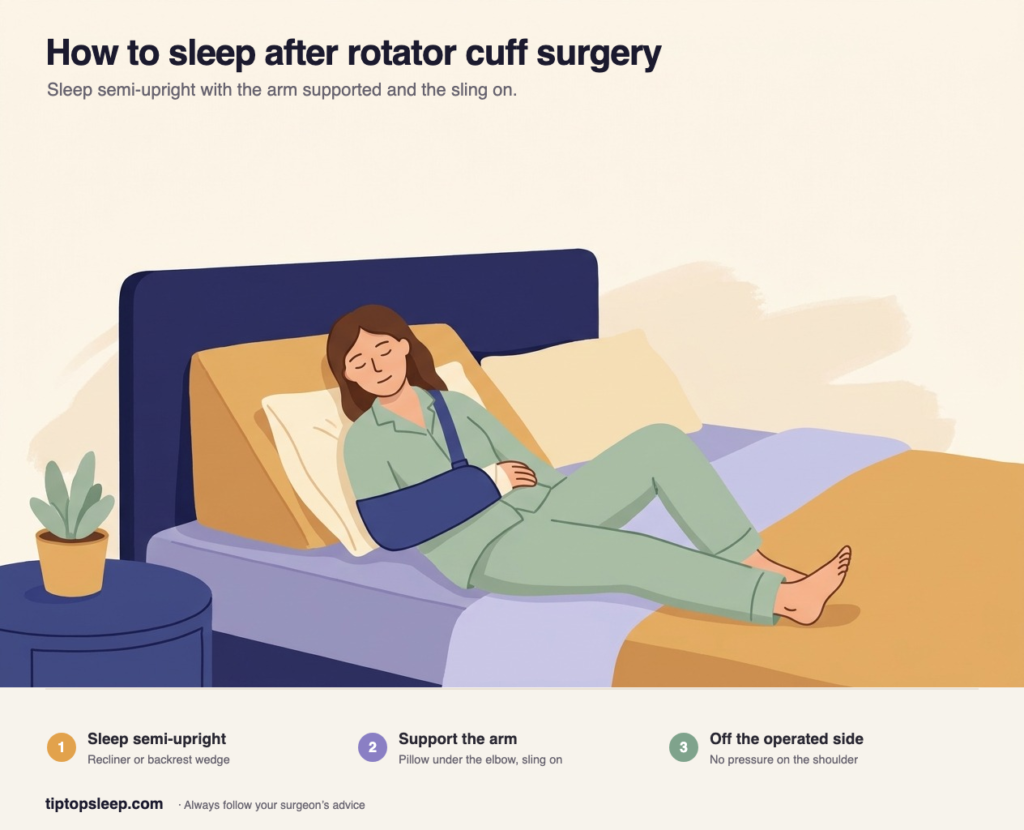
Sleep semi-upright - in a recliner, or propped up on a wedge or backrest in bed - not flat on your back. Lying completely flat lets the shoulder roll back and pulls on the repair, which is why it hurts. Keep your sling on exactly as your surgeon directs, and rest the forearm on a pillow so the arm isn't hanging. Most people move back to lying flatter over several weeks, on their surgeon's guidance.
If you've had rotator cuff repair and you're dreading the nights more than the surgery itself, you're not imagining it. Poor sleep is one of the most common complaints after this operation - more people tell me they struggled with the nights than with the daytime pain. I'm not a surgeon, but I've sat up with family through more than one shoulder recovery, and I've spent a lot of time since researching what actually helps. Here's what the setup that works looks like.
What's the best sleep position after rotator cuff surgery?
Semi-upright, with the arm supported. Lying flat on your back sounds like the "normal" thing to do, but for a healing rotator cuff it tends to let the shoulder drop backward, which stretches the repair and wakes people up. Here's how to set it up:
- Recline, don't lie flat. A recliner chair is genuinely one of the easiest solutions for the first stretch of recovery - many people sleep in one for the first week or two rather than fighting with pillows all night. Cleveland Clinic's own after-surgery advice puts it simply: "You can prop up your arm on a pillow while you're reclining to make it more comfortable."
- No recliner? Build the incline in bed. A firm wedge or backrest pillow behind your back and head achieves the same semi-upright angle without buying new furniture.
- Keep the sling on. Wear it overnight exactly as your surgeon told you to - this isn't a daytime-only precaution.
- Support the forearm and elbow on a pillow so the weight of the arm isn't pulling on your shoulder or left dangling off the side of the chair or bed.
- Keep the operated arm still. No reaching, no pushing yourself up out of bed with that arm - use your other arm and your legs to get up.
How long do I need to sleep like this?
This changes as the repair heals, and your surgeon's timeline is the one that matters - but here's the general shape of it, based on the sling and recovery guidance from the American Academy of Orthopaedic Surgeons (AAOS):
- Weeks 1-6: Sling on day and night, sleeping semi-upright (recliner or propped up in bed). This is usually the hardest stretch for sleep. As AAOS explains, "to keep your arm from moving, you will most likely use a sling and avoid using your arm for the first 4 to 6 weeks," and exactly how long depends on the severity of your tear, your tissue quality, and the type of repair you had.
- Around weeks 6-8: Once your surgeon clears you to reduce or stop the sling, you can usually start lowering the incline gradually, a little at a time.
- Months 2-6 and beyond: As strength and motion return through physical therapy, most people ease back to their normal sleep position - though it's common for a healing shoulder to still feel most comfortable slightly propped for a while longer.
Positions to avoid
- Flat on your back with no incline - lets the shoulder fall backward and puts tension straight through the repair.
- On the operated side - direct pressure on the healing tendon; avoid this until your surgeon says it's fine.
- On your stomach - forces the shoulder into an awkward, rotated position.
- Arm hanging or unsupported - whether you're in a chair or in bed, an unsupported arm pulls at the shoulder all night without you noticing until morning.
The one thing that makes this easier
Not everyone wants to sleep in a recliner for six weeks. A firm backrest pillow with arm support lets you build that same semi-upright position right in your own bed.

Avoilux Bed Rest Backrest Pillow
A firm backrest with arm support lets you sleep semi-upright in bed - the position most shoulder patients find least painful - without needing to buy a recliner.
Want the full kit? See our Sleep Toolkit for more recovery-sleep helpers worth having on hand.
When to call your surgeon
Night pain is expected after this surgery, especially in the early weeks - that's normal and it does ease. These are not, and are worth a call to your surgical team:
- Fever, or redness, warmth or drainage at the incision (possible infection).
- Numbness, tingling, or a hand that feels cold or discolored - can mean the sling is too tight.
- Pain that keeps getting worse or isn't controlled by your medication.
- Calf pain or swelling, or chest pain and shortness of breath - seek urgent care; these can signal a blood clot.
When in doubt, call. That's exactly what your surgical team is there for.
Frequently asked questions
Do I really have to sleep in the sling every night?
Yes, unless your surgeon has told you otherwise. The sling protects the repair while it heals, and that protection matters just as much while you're asleep and not paying attention to your arm.
Can I sleep flat on my back at all?
Most people find it more comfortable to stay semi-upright for the first several weeks, since lying fully flat can let the shoulder roll back and pull on the repair. Follow your surgeon's specific guidance on when it's fine to lie flatter.
How long before I can sleep on my side again?
It varies by person and by repair, but many people wait until well after the sling comes off and their surgeon confirms the shoulder is healing well - often several months. Never sleep on the operated side in the meantime.
Is it normal for the shoulder to hurt more at night than during the day?
Yes, this is a very common complaint after rotator cuff surgery. Without daytime distractions and with less movement to shift position, night pain can feel worse even when healing is on track. Staying semi-upright and keeping the arm well supported usually helps the most.
Sources & review: Guidance here is general comfort information, researched against post-operative recovery guidance from the American Academy of Orthopaedic Surgeons (AAOS) OrthoInfo and Cleveland Clinic. It is not medical advice and does not replace your surgeon's instructions - always follow the specific guidance you were given, and contact your care team with any concerns.
📥 Free: The Post-Surgery Sleep Recovery Kit
Our 2-page PDF - the safe sleep position for your surgery, how to set up your bed, a night-by-night recovery timeline, and the red flags worth calling your doctor about. We'll email you the download link.
By subscribing you agree to our Privacy Policy.