

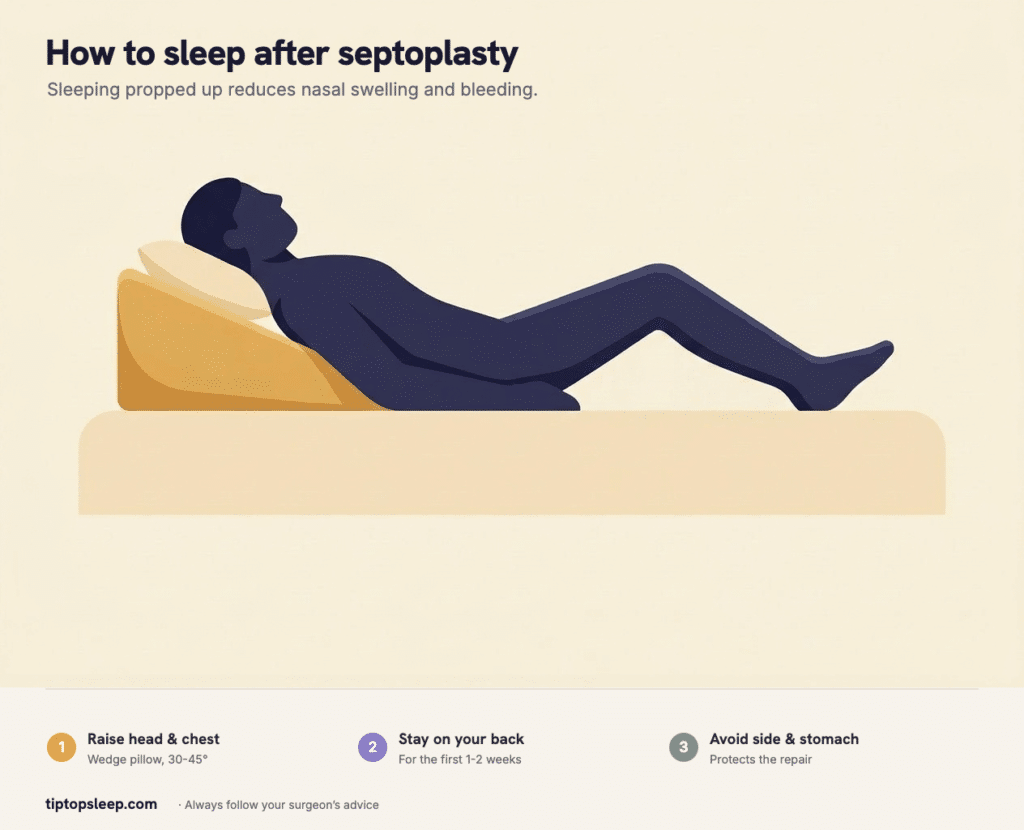
Sleep on your back with your head and chest raised 30-45° on a wedge, for the first 1-2 weeks. This keeps your head above your heart, which cuts swelling, congestion and bleeding. Avoid your side or stomach - any pressure on the nose can undo the surgery's work while it's healing.
If you've just had septoplasty, that first night home is rough. Your nose is packed or splinted, you can't breathe through it, your throat is dry from mouth-breathing, and every instinct tells you to curl up on your side like you always do. I get it - I've talked to enough people going through this to know the first week feels less like recovery and more like survival, especially around 2am when your mouth is bone-dry and you can't remember the last time you slept through the night without waking up gasping for air through your mouth. The good news is there's a simple, well-supported way to sleep that makes it easier, and it's not complicated once you know the why behind it.
The best position: on your back, head raised
The surgeons and nurses who do this every day agree on the basics: back sleeping, head and upper body elevated, for at least the first week or two. Here's how to actually set it up.
- Build a real incline, not a pillow pile. Stack pillows or use a wedge so your head and chest sit at roughly 30-45 degrees. A soft pillow stack tends to collapse by 2am, so a firm wedge holds the angle all night.
- Keep your head above your heart. This is the actual mechanism - gravity helps fluid drain away from your nose instead of pooling in it, which means less swelling and less pressure.
- Stay propped up for naps too. Swelling doesn't pause for daytime rest, so keep the same incline if you lie down during the day, not just at night.
Your first weeks, night by night
Recovery isn't linear, but there's a pattern most people go through. An NHS patient information leaflet on septoplasty puts the elevation rule plainly: "it is important that you sleep at a 30-degree to 45-degree incline to keep the head elevated." Mayo Clinic's guidance follows the same logic, advising patients to sleep on their back with the head elevated through the first week or two after surgery.
- Days 1-3: Expect to be well propped up and breathing mostly through your mouth. Your nose may be packed or splinted, your throat will get dry, and this is normal - not a sign anything's wrong.
- Days 4-14: Still sleeping elevated, but congestion usually starts easing. Splints, if you have them, are often removed around the one-week mark at a follow-up visit.
- Weeks 2-4: Most people can gradually return to normal sleep positions, once swelling has settled and your surgeon has given the go-ahead.
Positions and habits to avoid
- Side sleeping - even light pressure from a pillow against the nose can shift healing tissue or worsen swelling on one side.
- Stomach/face-down sleeping - direct pressure on the nose is the one thing to avoid most in these first two weeks.
- Lying flat - without elevation, fluid and blood pool in the nasal passages overnight, making morning congestion worse.
- Blowing your nose - even to clear it, resist the urge. It can dislodge clots or irritate the healing septum.
The one thing that makes this easier
Honestly, the hardest part isn't knowing you need to sleep elevated - it's staying that way for eight hours straight. Regular pillows shift, flatten, or slide apart, and you wake up flat on your back with your nose throbbing and more congested than when you fell asleep. A dedicated wedge solves that problem because it doesn't compress or migrate the way stacked pillows do, so the incline you start the night with is the incline you wake up with.

Kölbs Bed Wedge Pillow
A firm wedge that holds the 30-45° head-and-chest incline all night, so your nose keeps draining and you're not rebuilding a pillow tower at 3am.
Want more setups like this? Our Sleep Toolkit has other tools people lean on during recovery, from humidifiers to bedside water setups.
When to call your surgeon
- Heavy or persistent bleeding that isn't slowing down
- Fever
- Spreading redness around the nose or face
- Severe pain that isn't easing with your prescribed medication
- Any changes in vision
None of these are things to wait out or talk yourself out of. A little blood-tinged drainage and stuffiness are expected, but anything on this list is worth a call. If you notice any of them, contact your surgeon or seek medical care right away rather than waiting to see if it settles on its own.
Frequently asked questions
How long do I have to sleep elevated after septoplasty?
Most guidance points to the first 1-2 weeks, though your surgeon may adjust this based on how your swelling and splints are healing.
Can I use a regular pillow instead of a wedge?
You can stack a few firm pillows to start, but most people find they slide apart overnight. A wedge holds the angle more reliably, especially in the first week.
Why can't I sleep on my side yet?
Any pressure against the nose, even from a pillow, can aggravate swelling or shift the healing septum. It's a short-term restriction, not a forever one.
Is a dry throat and mouth-breathing normal?
Yes, especially in the first few days while nasal packing or splints are in place. Keep water at your bedside and consider a humidifier in the room to ease the dryness.
Sources & review: This article was researched against an NHS septoplasty patient information leaflet and the Mayo Clinic septoplasty overview, not medical advice - follow your surgeon's instructions for your own recovery.
📥 Free: The Post-Surgery Sleep Recovery Kit
Our 2-page PDF - the safe sleep position for your surgery, how to set up your bed, a night-by-night recovery timeline, and the red flags worth calling your doctor about. We'll email you the download link.
By subscribing you agree to our Privacy Policy.