

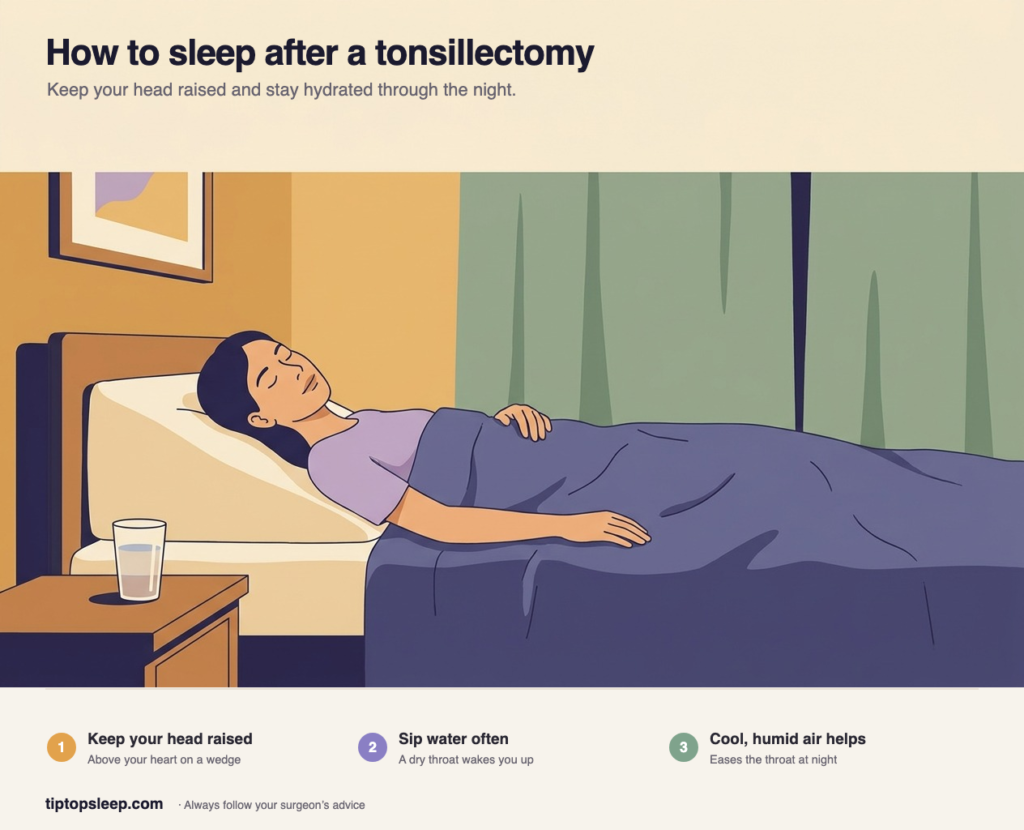
Sleep on your back with your head and upper body raised on a wedge or a couple of firm pillows, and keep a glass of water within arm's reach so you can sip through the night. A dry throat makes the pain much worse, and staying propped up eases the swelling that makes lying flat so uncomfortable in the first days.
The nights after a tonsillectomy catch a lot of people off guard - not just because of the pain, but because everyone assumes it should be getting better every day, and then around day five it doesn't. I've sat up with my own child through a rough post-op night, propping pillows and refilling a water cup more times than I can count. If that's where you are right now, whether it's you recovering or you're the one hovering by a child's bed, here's what actually helps get through the night.
The best position and setup for sleeping after a tonsillectomy
Your throat is swollen and raw where the tonsils were removed, and lying completely flat lets blood and fluid pool there, which tends to make throbbing and swelling worse overnight. Sleeping propped up keeps things calmer. Here's how to set it up:
- Raise your head and upper body. A wedge pillow, or two to three firm pillows stacked under your back and head, keeps you at a gentle incline. This is the single biggest comfort win for the first several nights.
- Keep water at the bedside, not across the room. A dry throat overnight is one of the most common reasons people wake up in real pain. Small, frequent sips - even just wetting the throat - keep things from tightening up while you sleep.
- Run a cool-mist humidifier in the bedroom. Dry indoor air, especially with central heating or air conditioning running, dries the throat out further. A humidifier by the bed takes the edge off night-time throat pain.
- Time your last dose of pain relief so it covers the night. Ask your surgeon exactly when to take it before bed so you're not waking at 3am already behind on pain control.
If you're caring for a child through this, the same principles apply: extra pillows to prop them up, a cup or sippy cup of water close by, and a humidifier running in their room overnight. It is a long few nights for a caregiver too - don't feel like you have to manage it perfectly.
Your recovery, night by night
This is the part that trips people up: tonsillectomy pain doesn't fall steadily. It often gets worse partway through the first week - typically around days 5 to 7 - as the protective white scab over each tonsil bed starts to separate. ENT Health notes the sore throat can last about 7 to 10 days, and sometimes up to two weeks, so don't be alarmed if you hit a rough patch several days in rather than a steady improvement.
- Days 1-4: Sore, swollen, and often the most obviously uncomfortable stretch. Sleep propped up, keep sipping water, and stay ahead of pain relief around the clock.
- Days 5-7 (the pain peak most people don't expect): Pain frequently climbs again here rather than fading, as the scab over the tonsil beds loosens and separates. Ear pain is common too during this stretch - it's usually just the throat and ear sharing nerve pathways, not a sign of an ear infection. Keep up fluids and pain relief on schedule; this is a normal, if miserable, part of healing.
- Week 2 and beyond: Throat pain gradually eases and sleep gets easier without the props. Full healing of the tonsil beds can take a couple of weeks, so keep going gently even once you're feeling mostly back to normal.
What to avoid while you're healing
- Sleeping completely flat - it lets fluid and swelling settle in the throat overnight and tends to make pain worse by morning.
- Letting your mouth and throat dry out - skipping water because swallowing hurts is understandable, but a dry throat is one of the most reliable ways to have a worse night.
- Skipping or delaying scheduled pain medication - waiting until pain is severe makes it much harder to get back ahead of it, especially overnight.
- Hard, crunchy, hot, or acidic foods and drinks close to bedtime - they can irritate the healing tonsil beds right before you're trying to settle down to sleep.
The one thing that makes propped-up sleep easier
Stacked pillows slide apart through the night, which means rebuilding your setup at 2am with a sore throat. An adjustable wedge holds the incline steady and can be lowered gradually as healing progresses, so it's useful well past the first rough week.

Adjustable-Height Bed Wedge Pillow
An adjustable-height wedge keeps your head above your heart to ease throat swelling on the worst nights, then drops lower as you heal - one pillow for the whole recovery.
Want the full kit? See our Sleep Toolkit for the humidifiers, cooling aids and other helpers worth having during recovery.
When to call your surgeon, and when to get urgent help
Some pain, bad breath, and disrupted sleep are a normal part of tonsillectomy recovery. These are not, and need attention:
- Any bright-red bleeding from the mouth, nose, or throat - this is a medical emergency. Go to the emergency room or call emergency services immediately, even if it's a small amount.
- A fever that doesn't come down with medication, or signs of dehydration - very little or no urination, dizziness, or unusual drowsiness.
- Pain that keeps climbing past day seven or isn't touched at all by your prescribed pain relief.
- Trouble breathing, or being unable to keep any fluids down.
When in doubt, call your surgeon's office. If there's any bleeding, don't wait to call - get to the ER.
Frequently asked questions
Why does my throat hurt so much more at night after a tonsillectomy?
Lying flat lets swelling and fluid settle in the throat, and the air tends to be drier overnight, both of which make pain worse. Sleeping propped up, sipping water, and running a humidifier all help take the edge off.
Is it normal for tonsillectomy pain to get worse after a few days?
Yes. Many people feel worse again around days five to seven, as the protective scab over the tonsil beds loosens and separates. It's an expected part of healing, not a sign something has gone wrong - but keep up your pain relief and fluids through it.
Why do my ears hurt after tonsil surgery?
The throat and ears share nerve pathways, so pain from the healing tonsil beds is often felt in the ears too. This referred ear pain is common and not usually a sign of an ear infection, but mention it to your surgeon if you're unsure.
What should I do if I see blood after a tonsillectomy?
Any bright-red bleeding from the mouth or throat needs emergency care right away - go to the ER or call emergency services. Don't wait to see if it stops on its own.
Sources & review: Guidance here is general comfort advice, researched against post-operative recovery information from ENT Health (American Academy of Otolaryngology - Head and Neck Surgery) and the Cleveland Clinic. It is not medical advice and does not replace your surgeon's instructions - always follow the specific guidance you were given, and contact your care team with any concerns.
📥 Free: The Post-Surgery Sleep Recovery Kit
Our 2-page PDF - the safe sleep position for your surgery, how to set up your bed, a night-by-night recovery timeline, and the red flags worth calling your doctor about. We'll email you the download link.
By subscribing you agree to our Privacy Policy.