

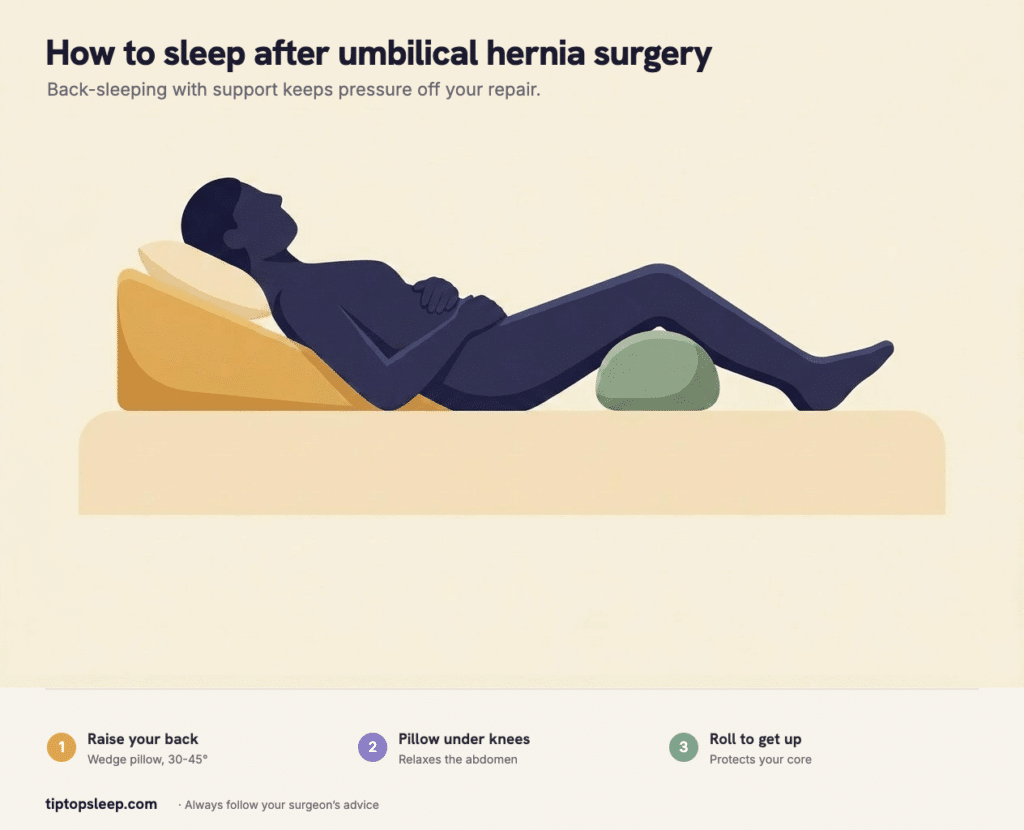
Sleep on your back for the first week or two, upper body slightly raised on a wedge, with a pillow under your knees - this relaxes your abdominal wall and takes pressure off the repair. Hug a pillow against your tummy when you cough, laugh, or shift position. Skip stomach-sleeping and side-sleeping until your surgeon gives the go-ahead, usually a couple of weeks in.
I know how strange it feels the first night home. Your tummy is sore, you're scared to move wrong, and lying down suddenly feels like a puzzle nobody warned you about. I've been there with a friend through her repair, and the good news is that once you find the right setup, sleep gets a lot easier, fast. Here's what actually helped, in plain terms.
The best position: on your back, well supported
Right after umbilical or abdominal hernia repair, your abdominal wall needs to stay as slack and unstrained as possible while it heals. Lying flat on your back with your upper body gently raised does that, and a pillow under your knees takes it a step further by relaxing the muscles that run across your belly. Here's how to set it up.
- Build the incline first. Use a wedge pillow (or stack firm pillows) so your chest and shoulders sit a little higher than your hips - just enough to ease tension on the incision, not a full sitting-up angle.
- Add the knee pillow. Slide a pillow or rolled blanket under your knees so they stay slightly bent. This takes the pull off your abdominal wall and often feels like an instant relief.
- Keep a "hug pillow" within reach. Rest a small pillow against your tummy so you can press it there before you cough, sneeze, or laugh. Splinting the area this way cushions the repair from sudden pressure.
Your first weeks, night by night
Recovery isn't a single milestone, it's a gradual easing back toward normal. The NHS notes that "it usually takes up to 4 to 6 weeks to fully recover from an umbilical hernia repair," so don't be discouraged if week one still feels careful and slow. Sleep tends to loosen up in stages.
- Days 1-3: Stay propped up on the wedge with the knee pillow every night. Movement should be minimal and deliberate. This is when the tummy is most tender and support matters most.
- Days 4-14: Start lowering the incline a little as it feels comfortable, and begin easing toward side-sleeping if your surgeon has said it's fine - always with a pillow braced against your tummy for support.
- Weeks 2-6: Most people can gradually return to their normal sleep position during this stretch. Save stomach-sleeping for last, it puts direct pressure on the repair and should wait until you're confidently past the early healing window.
Positions and moves to avoid
- Stomach-sleeping - direct pressure on the incision, avoid for the first couple of weeks at minimum.
- Lying completely flat with no support early on - skipping the wedge and knee pillow leaves the abdominal wall under more tension than it needs.
- Sleeping on the side that pulls or tugs at the incision - if turning one way feels tight or sore, favor the other side or stay on your back until it settles.
- Sitting straight up out of bed - this uses your core muscles exactly where you don't want strain. Instead, roll onto your side first, then push yourself up with your arms, letting your legs swing down for balance. It feels slower, but it protects the repair.
The one thing that makes this easier
Honestly, the single change that made the biggest difference for my friend was just having a wedge that actually held its shape through the night, instead of a pile of pillows sliding apart by 3am. It sounds small, but not having to readjust constantly meant she actually slept.

Kölbs Bed Wedge Pillow
Holds the incline that keeps gentle pressure off your repair, and doubles later for reflux or reading in bed.
If you're setting up your recovery space from scratch, our Sleep Toolkit has the rest of what helped, from knee pillows to easy-access nightstands.
When to call your surgeon
- A fever that won't settle.
- Redness spreading around the incision, or any discharge or oozing from the wound.
- A bulge coming back at the site, or a hard, painful lump where the repair was.
- Severe or worsening pain that isn't easing with your prescribed painkillers.
- Nausea or vomiting, especially if you can't keep food or fluids down.
These aren't things to sleep on and hope improve by morning. Mayo Clinic is direct about this: "Get emergency medical care if you have nausea, vomiting or fever or if your hernia bulge turns red, purple or dark." When in doubt, call.
Frequently asked questions
Can I sleep on my side after umbilical hernia surgery?
Usually not right away. Most people stay on their back for the first week or two, then ease toward side-sleeping once it's comfortable and their surgeon has given the okay. If a particular side pulls at the incision, favor your back a little longer.
How long do I need the wedge pillow and knee pillow?
Many people find they need the full setup for about the first week, then start lowering the incline and using less support as days 4 through 14 go on. Let comfort be your guide rather than a strict deadline.
Why does a pillow under the knees help so much?
Bending the knees slightly relaxes the muscles across your abdominal wall, which takes tension off the repair site. It's a small adjustment that a lot of people say makes lying down noticeably more comfortable.
When can I go back to sleeping on my stomach?
Stomach-sleeping puts the most direct pressure on the incision, so it's the last position to return to, generally not before the 2-6 week recovery window your surgeon outlines for you, and only once you feel confidently healed.
Sources & review: This article was written from lived caregiving experience and researched against the NHS umbilical hernia repair recovery guidance and the Mayo Clinic hernia diagnosis and treatment page. It is not medical advice - always follow your surgeon's specific instructions for your recovery.
📥 Free: The Post-Surgery Sleep Recovery Kit
Our 2-page PDF - the safe sleep position for your surgery, how to set up your bed, a night-by-night recovery timeline, and the red flags worth calling your doctor about. We'll email you the download link.
By subscribing you agree to our Privacy Policy.