

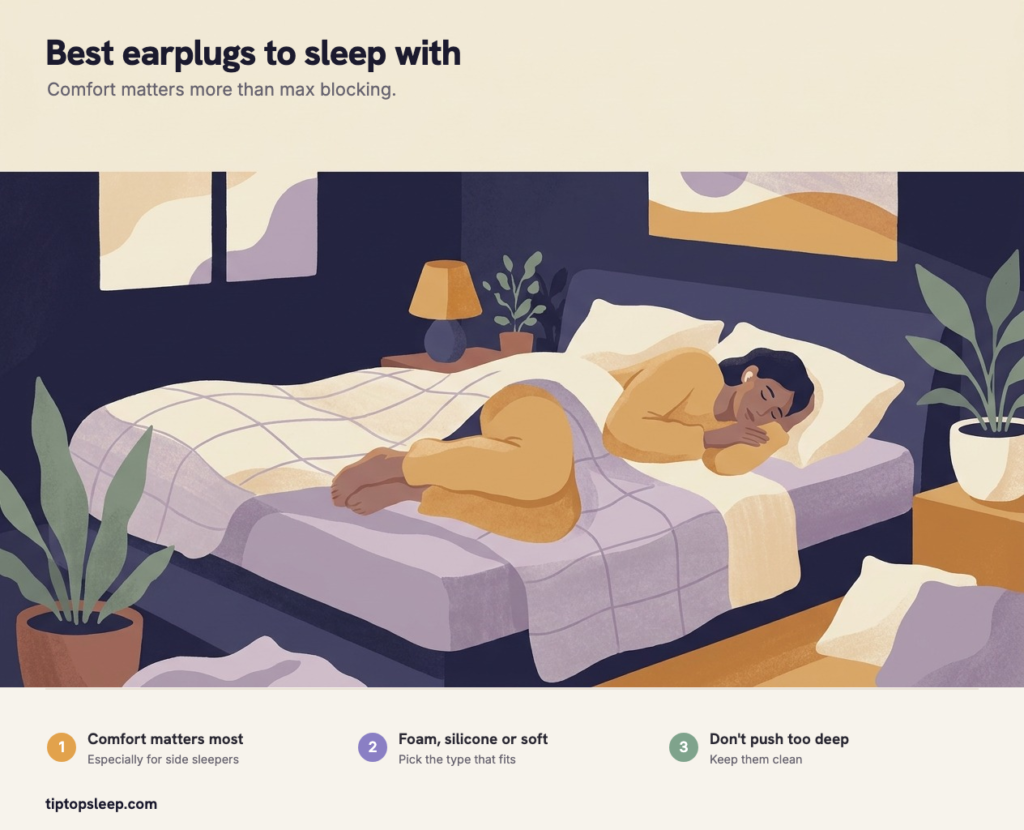
There's no single "best" earplug, there's a best type for your situation. Soft foam is cheap and blocks the most noise but can feel bulky for side sleepers. Moldable silicone putty (like Mack's) sits over the ear canal rather than inside it, which many side sleepers find gentler. Reusable soft flanged plugs and newer designs like Loop Quiet 2 trade some raw noise reduction for a fit that's genuinely comfortable to sleep in for eight hours. For a snoring partner or ambient street noise, you rarely need the highest NRR on the shelf - comfort you'll actually keep in overnight beats a number on the package.
I went through a stretch of testing earplugs after my partner picked up a snore that could rattle a window, and the thing nobody tells you is that the "strongest" earplug is often the one you rip out at 2am because it's dug into your ear canal. Comfort, not decibels, is what decides whether you actually wear them all night. Here's how the main types differ, and how to pick without overthinking the spec sheet.
What do the different types of sleep earplugs feel like?
Almost every earplug on the market falls into one of four categories, and the differences matter more for side sleepers than for anyone else, since you're pressing your ear straight into a pillow for hours.
- Soft foam. Cheap, disposable, usually the highest NRR you'll find (often 29-33 dB). Compresses small, then expands inside the canal. Very effective, but that expansion can feel like pressure against a pillow.
- Moldable silicone putty. A ball of soft silicone pressed over the outside of the ear canal rather than inserted inside it. Mack's is the best-known brand, around since 1962. Because it doesn't go deep, it's often more comfortable lying on a pillow, though it blocks slightly less noise than foam.
- Reusable flanged plugs. Silicone or rubber plugs with ridges, similar to what's handed out at concerts or on planes. Washable, long-lasting, mid-range noise reduction.
- Sleep-specific soft plugs (like Loop Quiet 2). Built around all-night comfort rather than maximum blocking. Flexible silicone, interchangeable tip sizes, lower but genuinely sufficient noise reduction for a partner's snoring or street noise.
What does NRR actually mean, and do I need the highest number?
NRR (Noise Reduction Rating) is a lab measurement of how many decibels an earplug can block under ideal conditions. It's printed on nearly every earplug package, and it's tempting to assume higher is always better. It usually isn't, for two reasons.
First, real-world performance is almost always lower than the lab number, because the rating assumes a perfect fit that's hard to replicate at home. Second, and more relevant for sleep, most people don't need industrial-level blocking to soften a snoring partner or muffle traffic. The Sleep Foundation puts it plainly: earplugs typically range from 22 to 33 dB NRR, and "depending on your needs and how loud the noises in your bedroom are, options on either end of this range may be appropriate." A moderate rating that you'll actually tolerate all night beats a maximum rating you take out at midnight.
If you share a room with a genuinely loud snorer, lean toward foam or a well-sealed silicone putty. If the issue is a partner's TV, a noisy street, or general light sleeping, a lower-NRR comfort-first design is often the more livable choice.
Which type is best if I'm a side sleeper?
This is the question that actually matters for most people shopping for sleep earplugs, and it's also where the type of earplug counts for more than the brand.
- If your ear presses straight into the pillow: moldable silicone putty or a low-profile soft flanged plug tends to sit flatter against the head than a foam plug's expanded body.
- If you switch sides through the night: a reusable plug you can quickly reseat, rather than a foam plug you'd need to re-roll and reinsert, is less disruptive when you wake up mid-turn.
- If you've tried foam and it's always uncomfortable: that's common, and it's less about the brand and more about foam sitting inside the canal. Switching category (to silicone putty or a flanged design) usually solves it faster than switching foam brands.
Whichever type you land on, give it a real trial run before deciding it doesn't work. Adjusting to sleeping with something in your ears takes a few nights the same way any new sleep habit does.
A few honest picks, by what they're actually good for
I'm not going to pretend one earplug wins every category. These three cover the three real scenarios people are usually shopping for.

Loop Quiet 2
A flexible silicone plug that sits low-profile in the ear, with four tip sizes to fine-tune the fit. Not the highest NRR on this list, but that's the tradeoff for something comfortable enough to actually keep in against a pillow. Good match for a snoring partner or ambient noise rather than an emergency-level racket.

Mack's Pillow Soft Silicone Earplugs
Moldable putty that you press over the ear canal rather than inserting inside it, which is why it's been a go-to for side sleepers for decades. Good seal against wind and water too, so it doubles as a travel or swimming plug. Not for people who need maximum decibel blocking, but a solid, gentle default for most bedrooms.

Mack's Ultra Soft Foam Earplugs
Classic foam with one of the highest NRR ratings you'll find, and a per-pair cost low enough that replacing them often isn't a hassle. The right pick if you need serious noise blocking (a loud snorer, thin apartment walls) and don't mind the slightly bulkier feel against a pillow.
Want the rest of what we actually keep on the nightstand? Our Sleep Toolkit rounds up the gear we trust for specific sleep problems, not just earplugs.
How do I insert earplugs correctly, and is it safe to wear them every night?
Foam and silicone earplugs are safe for regular use as long as you follow a few basic habits:
- Don't push foam too deep. The CDC's NIOSH guidance for foam earplugs is roll, pull, hold: roll the foam into a thin cylinder, pull the top of your ear up and back to straighten the canal, then hold the plug in place while it expands. You're not aiming to bury it, just to seat it comfortably in the outer canal.
- Use clean hands. Foam earplugs especially need to be rolled with your fingers before insertion, so dirty hands transfer straight to your ear canal.
- Replace foam plugs regularly. Disposable foam is meant to be disposed of once it's dirty, compressed, or no longer expanding fully. Reusable silicone and flanged plugs should be washed on the schedule the packaging recommends.
- Watch for earwax buildup. Frequent earplug use can contribute to wax buildup for some people, which can show up as itchiness, muffled hearing, or mild dizziness. If that happens, easing off for a few nights or asking a pharmacist about ear drops is a simpler fix than pushing through it.
None of this is complicated, but it's the difference between earplugs that help you sleep and ones that end up causing ear irritation instead.
Frequently asked questions
What's the best earplug for a snoring partner?
Foam with a high NRR (around 30 to 33 dB) blocks the most sound, so it's the strongest option if the snoring is genuinely loud. If foam feels uncomfortable against a pillow, moldable silicone putty is the next best seal, and a comfort-first design like Loop Quiet 2 is worth trying if you've given up on earplugs before because of discomfort rather than noise.
Is it bad to sleep with earplugs every night?
For most people, no, as long as you keep them clean and replace foam plugs regularly. The main thing to watch is earwax buildup with heavy long-term use, which is manageable but worth knowing about.
Why do my earplugs fall out while I sleep?
Usually a sizing or type mismatch rather than a defective product. Foam plugs that aren't given enough time to expand before you let go can work themselves loose; flanged and silicone designs often come with multiple tip sizes for exactly this reason. If one shape keeps falling out, try a smaller size or a different category rather than a different brand of the same type.
Can I sleep with earplugs if I have an ear infection?
It's worth checking with a doctor first. Earplugs trap warmth and moisture, which isn't ideal on top of an active infection. If you're already dealing with ear pain at night, get that checked before adding anything into the canal.
Related reading:
- How to Sleep in a Noisy Hospital
- How to Sleep Better With a Partner
- How to Sleep With an Ear Infection
- What Is the Best Color Noise for Sleep?
- Sleep Toolkit - the gear we actually recommend for situations like this
Sources & review: NRR guidance checked against the Sleep Foundation's earplug guide. Insertion guidance follows CDC NIOSH's roll-pull-hold method for foam earplugs. This is general comfort guidance, not medical advice - talk to a doctor about ear pain, infection, or hearing concerns.
📥 Free: The Post-Surgery Sleep Recovery Kit
Our 2-page PDF - the safe sleep position for your surgery, how to set up your bed, a night-by-night recovery timeline, and the red flags worth calling your doctor about. We'll email you the download link.
By subscribing you agree to our Privacy Policy.