

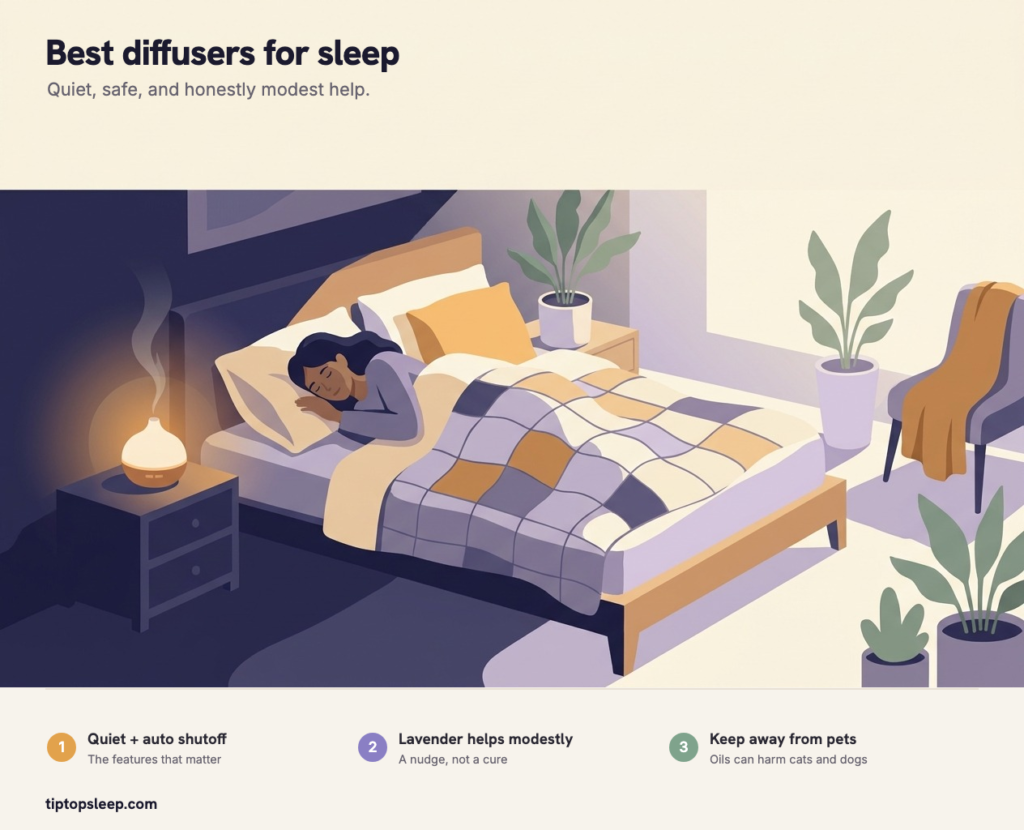
The best diffuser for sleep is a quiet ultrasonic model with an auto-shutoff timer, so it doesn't run (or beep) all night. Look for a runtime that covers how long you're actually asleep, a light you can dim or switch off, and a tank size that matches your room. Scent alone won't fix a sleep problem, but a calm, dark, well-humidified room genuinely helps some people wind down, and a diffuser is one small piece of that.
I've owned three diffusers over the years, and the first one taught me the hard way that "pretty light show" and "good for sleep" are not the same feature. It had gorgeous color-cycling LEDs and absolutely no way to turn them off without unplugging the whole unit at 1am. These days I care about exactly three things: how quiet it is, whether it shuts itself off, and whether the light has a true "off" setting. Everything else is nice-to-have.
How do ultrasonic diffusers actually work?
Most bedroom diffusers are ultrasonic, not heat-based. A small ceramic plate vibrates at a high frequency underneath the water and a few drops of essential oil, breaking the mixture into a fine cool mist that carries the scent into the air. Because there's no heat involved, the oil isn't cooked or degraded the way it can be in old-style heat diffusers, and the mist adds a touch of humidity to the room, which is part of why people also use these as light bedroom humidifiers.
That's really the whole mechanism. There's no "sleep technology" happening beyond the fragrance and the ambient hum of the unit, which is why the features that matter for sleep aren't about the scent at all, they're about how unobtrusive the device is while you're trying to fall asleep.
What features actually matter for a bedroom diffuser?
- Noise level. Ultrasonic diffusers are generally quieter than heat or nebulizing diffusers, but models still vary. Anything advertised under 25 decibels is genuinely close to silent; some budget models hum audibly enough to notice in a quiet room.
- Auto-shutoff. A diffuser that keeps misting after the water tank runs dry can overheat or wear out faster, and one that just keeps going all night isn't doing you any favors. Auto-shutoff when the tank empties, plus a timer option (1, 3, 6 hours, or continuous) so you can match it to how long you're actually asleep, is the single most useful feature on this list.
- Light control. Look for a model where the mist and the LED light run independently, so you can keep the mist going with the light fully off. Some bedrooms genuinely don't need a night light, and a diffuser that forces one on you is a problem, not a feature.
- Tank size and runtime. A 100-200ml tank is fine for a nightstand in a small bedroom. If the room is large or you want mist running most of the night, look for 300ml or more.
- Easy cleaning. Oil residue builds up inside the tank. A wide-mouth opening you can wipe out with a cloth beats a narrow one you need a bottle brush for.
Does aromatherapy actually help you sleep?
Here's where I want to be honest rather than sell you a miracle. Lavender is the most studied scent for sleep, and the Sleep Foundation notes that "lavender has been associated with improved sleep in multiple research studies, including in some people with insomnia." That's a real, meaningful signal, not nothing.
But it's not a strong one either. The same source is direct about the limits of the research: "While promising research supports the potential of aromatherapy to improve sleep, more rigorous research is needed before it can be considered a standard treatment for insomnia or other sleep disturbances." It also flags that "much of this research is preliminary or conducted in specific populations or settings that may not apply to the public as a whole."
My honest read as someone who uses one: a diffuser is a small, pleasant part of a wind-down routine, alongside things like a consistent bedtime and a dark room, not a replacement for them. If you're dealing with a real sleep disorder, our sleep hygiene checklist is a better place to start than a bottle of lavender oil. Think of scent as ambiance, not medicine.
Is it safe to run a diffuser all night, especially with pets or kids in the house?
This is the part I think gets glossed over too often. Essential oils aren't automatically harmless just because they're "natural."
Cleveland Clinic warns that certain oils carry real risk: "Since tea tree oil can be neurotoxic, [a doctor] says you shouldn't diffuse it if you have small children or animals at home," and separately notes that eucalyptus oil "should not be ingested and can have dangerous side effects on children and pets." More broadly, the same source cautions that "some essential oils can be harmful to the liver and nervous system when used in excess," and that certain oils "are toxic for animals as well."
Cats in particular process essential oil compounds poorly, and birds are especially sensitive to anything aerosolized in the air. The ASPCA's guidance is a reasonable middle ground: "Using an oil diffuser for a short time period in a secured area, one that your dog or cat cannot access, is not likely to be an issue. However, if your pet has a history of breathing problems, it may be best to avoid using one altogether." They also note that pets "have a much better sense of smell than we do, so something that seems light to us may be overwhelming to them," and that homes with birds should skip diffusers entirely.
For infants, the general safety guidance is to keep diffusers out of the nursery for very young babies and to ventilate the room rather than running one sealed up all night, since a baby's respiratory system is more sensitive than an adult's. Check with your pediatrician about which oils, if any, they're comfortable with around a baby's room.
Practical takeaways: keep the diffuser and oil bottles out of paws' and small hands' reach, crack a window so the room isn't sealed, keep it away from a crib or pet bed, and skip it if anyone in the house has asthma or a fragrance sensitivity.
Our picks for a bedroom diffuser
Three real options depending on what you need, none of them the flashiest thing on the shelf, just quiet, controllable, and sized right for a bedroom.
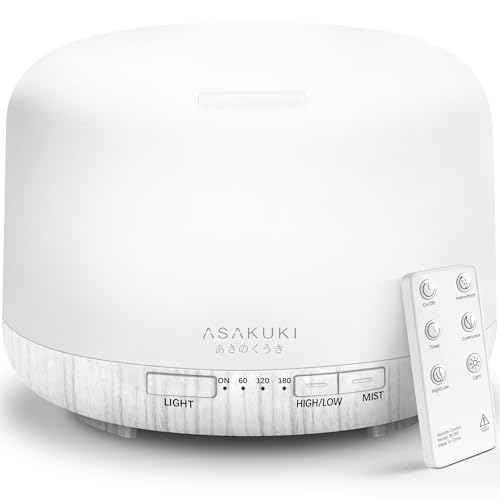
ASAKUKI 500ML Essential Oil Diffuser
Rated under 23 decibels, which is genuinely close to silent next to a bed. The remote lets you kill the light or change the timer (1, 2, or 3 hours, or continuous) without getting up, and the 500ml tank covers most of a full night without a refill.

URPOWER 300ml Sleep Diffuser
Built specifically as an all-night bedroom diffuser, with 1H/3H/6H/continuous timer settings and mist and light running independently, so you can turn the light fully off and just keep the scent going. The 300ml tank is sized for overnight use without babysitting it.
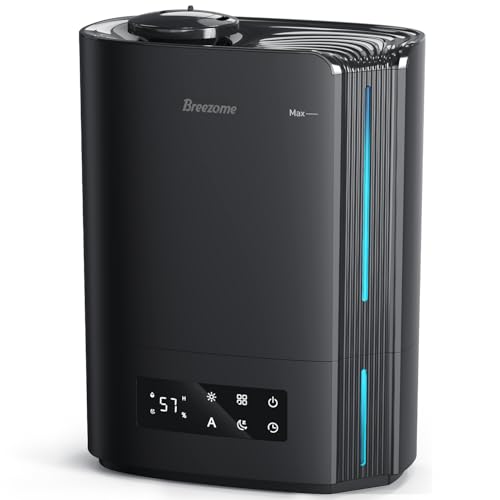
BREEZOME 6L Humidifier & Diffuser
If your bedroom is on the larger side or you also want real humidification (not just scent), the 6L tank runs up to 60 hours between fills and covers rooms up to about 500 square feet. It doubles as a humidistat-controlled humidifier with an aromatherapy tray built in, and shuts off automatically when the tank runs dry.
Want the rest of what we actually keep on our own nightstands? Our Sleep Toolkit rounds up the gear we trust, and skips the hyped stuff that isn't worth it.
Frequently asked questions
How much water and oil should I use in a bedroom diffuser?
Follow the fill line on the tank, and start with 3-5 drops of essential oil for a 100-200ml tank, or up to 8-10 drops for a 300-500ml tank. More oil doesn't mean more benefit, it just means a stronger smell that can become overwhelming in a closed bedroom.
Can I leave a diffuser running all night?
If it has auto-shutoff when the tank empties, running it on a timer through the night is generally fine for most healthy adults in a ventilated room. Skip it if you have a baby, a pet with breathing issues, birds in the house, or anyone with asthma or fragrance sensitivity.
Is lavender oil actually proven to help you sleep?
There's real research showing an association between lavender and improved sleep, but the evidence is described by the Sleep Foundation as promising rather than conclusive, and more rigorous research is still needed. Treat it as a pleasant part of a wind-down routine, not a fix for a sleep problem.
Are diffusers safe to use around cats?
Cats process essential oil compounds poorly, so caution matters more with cats than with most pets. If you diffuse at all with a cat in the house, keep the room ventilated, keep the diffuser somewhere your cat can't knock over or lick, and stop if you notice any signs of distress like drooling, coughing, or lethargy.
Related reading:
- Sleep Hygiene Checklist
- Best Herbal Tea to Help Sleep
- Benefits and Risks of Using a Humidifier While Sleeping
- Best Air Purifier for Better Sleep
- Sleep Toolkit - the gear we actually recommend, and the hyped stuff we skip
Sources & review: Evidence on aromatherapy and sleep is checked against the Sleep Foundation's review of smell and sleep research. Essential oil safety notes are checked against Cleveland Clinic's essential oils guide and the ASPCA's guidance on essential oils around pets. This is general information, not medical or veterinary advice, and it doesn't replace guidance from your doctor, pediatrician, or vet, especially around infants, pregnancy, or pets with existing health conditions.
📥 Free: The Post-Surgery Sleep Recovery Kit
Our 2-page PDF - the safe sleep position for your surgery, how to set up your bed, a night-by-night recovery timeline, and the red flags worth calling your doctor about. We'll email you the download link.
By subscribing you agree to our Privacy Policy.