
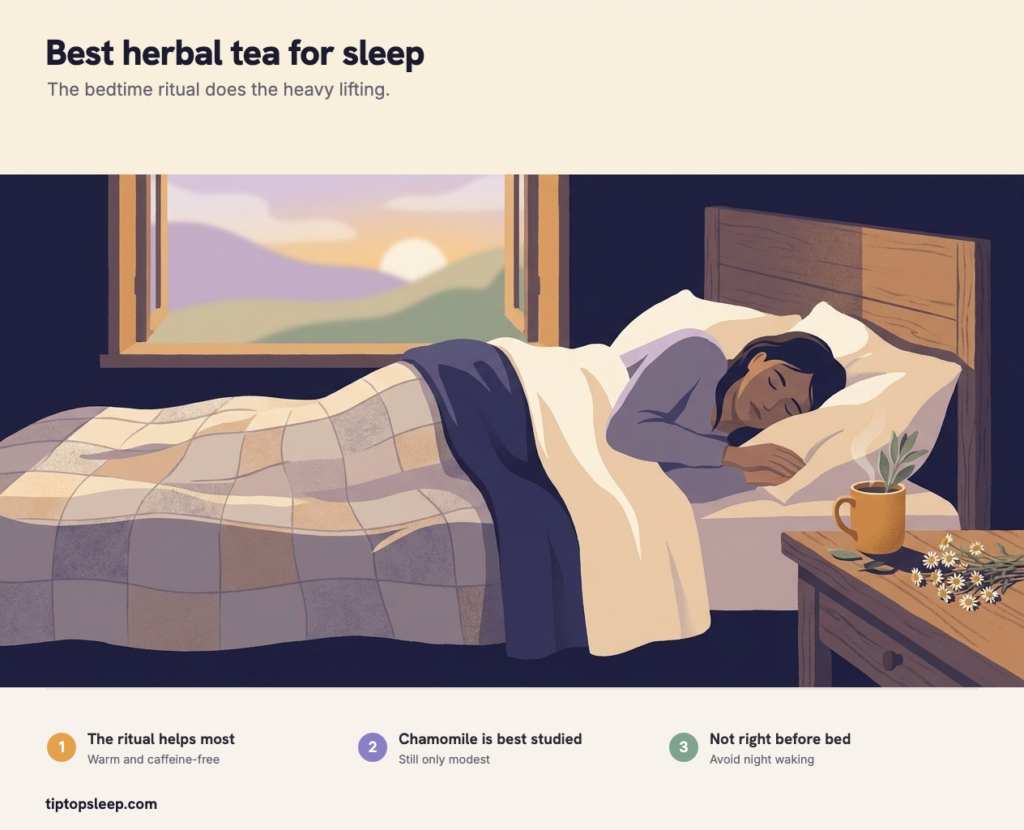
Herbal tea won't knock you out like a sleeping pill, and the honest evidence for any single herb is modest at best. What actually helps is the ritual: a warm, caffeine-free drink as a wind-down cue, 30-60 minutes before bed. Chamomile is the most studied and mildest option, valerian and passionflower blends go a step further for some people, and lemon balm and lavender show up as gentle add-ins. Keep the cup small so you're not up at 2am for the bathroom.
I used to think herbal "sleepy tea" was basically a cup of placebo with better marketing. Then I actually read the research instead of the tea box, and the real picture is more interesting than either "it's magic" or "it's nothing." A warm, caffeine-free drink before bed genuinely helps a lot of people wind down - the tea itself is a small, gentle nudge, not a sedative. Here's what's actually going on, herb by herb.
Does herbal tea actually help you sleep?
Mostly, it helps because of what it isn't and what it does around sleep, more than any single compound in the cup:
- It's caffeine-free. Swapping an evening coffee or black/green tea for a caffeine-free herbal blend removes a real sleep disruptor - caffeine can stay in your system for hours.
- It's a wind-down ritual. Making tea, sitting down, and drinking it slowly is a repeatable cue that tells your brain bedtime is coming, similar to dimming lights or brushing your teeth.
- It's warm. A warm drink is comforting and relaxing in the same low-key way a warm bath is - not because either one is medically sedating.
- Some herbs add a small, genuine effect on top. Chamomile in particular contains apigenin, a compound that binds to some of the same brain receptors as anti-anxiety medications, just far more weakly.
The honest caveat: this is a "gentle aid," not a treatment for real insomnia. If you're regularly getting poor sleep, tea is worth trying alongside good sleep hygiene basics, not instead of talking to a doctor about what's actually going on.
What does the research say about chamomile tea?
Chamomile is the most-studied sleep herb, and the results are genuinely mixed rather than a clean yes. The National Center for Complementary and Integrative Health notes plainly that "there's very little information on chamomile's effect on insomnia. A 2019 review of chamomile use found one study on insomnia, which found no benefit from its use for this sleep disorder." Some other trials using concentrated chamomile extract (not tea) have found modest improvements in sleep quality, so the picture depends heavily on dose and form - a cup of tea is a much smaller dose than a supplement capsule.
Sleep Foundation frames the mechanism worth knowing about: chamomile contains apigenin, which "has been found to bind on benzodiazepine receptors in the brain" - the same receptor family targeted by some anti-anxiety medications, though at a much weaker strength. That's a plausible reason it feels relaxing, even if it's not going to sedate you the way medication would.
Two safety notes worth knowing before you brew a cup. First, allergies: NCCIH states "people are more likely to experience allergic reactions to chamomile if they're allergic to related plants such as ragweed, chrysanthemums, marigolds, or daisies." If ragweed sets off your allergies, start with a small amount or skip chamomile. Second, pregnancy: NCCIH is direct that "little is known about whether it's safe to use chamomile during pregnancy or while breastfeeding" - so check with your doctor or midwife first rather than assuming "herbal" means "automatically fine."
What about valerian, lemon balm, lavender and passionflower?
- Valerian root. This is the herb with the most "sedative" reputation, but the evidence is inconsistent. NCCIH is blunt: "the evidence on whether valerian is helpful for sleep problems is inconsistent. In its 2017 clinical practice guidelines, the American Academy of Sleep Medicine recommended against using valerian for chronic insomnia in adults." It may still help some people feel more relaxed, but don't expect a guaranteed effect. NCCIH also flags an interaction worth knowing: "because it is possible (though not proven) that valerian might have a sleep-inducing effect, it should not be taken along with alcohol or sedatives." Pregnancy safety is also unclear, same as chamomile.
- Lemon balm. Often blended with valerian or chamomile rather than sold alone. It has a mild, traditional reputation for easing stress and is generally considered gentle, but like the others, it isn't a proven insomnia treatment - think "calming," not "sedating."
- Lavender. Most of lavender's sleep research is on aromatherapy (diffusers, pillow sprays) rather than tea, but as a tea ingredient it adds a floral, calming note that pairs well with chamomile in a bedtime blend.
- Passionflower. Traditionally used for mild anxiety and restlessness, often blended with chamomile and valerian in "bedtime" tea mixes. Evidence is limited but it's widely considered gentle for most adults.
None of these are a substitute for treating an actual sleep disorder. If you've tried the wind-down-tea approach for a few weeks and you're still exhausted, that's worth mentioning to a doctor rather than reaching for a stronger herb or a bigger dose.
Which bedtime tea should I actually buy?
Since the "ritual" matters as much as the specific herb, pick a blend you'll actually enjoy drinking every night - that's the one that will work. A few honest picks depending on what you're looking for:

Traditional Medicinals Organic Chamomile with Lavender
A straightforward, single-focus chamomile and lavender blend with no added valerian or other strong herbs - a good starting point if you want the most-studied option without anything stronger. Caffeine-free and organic.

Traditional Medicinals Nighty Night Extra (with Valerian Root)
Blends valerian root with passionflower, lemon balm and peppermint rather than using valerian alone, which tends to make the flavor and effect gentler than a straight valerian tea. Worth trying if plain chamomile hasn't done much for you - skip it if you're also using alcohol or a sedative that night.

Yogi Tea Bedtime (Passionflower, Chamomile, Valerian & Lavender)
Combines four of the most common bedtime herbs - passionflower, chamomile, valerian root and lavender - in one caffeine-free cup, so you're not relying on a single herb to do the work. A reasonable pick if you want the "everything" version of a wind-down tea.
Whichever you choose, brew it caffeine-free and check the label - some "sleepy" blends sneak in green or white tea for flavor, which defeats the point. For more of the gear and small routines we actually trust, see the Sleep Toolkit.
What's the best way to drink it without disrupting sleep?
- Time it right. Have your cup 30-60 minutes before bed, not right as you're lying down, so you're not still digesting a warm drink when you want to fall asleep.
- Keep the cup modest. A full mug of any liquid close to bedtime is a common, underrated cause of waking up to use the bathroom. If nighttime trips are already an issue for you, drink less and drink earlier.
- Skip anything with hidden caffeine. Green tea, white tea, and some "detox" or fruit blends are not caffeine-free even though they don't taste like coffee. Read the ingredient list, not just the marketing on the box.
- Make it a routine, not a rescue. The tea works best as part of a consistent wind-down - same time, same steps - rather than something you reach for only on bad nights.
Frequently asked questions
Is chamomile tea actually proven to help you sleep?
Not conclusively. Clinical research is mixed - some concentrated-extract studies show modest sleep quality improvements, while a review focused specifically on insomnia found no benefit. It's a gentle, low-risk option, not a proven treatment for insomnia.
Can I drink herbal sleep tea every night?
For most healthy adults, yes - chamomile, lemon balm, and lavender teas are generally considered safe for regular use. If you're pregnant, breastfeeding, or taking medication (especially sedatives, blood thinners, or anything metabolized by the liver), check with your doctor first, since safety data for some herbs during pregnancy is limited.
Why do I still wake up at night after drinking sleep tea?
The most common culprit is simply liquid volume close to bedtime, not the herb itself. Try a smaller cup, finish it earlier in your wind-down, and see if that solves it before assuming the tea "isn't working."
Is valerian tea stronger than chamomile tea?
It has a stronger traditional reputation, but the clinical evidence for valerian is actually more inconsistent than chamomile's, and a major sleep medicine guideline recommends against relying on it for chronic insomnia. Don't combine it with alcohol or sedatives.
Related reading:
- Best Valerian for Sleep
- Best Foods to Eat Before Bed
- Sleep Hygiene Checklist
- Best Magnesium for Sleep
- Sleep Toolkit - the gear and routines we actually recommend
Sources & review: Evidence claims checked against the National Center for Complementary and Integrative Health on chamomile, NCCIH on valerian, and Sleep Foundation on chamomile tea and sleep. This is general wellness information, not medical advice - talk to your doctor before using herbal teas regularly if you're pregnant, breastfeeding, or taking medication.
📥 Free: The Post-Surgery Sleep Recovery Kit
Our 2-page PDF - the safe sleep position for your surgery, how to set up your bed, a night-by-night recovery timeline, and the red flags worth calling your doctor about. We'll email you the download link.
By subscribing you agree to our Privacy Policy.