

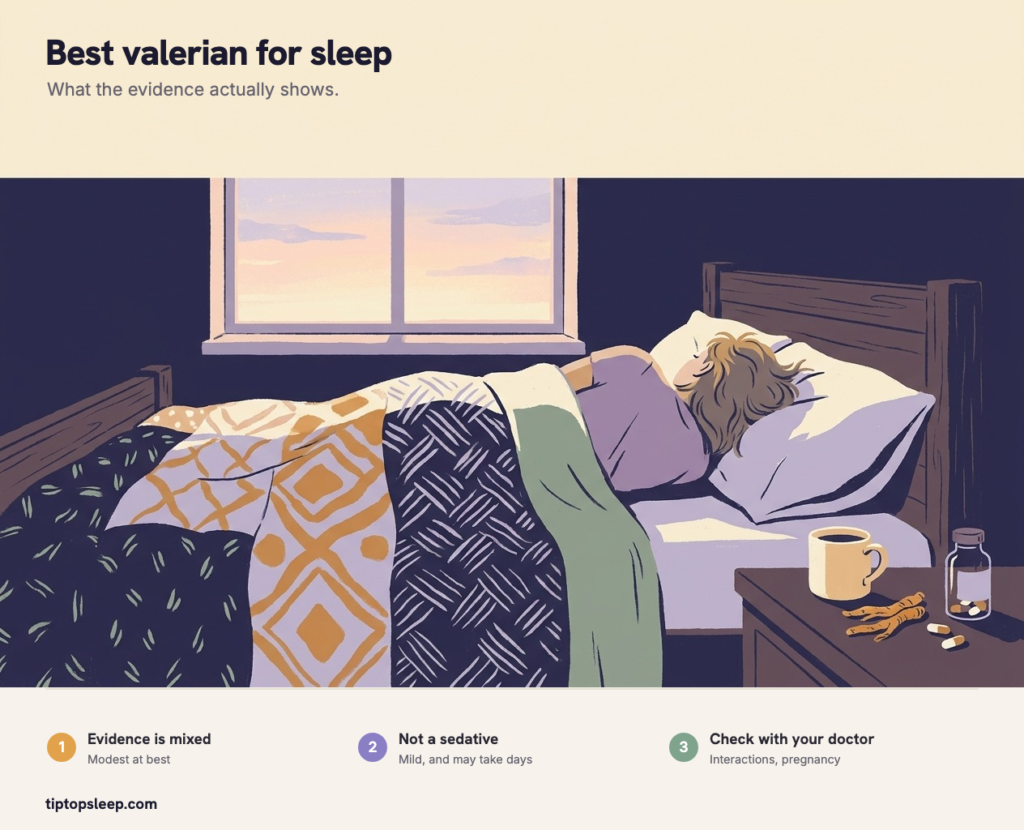
Valerian root is one of the oldest and most popular herbal sleep aids, but the honest answer is that the clinical evidence is mixed. Some studies find it modestly helpful for falling asleep or feeling calmer; others find no real effect beyond placebo. It is not a sedative like a sleeping pill, any benefit tends to be mild, and it can take days to weeks of regular use to notice anything. If you try it, treat it as a low-key experiment, not a fix - and check with a doctor first if you're on any medication.
Valerian is one of the supplements I get asked about most, usually by someone who's tried melatonin, wasn't thrilled with it, and is wondering if "the other one" - the one that's supposedly been used since ancient Greece - actually works better. I wish I had a cleaner answer. The truth is that valerian has been studied a lot, for a long time, and researchers still can't agree on whether it reliably helps people sleep. Here's what the evidence actually says, not what the bottle promises.
What is valerian root?
Valerian is a flowering plant - the National Center for Complementary and Integrative Health (NCCIH) describes it simply: "Valerian is a plant native to Europe and Asia; it also grows in North America." People have used its root in traditional medicine for centuries as a calming remedy, well before modern supplements existed. Today it's sold as capsules, tablets, tea, tinctures, and gummies, almost always marketed for sleep or relaxation.
It's not related to prescription sedatives or benzodiazepines, and it doesn't work the same way. It's an herbal supplement, not a drug, which also means it isn't regulated or tested the way medications are before hitting the shelf.
Does valerian actually work for sleep?
This is the part worth being honest about. NCCIH puts it plainly: "The evidence on whether valerian is helpful for sleep problems is inconsistent." Some trials report people falling asleep a bit faster or rating their sleep quality slightly better. Other trials find no meaningful difference from a placebo. Sleep Foundation's review of the research reaches a similar mixed conclusion - a broad look at "60 studies published over nearly 40 years" found that valerian root "can likely improve sleep and reduce anxiety in many people," but adds the important caveat that "some studies found that valerian root had no effect or a statistically insignificant effect."
The clearest signal of how weak the evidence is comes from sleep medicine's own professional body. Sleep Foundation notes that "The American Academy of Sleep Medicine (AASM) advises against the use of natural sleep aids, including valerian root and melatonin, when treating chronic insomnia, due to the lack of evidence." NCCIH confirms the same guidance: in its 2017 clinical practice guidelines, "the American Academy of Sleep Medicine recommended against using valerian for chronic insomnia in adults."
None of that means valerian is a scam or that nobody benefits from it. It means the honest picture is "might help a little, for some people, sometimes" rather than "proven sleep aid." If you're dealing with occasional restless nights, that might be worth a modest try. If you're dealing with ongoing insomnia, valerian isn't the evidence-backed answer, and it's worth reading about sleep hygiene basics or talking to a doctor instead.
What forms does valerian come in, and how do people use it?
- Capsules or tablets - the most common and most consistent way to know how much you're taking. Sleep Foundation notes "Valerian root is available in a number of forms, including tablets, capsules, teas, tinctures, drink powders, and gummies."
- Tea - milder and slower-acting, often used more as a wind-down ritual than a measured dose. If you like the ritual angle, our herbal tea for sleep guide covers gentler options too.
- Tincture - a concentrated liquid extract, faster to adjust the dose but harder to measure precisely than a capsule.
On dosing, Sleep Foundation notes that "Most studies of valerian root's effect on sleep have people take 300 to 600 milligrams, once per day, on a regular basis," and recommends taking it "between 30 minutes and two hours before you want to go to bed." NCCIH's safety data lines up with that range: valerian "has been used with apparent safety in doses of 300 to 600 milligrams daily for up to 6 weeks." Notice that word - milligrams, daily, for weeks. This is not a fast-acting sedative you take once and feel immediately; if it does anything, it tends to build with consistent use over time, not on night one.
Is valerian safe to take?
For most healthy adults, short-term use appears to be reasonably safe, but "reasonably safe" comes with real caveats worth taking seriously:
- Don't combine it with alcohol or sedatives. NCCIH is direct: "Because it is possible (though not proven) that valerian might have a sleep-inducing effect, it should not be taken along with alcohol or sedatives." The same caution applies to other CNS depressants, including some anxiety and sleep medications - combining sedating substances can compound drowsiness in ways that haven't been well studied.
- Pregnancy and breastfeeding. NCCIH says plainly, "Little is known about whether it's safe to use valerian during pregnancy or while breastfeeding." Sleep Foundation goes further, noting "those who are pregnant or nursing and children under the age of 3 shouldn't take valerian root, as the risks haven't been studied in these groups yet." Skip it in these situations unless your doctor specifically tells you otherwise.
- Side effects. NCCIH lists "headache, stomach upset, mental dullness, excitability, uneasiness, and vivid dreams" as possible side effects. Sleep Foundation adds drowsiness and dry mouth to that list. Most people don't notice anything unusual, but stop if something feels off.
- Long-term use is unstudied. NCCIH is upfront: "The safety of long-term use of valerian is unknown." Treat it as something you try for a defined stretch, not a permanent nightly habit without checking in with a doctor.
- Surgery. Because valerian may have a mild sedating effect, it's standard practice to stop taking any sedating herbal supplement in the days before a scheduled surgery or procedure - tell your surgical team what you're taking.
- Liver conditions or other medications. If you have a liver condition, or you take other medications - especially anything else that's sedating, or anything metabolized by the liver - talk to your doctor or pharmacist before adding valerian. Herb-drug interactions are easy to overlook and not always well documented.
Should you actually try it?
Here's my honest take: valerian isn't a proven or first-line sleep aid, and I wouldn't want you spending money expecting it to work like a sleeping pill. But if you're a healthy adult, not pregnant, not on sedating medication, and you like the idea of a low-stakes, traditional-use supplement to add to a good bedtime routine, a modest trial isn't unreasonable - as long as you go in with realistic expectations and give it a couple of weeks, not one night, to judge it fairly.

NOW Foods Valerian Root 500mg
A single-ingredient valerian capsule at 500mg - inside the 300 to 600mg range studied for sleep - rather than a crowded "sleep blend" with unclear dosing. Useful if you want to try valerian specifically and judge your own response. This is not a proven or first-line sleep aid, and it isn't a substitute for good sleep habits or your doctor's advice, especially if you're pregnant, breastfeeding, or taking any sedating medication.
Prefer to start with better-evidenced options first? Our Sleep Toolkit covers the honest picks we actually stand behind, including where magnesium and melatonin fit in compared to herbal extras like valerian.
Frequently asked questions
Does valerian root really help you sleep?
Maybe, a little, for some people. The evidence is genuinely mixed - some studies show modest benefit, others show none. The American Academy of Sleep Medicine advises against relying on it for chronic insomnia due to the lack of solid evidence. It's not a proven sleep aid, so keep expectations modest.
How long does it take for valerian to work?
Don't expect it to work like a sleeping pill in one night. Most research uses regular daily doses of 300 to 600 milligrams over days to weeks before assessing any effect, and it's typically taken 30 minutes to two hours before bed.
Can I take valerian every night?
Short-term use, up to about six weeks, has been studied for apparent safety. Long-term safety is unknown, so it's best treated as a temporary trial rather than an indefinite nightly habit, and worth discussing with a doctor if you want to continue past that.
Is valerian safe to take with other sleep aids or medication?
Not without checking first. Valerian shouldn't be combined with alcohol or sedatives, and it may interact with other CNS depressants or medications processed by the liver. Talk to your doctor or pharmacist before combining it with anything else, and don't take it if you're pregnant or breastfeeding.
Related reading:
- Best Herbal Tea to Help Sleep
- Best Magnesium Spray for Sleep
- Sleep Hygiene Checklist
- Best Magnesium for Sleep
- Sleep Toolkit - the honest, evidence-checked picks we actually stand behind
Sources & review: Evidence and safety notes on valerian root, including direct quotes on inconsistent research findings, dosing, and interaction warnings, are drawn from the National Center for Complementary and Integrative Health (NCCIH) and Sleep Foundation's review of valerian root research. This article is general information, not medical advice, and doesn't replace guidance from your doctor or pharmacist - talk to them before starting any supplement, especially if you're pregnant, breastfeeding, on medication, or managing a liver condition.
📥 Free: The Post-Surgery Sleep Recovery Kit
Our 2-page PDF - the safe sleep position for your surgery, how to set up your bed, a night-by-night recovery timeline, and the red flags worth calling your doctor about. We'll email you the download link.
By subscribing you agree to our Privacy Policy.