

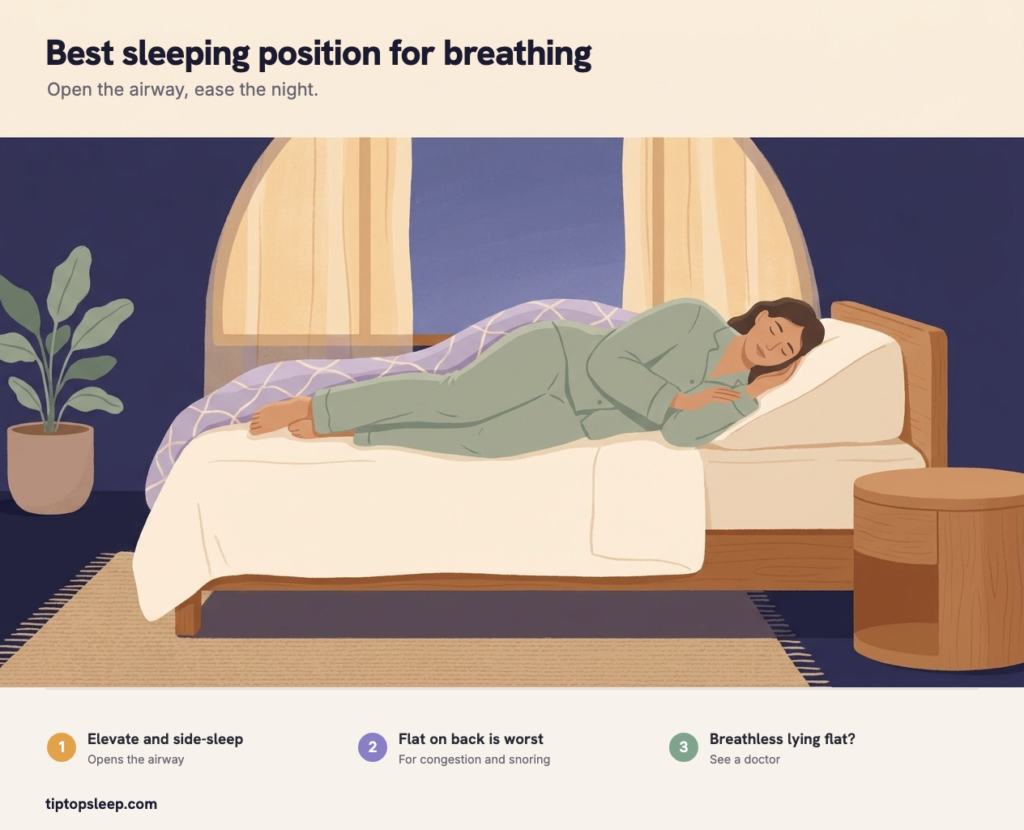
Side sleeping is generally best for easier breathing, since it keeps the airway more open than lying flat on your back. If you're congested from a cold or allergies, propping your head and upper body up with an extra pillow (or a wedge) helps postnasal drip drain instead of pooling, and eases mild reflux too. Flat-on-your-back is the position most likely to make snoring, congestion, and reflux worse. If you're genuinely short of breath lying down, not just stuffy or snoring, that's a signal to talk to a doctor rather than adjust your pillow.
There's a specific kind of miserable that comes with lying down when your nose won't cooperate. You're exhausted, you finally get horizontal, and within a minute everything that was manageable sitting up suddenly isn't. I've spent enough nights propped on pillows fighting a cold to know it's not really about willpower, it's about which position you pick and how much your head is elevated. The good news is this is one of the more fixable sleep problems out there.
What is the best sleeping position for breathing?
For most people dealing with congestion, mild reflux, or snoring, side sleeping with the head slightly elevated is the combination that helps the most. The Sleep Foundation notes that side sleeping is "typically the recommended position for sleep-related breathing problems," while "back sleeping generally has the most negative effects on breathing." If you're dealing with obstructive sleep apnea specifically, that same source points out that "some research suggests that sleeping on the right side may be the most effective at decreasing breathing problems related to OSA."
- Side sleeping: keeps your airway more open and lets mucus drain rather than sitting at the back of your throat. Good default for colds, allergies, and mild snoring.
- Back sleeping (head elevated): works if side sleeping isn't comfortable for you, but only with real head and upper-body elevation, not just one flat pillow. Flat on your back is the position to avoid when you're congested.
- Stomach sleeping: not usually recommended either way, it tends to strain your neck and doesn't help congestion much.
Why does lying flat make congestion and reflux worse?
Gravity is doing you a favor all day by helping mucus and stomach acid stay where they belong. Lie flat and that favor disappears. The Sleep Foundation explains that "congestion caused by allergies, rhinitis, or other conditions affecting the nasal passages can make breathing difficult, especially when lying down." Postnasal drip pools at the back of the throat instead of draining, which is what triggers that middle-of-the-night coughing fit or the feeling that you can't get a full breath in.
The same logic applies to reflux. Lying completely flat makes it easier for stomach acid to travel back up, which can irritate your throat and airway and make breathing feel worse on top of whatever congestion you already have. Elevating your head and upper body, whether that's an extra pillow, a wedge, or propping yourself up on the couch for a night, addresses both problems at once.
If you're dealing with a full-blown cold on top of this, our guide on the best way to sleep with a cough and cold goes deeper into managing the coughing side of things specifically.
Why does elevating my head help me breathe better at night?
Elevation is the single biggest lever you have here, more than which side you pick. The Sleep Foundation notes that people who sleep on their backs "may find it helpful to keep their heads elevated with a supportive pillow, which may improve issues like snoring, acid reflux, and breathing difficulties from COPD." The mechanism is simple: raising your head and chest reduces the pooling of mucus and stomach contents, and it can also reduce the airway narrowing that drives snoring.
A folded pillow works in a pinch, but it tends to slide or flatten out by 3am. A wedge pillow keeps a consistent incline all night without you having to re-stack anything.

Kolbs Bed Wedge Pillow
A firm foam incline that holds its shape all night, so your head and upper body stay elevated without a pillow stack collapsing under you. Useful for a stuffy nose, mild reflux, or just a night where lying flat makes breathing feel harder than it should. It sits under your regular pillow rather than replacing it.
Looking for more gear that actually earns a spot on the nightstand? Our Sleep Toolkit rounds up what we trust for situations like this one.
When is breathing trouble at night more than just position?
Everything above is about ordinary congestion, mild snoring, or occasional reflux, not a genuine medical breathing problem. Those are different, and they deserve a doctor's attention rather than a pillow adjustment. The Sleep Foundation is direct about this: "it's important to contact a medical professional if breathing problems are new, unexpected, severe, or get worse over time."
Pay particular attention if you notice:
- You can't lie flat at all without feeling short of breath (this is called orthopnea, and it can be a sign of a heart or lung condition). The Sleep Foundation notes that with heart failure specifically, "breathing difficulties may increase when lying flat on the back."
- Loud, ongoing snoring with gasping or choking sounds, which points toward sleep apnea rather than simple congestion. If that sounds familiar, our piece on the best sleeping position for sleep apnea covers it specifically.
- Wheezing, chest tightness, or breathlessness that doesn't ease with position changes, which can point to asthma or COPD flaring at night.
- Waking up gasping, or a partner noticing you stop breathing, again worth a proper evaluation rather than a DIY fix.
None of that is meant to alarm you over an ordinary cold. Most nighttime breathing trouble really is congestion, position, or mild reflux, and it responds to the changes above within a night or two. The distinction is whether elevating your head and switching sides actually helps. If it doesn't, or if you're getting genuinely breathless lying down regardless of position, that's the point to call your doctor instead of trying another pillow.
Frequently asked questions
Is it better to sleep on your side or back for breathing?
Side sleeping is generally better for breathing, since it tends to keep the airway more open and helps mucus drain rather than pool. Back sleeping can still work if you elevate your head and upper body well, but flat on your back is the position most likely to worsen snoring, congestion, and reflux.
Does sleeping on your left side help you breathe or help with reflux?
Left-side sleeping is commonly cited for easing reflux, since it may keep stomach acid lower relative to the esophagus. For breathing specifically tied to sleep apnea, some research points to the right side as more effective, so if snoring or gasping is your main issue rather than reflux, right-side or general side-sleeping with head elevation is the more useful combination to try.
Why can't I breathe well lying down when I have a cold?
Lying flat lets mucus pool at the back of your throat and nasal passages instead of draining, which is what makes congestion feel so much worse at night than during the day. Elevating your head and sleeping on your side both help gravity work in your favor again.
When should I see a doctor about breathing trouble at night?
See a doctor if you're short of breath lying flat regardless of position (orthopnea), if breathing problems are new, severe, or worsening, if you have loud snoring with gasping or choking, or if you have known asthma, COPD, or heart conditions and notice your symptoms changing at night. These are outside what position or pillow adjustments can fix.
Related reading:
- The Best Way to Sleep With a Cough and Cold
- How to Sleep With an Ear Infection
- Best Sleeping Position for Sleep Apnea
- Learning to Sleep on Your Back (In 3 Easy Steps)
- Sleep Toolkit - the gear we actually recommend for situations like this
Sources & review: Guidance here is general comfort information, checked against the Sleep Foundation's guide to the best sleeping position for breathing problems. It is not medical advice and doesn't replace a proper evaluation. If you have ongoing breathing difficulty, especially trouble breathing while lying flat, loud snoring with gasping, or a known heart or lung condition, talk to your doctor.
📥 Free: The Post-Surgery Sleep Recovery Kit
Our 2-page PDF - the safe sleep position for your surgery, how to set up your bed, a night-by-night recovery timeline, and the red flags worth calling your doctor about. We'll email you the download link.
By subscribing you agree to our Privacy Policy.