

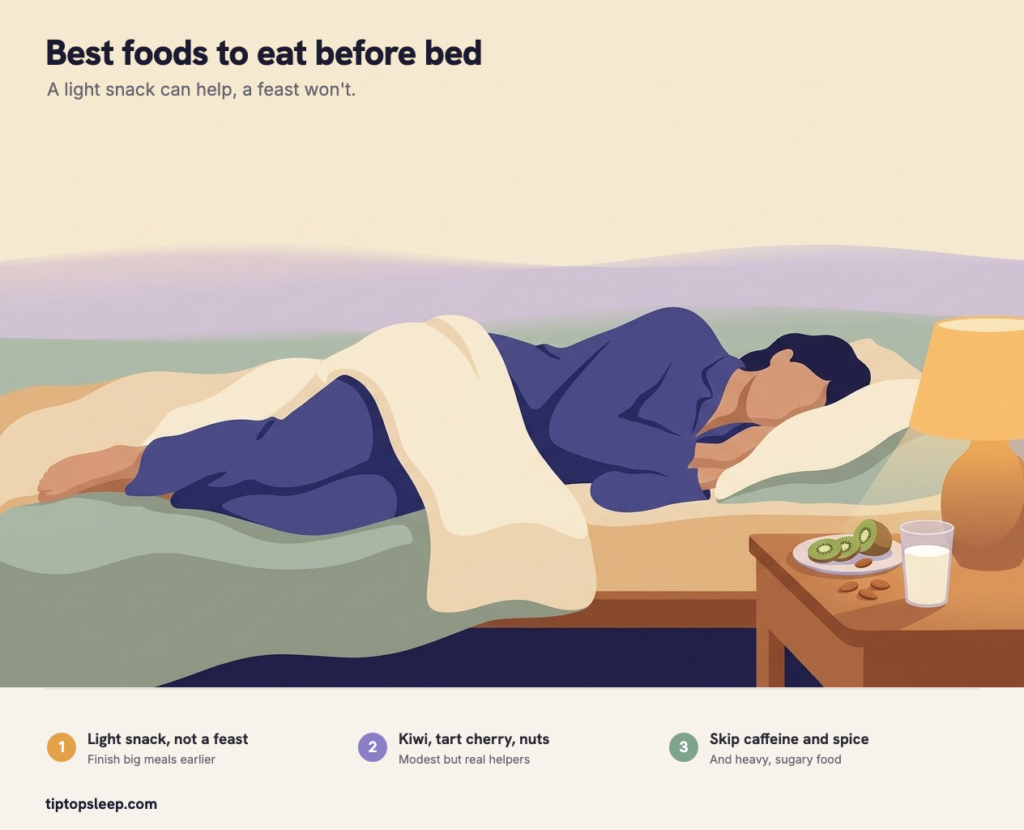
The best bedtime snacks pair a little protein or tryptophan with a little carbohydrate - think a small bowl of cereal with milk, a banana with almond butter, or a handful of walnuts. Tart cherry juice and kiwi have some real (if modest) research behind them for sleep specifically. Skip anything heavy, spicy, sugary, caffeinated, or alcoholic in the few hours before bed. None of this replaces good sleep habits overall - food is a small lever, not a fix.
I used to think a "sleep food" list meant eating my way to a good night's rest. It doesn't work like that. What you eat before bed can nudge things slightly in your favor or work against you, but it's nowhere near as powerful as your sleep schedule, light exposure, or stress levels. Still, a nudge in the right direction is worth having, especially if you're already hungry at 9pm and deciding what to reach for.
What are the best foods to eat before bed?
These are the options with the most going for them, either because of what's in them or because there's actual research behind them:
- Kiwi. This is one of the few fruits with real study data specifically on sleep. The Sleep Foundation notes that in research, "people who ate two kiwis one hour before bedtime found that they fell asleep faster, slept more, and had better sleep quality." It's a small body of evidence, but it's a specific one.
- Tart cherries or tart cherry juice. Tart cherries (Montmorency cherries specifically) contain naturally occurring melatonin. Per the Sleep Foundation, "tart cherries have been found to have above-average concentrations of melatonin, which is a hormone that helps regulate circadian rhythm and promote healthy sleep." The effect size in studies is modest, not dramatic, but it's a reasonable swap for a sugary dessert.
- Foods with tryptophan, paired with a carb. Turkey, milk, eggs, and nuts contain tryptophan, an amino acid the body uses to make serotonin and eventually melatonin. On its own, tryptophan from food is a weak lever - it competes with other amino acids to cross into the brain. Pairing it with a carbohydrate (crackers, toast, oats) helps clear the way, which is part of why "warm milk and toast" became a folk remedy in the first place.
- Milk or dairy. Contains tryptophan and calcium, and the ritual of a warm drink before bed has its own calming effect that's hard to separate from the nutrition itself.
- Almonds and walnuts. A small handful gives you magnesium, healthy fats, and a bit of tryptophan without a heavy load on your stomach.
- Oats. A small bowl of oatmeal is a mild, carb-forward snack that's easy to digest and pairs well with milk.
- Bananas. Contain magnesium and potassium, which support muscle relaxation, plus a small amount of tryptophan.
- A slice of whole-grain toast. Simple, low-fat, and works well as the "carb" half of a tryptophan pairing above.
The common thread: all of these are light. A small snack, not a second dinner.
What foods and drinks should I avoid before bed?
- Caffeine. This one matters more than people think, and later than people think. The Sleep Foundation cites research that "consuming caffeine even six hours before bedtime still impacted sleep quality." That means your 4pm coffee, that after-dinner chocolate, or even a cup of tea can still be working against you at midnight. If you're curious how this plays out with a specific drink, we've broken down how long Coca-Cola keeps you awake.
- Alcohol. It feels sedating, which is exactly why it's misleading. Alcohol can shorten REM sleep and lead to more awakenings later in the night, so you fall asleep faster but the sleep itself is lower quality and more fragmented.
- Spicy food. Can raise body temperature and trigger reflux when you're lying flat, both of which work against falling and staying asleep.
- Large or heavy meals. A big, fatty meal close to bedtime keeps your digestive system working when it should be winding down, and raises the odds of discomfort or reflux.
- A lot of added sugar. Can cause a blood sugar spike and later dip that disturbs sleep for some people, on top of just being an unhelpful evening habit.
- Too much fluid right before bed. Has nothing to do with food quality and everything to do with waking up to use the bathroom. If you're prone to that, taper fluids in the hour or so before lights out.
How close to bedtime should I stop eating?
As a general rule, try to finish a full meal roughly two to three hours before bed, so your body has time to do most of the digesting before you lie down. That said, going to bed genuinely hungry isn't a great trade either - it can keep you awake just as effectively as a heavy meal. If you're hungry closer to bedtime, a small, light snack from the list above is a reasonable middle ground. We've written more on whether going to bed hungry is actually okay if that's a more regular issue for you.
Do bedtime foods actually make a big difference?
Honestly, no - not on their own. The research behind kiwi and tart cherries is real, but it's a handful of small studies, not a mountain of evidence, and the effect sizes are modest. Food timing and choices are one lever among many, and a much smaller one than things like a consistent sleep schedule, a dark and cool room, or winding down screens before bed. If your sleep problems are more than "I'm a bit hungry at night," a smarter bedtime snack isn't going to fix it. Our sleep hygiene checklist covers the bigger levers worth checking first.

R.W. Knudsen Organic Just Tart Cherry Juice
An easy way to try tart cherry juice without hunting down a specialty brand - organic, no added sugar, and a small glass (or a splash mixed with water) makes a reasonable swap for a sugary evening drink. Don't expect a dramatic effect; think of it as a modest nudge, not a sleep aid.
Want the rest of what we actually recommend for better sleep? Our Sleep Toolkit rounds up the gear and picks we trust.
Frequently asked questions
Is milk actually good before bed, or is that just an old wives' tale?
There's a real mechanism behind it - milk contains tryptophan, which the body can convert toward melatonin and serotonin - but the amount in a glass of milk is small, and a lot of the benefit is likely the calming ritual of a warm drink rather than the nutrition alone. It's a fine habit, just not a magic one.
Can eating cheese before bed give you nightmares?
There's no solid evidence that cheese specifically causes nightmares. What can disrupt sleep is a heavy, fatty snack close to bedtime, or an evening full of stimulating content or stress, and either of those is a more likely culprit than the cheese itself.
Does eating a big meal right before bed matter that much?
Yes, more than most single food choices. A large or fatty meal close to bedtime keeps digestion active, raises reflux risk when you lie flat, and can genuinely disrupt sleep quality. Finishing eating two to three hours before bed matters more than which specific food you choose.
Is a bedtime snack better than going to bed hungry?
For most people, yes. Real hunger can keep you awake just as effectively as a heavy meal can. A small, light snack - not a second dinner - is a reasonable middle ground if you're genuinely hungry close to bedtime.
Related reading:
- Going to Bed Hungry: Is It OK?
- Sleep Hygiene Checklist
- How Long Does Coca Cola Keep You Awake?
- Best Magnesium for Sleep
- Sleep Toolkit - the gear we actually recommend
Sources & review: Claims about kiwi, tart cherries, caffeine timing, and tryptophan are checked against the Sleep Foundation's guide to food and sleep. This is general nutrition information, not medical advice, and doesn't replace guidance from a doctor or dietitian - especially if you have a specific medical condition affected by diet or alcohol.
📥 Free: The Post-Surgery Sleep Recovery Kit
Our 2-page PDF - the safe sleep position for your surgery, how to set up your bed, a night-by-night recovery timeline, and the red flags worth calling your doctor about. We'll email you the download link.
By subscribing you agree to our Privacy Policy.