

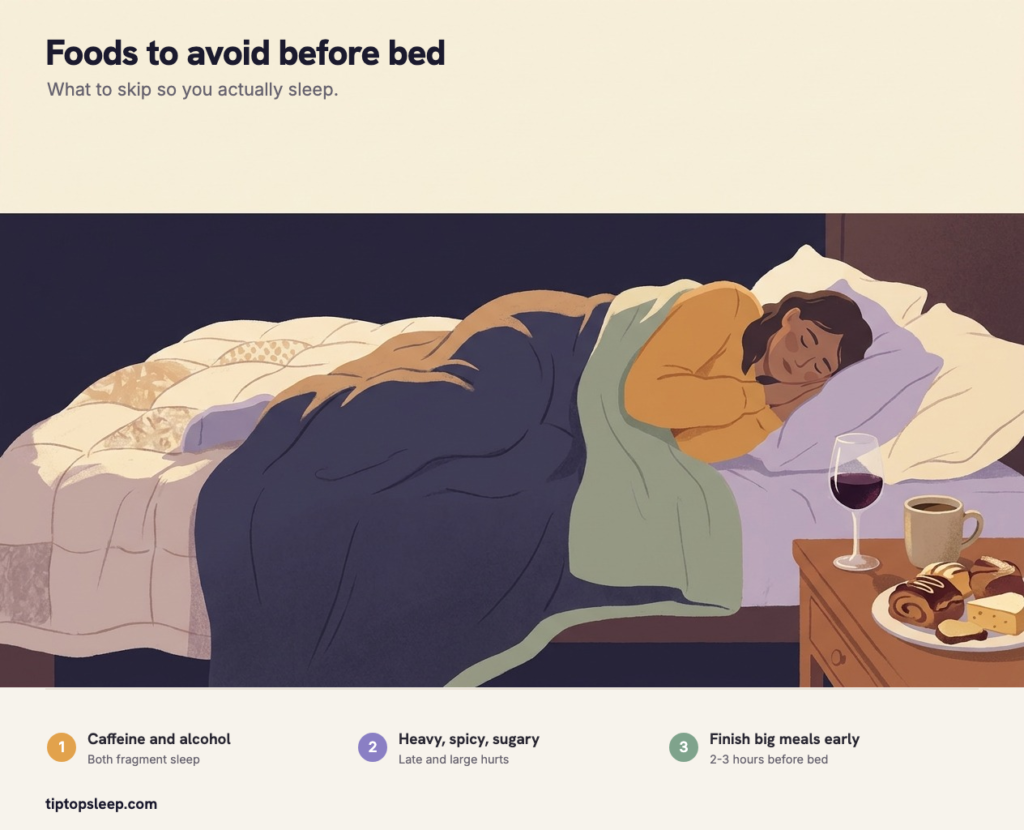
The biggest sleep disruptors on your plate are caffeine, alcohol, spicy or high-fat food, and anything sugary eaten too close to bedtime, plus large meals and too much fluid right before you lie down. None of these will ruin one night on their own, but stacked together in the same evening, they're a reliable way to end up staring at the ceiling. Finishing your last big meal two to three hours before bed fixes most of it.
I used to think my "bad sleep nights" were random. Then I started paying attention to what I'd actually eaten that day - the afternoon energy drink, the extra-spicy takeout, the glass of wine I told myself would help me relax - and the pattern was embarrassingly obvious. This is the flip side of our foods to eat before bed post: instead of what helps, here's what quietly works against you, and why.
Does caffeine really affect sleep hours later?
Yes, longer than most people assume. Caffeine doesn't just wear off after your afternoon slump fades - it lingers in your system for hours after you've stopped feeling it.
- Coffee, tea, and cola are the obvious sources, but chocolate, some over-the-counter medications, and pre-workout supplements count too.
- Energy drinks often combine caffeine with sugar, which stacks two sleep disruptors in one can.
- It blocks the chemical that makes you sleepy. The Sleep Foundation explains that "caffeine affects the brain by blocking adenosine receptors. Adenosine is a sleep-promoting chemical that is produced in the brain during our waking hours."
How long does it actually stick around? Longer than a single afternoon. "Caffeine has a half-life of anywhere between 2 and 12 hours," and "the effects of consuming caffeine typically begin after around 30 minutes and may last up to five hours or longer." The Sleep Foundation's general guidance is that "the generally recommended cut-off time for caffeine use is a minimum of eight hours before bedtime." Even if you fall asleep fine, caffeine can quietly cut into your deep sleep - it "can also reduce the amount of deep, slow-wave sleep you get, which is a critical stage of sleep for feeling refreshed the next day." If you want the fuller picture on tolerance and timing, we cover it in more depth in our effects of caffeine on sleep guide.
Why does alcohol make me feel sleepy but sleep worse?
This is the one that trips people up most, because the sedating feeling is real - it's just not the same thing as good sleep. As the Sleep Foundation puts it, "alcohol is a sedative, which means it can make you feel relaxed and drowsy shortly after drinking," but "the same chemical effects that make alcohol feel calming at first also disrupt normal sleep patterns later in the night."
What actually happens overnight: "you're likely to experience more N3 sleep - known as 'deep sleep' - and less REM sleep than usual, at least initially," which then "leads to lighter, more fragmented sleep and frequent awakenings, especially during the second half of the night." That's why a "good" wine-assisted sleep onset often turns into a rough 3am wake-up.
Alcohol can also make snoring and sleep apnea worse, because "alcohol causes tongue and throat muscles to relax. It also causes changes to blood vessels in the nose, leading to greater airway resistance." If you or a partner already snores, alcohol close to bedtime tends to make it noticeably louder. Sleep medicine physician Dr. Abhinav Singh sums it up bluntly: "Alcohol and sleep are not friends. They do not mix well." The general recommendation is to "avoid alcohol for at least three hours before bedtime" - longer if you notice it disrupts you.
Why do big or spicy meals wreck sleep?
Two separate problems show up here: digestion and heartburn.
- Large or high-fat meals take longer to digest, and lying down mid-digestion is uncomfortable. The Sleep Foundation notes that "eating high-calorie meals with large amounts of fat or carbohydrates less than an hour before bedtime can extend the time it takes to fall asleep," and that "eating right before bed can also make a person wake up in the middle of the night."
- Spicy food raises your core body temperature right when it's supposed to be dropping for sleep, and it's a well-known reflux trigger.
- Acidic and citrus foods, plus tomato-based sauces, are common heartburn culprits too. Per the Sleep Foundation's overview of reflux and sleep, "certain foods and beverages are often reported to induce heartburn or reflux. Examples include chocolate, tomatoes, spicy food, vinegar, citrus, fatty foods, carbonated beverages, coffee, and mint." Lying flat makes it easier for stomach acid to travel back up, which is exactly what happens once you're horizontal for eight hours.
Timing is the fix that matters most here. Expert guidance is consistent: "most experts recommend eating a meal two to four hours before bedtime," and for reflux specifically, "finishing meals at least three hours before lying down can also give your stomach time to digest and reduce the chances of reflux." Aim for your last real meal roughly two to three hours before you plan to sleep, and if you're prone to heartburn, lean toward the longer end of that window.
Does sugar before bed actually matter?
It's not dramatic, but it's real. A dessert or sugary snack causes a quick blood-sugar rise followed by a dip, and that swing can show up as restlessness or a wake-up in the night rather than an obvious "sugar crash." Refined carbs behave similarly to straight sugar in this respect - white bread, pastries, and sweetened cereal digest fast and spike blood sugar the same way a candy bar does. Soft drinks are a double hit, since "a 12-ounce soft drink serving may contain anywhere from 10 to 13.5 teaspoons of sugar," often alongside caffeine, and "studies show soft drinks and other [sugar-sweetened beverages] may decrease sleep duration for both adults and children." None of this means dessert is banned - it just means a large sugary snack right at bedtime is more likely to work against you than a smaller one earlier in the evening.
Should I stop drinking water before bed?
Not entirely - dehydration has its own downsides - but the timing matters. A large glass of anything right before lights-out is the most common reason people wake up for a bathroom trip mid-sleep. This effect is even more pronounced with caffeinated or alcoholic drinks, since both act as diuretics on top of simply adding fluid volume. Nighttime waking to urinate has a name, nocturia, which the Sleep Foundation describes as "the need to wake up more than once at night to urinate." If this is a recurring problem, try tapering fluids in the hour or two before bed rather than cutting them off abruptly, and get most of your hydration earlier in the day.
What about tyramine-rich foods?
This one's more niche, but worth knowing if you're sensitive to it. Tyramine is a compound found in aged cheeses, cured or smoked meats, soy sauce, and some fermented foods. It can trigger the release of norepinephrine, a stimulating brain chemical - which is the opposite of what you want before bed. Most people never notice an effect, but if you're someone who reacts to migraines from aged cheese or red wine, that same tyramine sensitivity can show up as a harder time winding down at night. It's worth ruling out if you eat a lot of cured or aged foods in the evening and can't pin down why you're wired.
What's a realistic evening eating pattern?
- Finish your last big meal 2-3 hours before bed. This alone resolves most of the digestion and reflux issues above.
- Cut caffeine by early-to-mid afternoon if you're sensitive to it, given how long it lingers.
- If you drink alcohol, have it earlier in the evening rather than as a nightcap, and try to leave at least a few hours before bed.
- Keep the pre-bed snack small and bland if you need one - this is where our foods to eat before bed picks come in.
- Sip, don't chug, fluids in the last hour before sleep.
None of this requires perfection every night. If you're already prone to going to bed hungry and wondering whether that's worse, it's a fair question - see our piece on going to bed hungry for the other side of this balance. The goal isn't a rigid diet, it's noticing which of these apply to you and adjusting the one or two that actually move the needle on your sleep.
Want a broader check on your evening routine, not just food? Our sleep hygiene checklist covers the rest of it, and the Sleep Toolkit rounds up the gear we actually trust if you're building better habits from scratch.
Frequently asked questions
How long before bed should I stop eating?
Aim for 2-3 hours for a full meal. That gives your stomach time to mostly empty and lowers the odds of reflux or a mid-sleep wake-up. A small, light snack closer to bedtime is generally fine if you're actually hungry.
Is it the caffeine or the sugar in soda that's worse for sleep?
Both contribute, and together they're worse than either alone. The caffeine delays sleep onset and cuts into deep sleep, while the sugar can cause blood-sugar swings that disrupt sleep later in the night.
Can a glass of wine before bed help me fall asleep faster?
It might make you feel drowsy faster, but that's not the same as better sleep. Alcohol tends to fragment sleep and reduce REM sleep in the second half of the night, so you're more likely to wake up feeling less rested even if you fell asleep quickly.
Are spicy foods bad for everyone's sleep, or just people with reflux?
The temperature-raising effect applies to most people, but the heartburn risk is bigger if you already deal with acid reflux or GERD. If spicy food doesn't usually bother your stomach, an earlier dinner is probably enough of a buffer.
Related reading:
- Best Foods to Eat Before Bed
- Effects of Caffeine on Sleep
- Going to Bed Hungry: Is It OK?
- Sleep Hygiene Checklist
- Sleep Toolkit - the gear we actually recommend for building better sleep habits
Sources & review: Guidance here is checked against the Sleep Foundation's reporting on caffeine and sleep, alcohol and sleep, eating before bed, GERD and sleep, and soda and sleep, and nocturia. It is not medical advice and doesn't replace guidance from your doctor, especially if you have chronic reflux, diabetes, or another condition affected by diet - always follow their specific recommendations.
📥 Free: The Post-Surgery Sleep Recovery Kit
Our 2-page PDF - the safe sleep position for your surgery, how to set up your bed, a night-by-night recovery timeline, and the red flags worth calling your doctor about. We'll email you the download link.
By subscribing you agree to our Privacy Policy.