

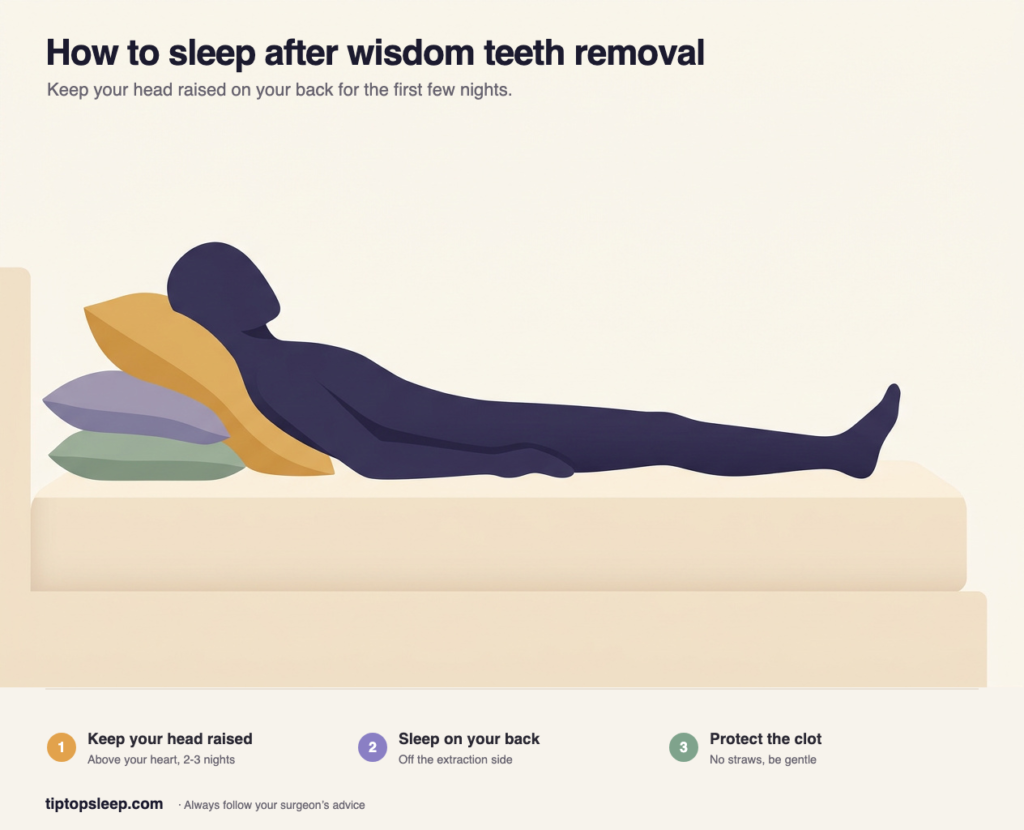
Sleep on your back with your head raised above your heart - propped on a wedge or a couple of firm pillows - for the first 2-3 nights. This keeps swelling and throbbing down and limits oozing. Protect the blood clot: no straws, smoking, or vigorous rinsing.
Wisdom teeth removal often lands on teenagers and twenty-somethings right in the middle of exam season or a new job, which makes that first rough night even more frustrating. I've sat up with my own family through this one - swollen cheeks, an ice pack sliding off, someone convinced they'd never get comfortable again. The truth is the position you sleep in for those first few nights matters almost as much as the ice and the painkillers. Here's exactly how to set yourself up.
The best position: on your back, head above your heart
Right after extraction, a blood clot forms in each socket - it's the foundation everything else heals on top of. Lying flat lets blood pool in your head and jaw, which tends to mean more throbbing, more swelling, and more oozing overnight. Keeping your head elevated above your heart counters that. Here's the setup:
- Prop yourself up on your back. A bed wedge under your upper body is the simplest way to keep the angle steady all night; a stack of firm pillows works too, though it tends to slide by 3am.
- Aim your head above your heart - roughly a 30-45° incline is comfortable for most people and still lets you actually sleep, rather than sitting bolt upright.
- Lay down an old towel or pillowcase under your head for the first night. Some blood-tinged saliva or light oozing is normal, and you don't want to be swapping sheets at 2am.
Avoid sleeping on the side where the teeth were removed, and try not to bunch a pillow against your cheek or jaw - direct pressure on the extraction site is uncomfortable and can slow healing.
Your first few nights, night by night
Swelling and discomfort usually peak around day two or three, then ease. Dry socket - one of the most painful complications - has a fairly predictable window too. As the Cleveland Clinic explains, "dry socket usually develops within the first three days after your dentist removes a tooth. If you haven't had symptoms by day five, you're likely in the clear."
- Night 1: The most important night to stay elevated and still. Take pain relief on the schedule your dentist or surgeon gave you, timed so a dose covers your longest stretch of sleep. Bite gently on gauze as instructed and expect some oozing.
- Nights 2-3: Swelling is often at its worst here even though the surgery is behind you. Keep your head elevated and keep icing during the day per your surgeon's instructions.
- Nights 4-7: Swelling and soreness should be clearly improving. You can usually lower the incline a little each night as it feels comfortable, and most people are close to sleeping normally again by the end of the week.
What to avoid at first
- Straws - the suction can dislodge the clot. The Cleveland Clinic is blunt about it: "Suction from drinking through a straw can dislodge the blood clot. Skip the straw for at least a week."
- Smoking or vaping - smokers are "over three times more likely to develop dry socket than those who don't," per the Cleveland Clinic - avoid it for as long as your dentist recommends.
- Vigorous spitting or rinsing - be gentle for the first 24 hours especially; swishing too hard can knock the clot loose the same way a straw does.
- Lying completely flat - it's fine occasionally, but most people notice more throbbing and oozing without any elevation those first nights.
- Sleeping on the extraction side - pressure on a healing socket or swollen cheek is rarely comfortable and can irritate the area.
The one thing that makes this easier
Pillows stacked up will do the job for a night, but they flatten and slide, and you end up rebuilding your setup every time you wake. A firm wedge holds the incline on its own, which matters most on exactly the nights you're too sore and tired to keep fixing your pillows.

Adjustable-Height Bed Wedge Pillow
An adjustable-height wedge lets you sleep well propped up for the first few nights to keep swelling and oozing down, then drop it lower as you heal - so one pillow covers the whole recovery without a sliding stack.
Want the full kit? See our Sleep Toolkit for the ice packs, gauze and other helpers worth having on hand for recovery.
When to call your dentist or surgeon
Some soreness, swelling and disrupted sleep is expected. These signs are not - contact your dentist or oral surgeon if you notice:
- Severe, worsening throbbing pain two to four days after surgery, especially with a bad taste or odor, or a socket that looks empty rather than clotted - possible dry socket.
- Heavy bleeding, or bleeding that won't slow down after gentle pressure with gauze.
- Fever, or swelling that keeps spreading rather than easing - possible infection.
- Trouble breathing or swallowing - seek urgent medical care right away.
If anything feels wrong, call. That's exactly what your dental team is there for.
Frequently asked questions
How many nights do I need to sleep with my head elevated after wisdom teeth removal?
Most people stay propped up for the first 2-3 nights, when swelling and oozing tend to be worst, then gradually lower the incline as things settle. Let your comfort and your surgeon's instructions guide the pace.
Can I sleep on my side after having my wisdom teeth out?
It's best to stay on your back, propped up, for the first few nights. Side-sleeping puts pressure on a swollen cheek or a healing socket and can be uncomfortable until the area calms down.
What are the first signs of dry socket?
Severe throbbing pain that shows up a couple of days after extraction (often worse than the surgery itself), a bad taste or odor in your mouth, and a socket that looks empty rather than filled with a dark clot. Call your dentist if you notice these.
Is it normal to have blood-tinged saliva the first night?
Yes, light oozing and blood-tinged saliva are common the first night, which is why an old towel or pillowcase on your pillow is worth doing. Heavy, fresh bleeding that won't stop with gentle gauze pressure is not normal - call your dentist.
Sources & review: Guidance here is general comfort advice, researched against post-extraction care information from the NHS and dry socket information from the Cleveland Clinic. It is not medical advice and does not replace your dentist's or oral surgeon's instructions - always follow the specific guidance you were given, and contact your care team with any concerns.
📥 Free: The Post-Surgery Sleep Recovery Kit
Our 2-page PDF - the safe sleep position for your surgery, how to set up your bed, a night-by-night recovery timeline, and the red flags worth calling your doctor about. We'll email you the download link.
By subscribing you agree to our Privacy Policy.