

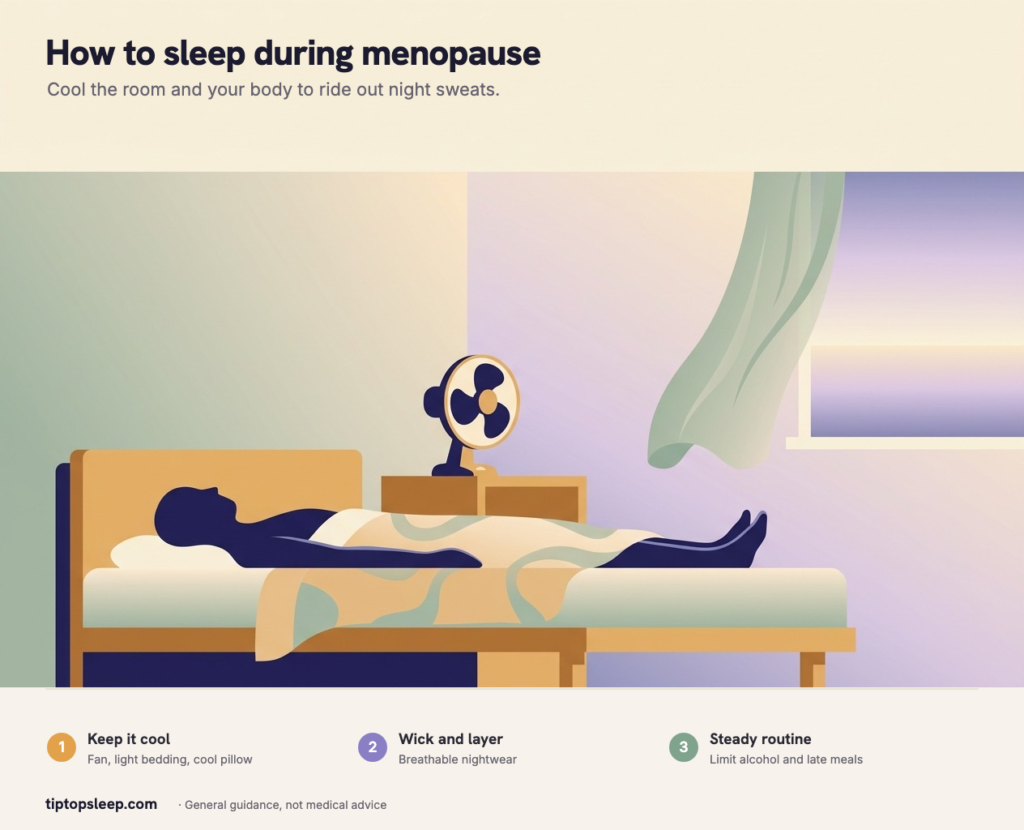
Menopause disrupts sleep mainly through hot flashes and night sweats, falling estrogen, and higher rates of anxiety, insomnia and sleep apnea. The evidence-based first step is a cool, dark bedroom plus a steady wind-down routine; if sleep stays broken for weeks, CBT-I (cognitive behavioral therapy for insomnia) is the treatment sleep specialists recommend first, with hormone therapy as a separate medical decision to discuss with your doctor.
I remember the first summer the night sweats started - waking up at 3am with the sheets damp, wide awake, heart going, and no idea why my own bedroom suddenly felt like a sauna. Nobody warns you how much menopause changes your nights before it changes anything else. I'm not a doctor, but I've lived through this stretch and I've read everything I could find about it. Here's what actually helps, and what's worth a proper conversation with your GP.
Why menopause disrupts sleep
It isn't one thing - it's several things landing at once. As estrogen and progesterone decline during the menopausal transition, the part of your brain that manages body temperature becomes more sensitive to small changes, which is what triggers hot flashes - and when one happens overnight, it's a night sweat. The NHS lists sleep problems and night sweats as two of the most common menopause symptoms, noting that "sleep problems may be worse if you also have night sweats," and that poor sleep on its own "can make you feel irritable, stressed and anxious."
The relationship between waking and hot flashes may even run the other way round from what you'd expect. The National Institute on Aging (NIA) explains that "hot flashes, especially night sweats, and changes in mood - depression in particular - can contribute to poor sleep," and adds that "research now suggests that waking from sleep itself may trigger hot flashes, rather than the other way around." In other words, whatever wakes you up first, the two feed each other.
Mood plays a real part too. Anxiety and low mood are common during this transition, and a racing mind at 3am is just as likely to keep you up as a hot flash is. On top of that, menopause brings a genuinely higher rate of two sleep disorders: chronic insomnia, and obstructive sleep apnea, since declining hormones can make the throat tissues more prone to collapsing during sleep, and midlife weight changes can add to that risk.
What actually helps
- Cool the room and your body. Keep the bedroom cooler than you think you need - a fan, breathable cotton or moisture-wicking nightwear, and a cooling pillow or mattress topper all give your body somewhere to dump heat fast when a flash hits, instead of you lying there overheating.
- Keep a steady sleep schedule and a real wind-down. Going to bed and waking at the same time daily, and giving yourself 20-30 minutes to properly unwind beforehand, is one of the NIA's own recommendations for getting through this transition.
- Watch alcohol, caffeine and late heavy meals. All three are well-known hot flash and night-sweat triggers for many women - alcohol especially tends to bring flashes on a few hours after your last drink, right in the middle of the night.
- Move your body and get daylight. Regular exercise and morning light exposure support both mood and your circadian rhythm, which tends to drift during menopause.
- Try CBT-I if poor sleep has become the norm. Cognitive behavioral therapy for insomnia is the first-line, evidence-based treatment for chronic insomnia, including the insomnia that shows up around menopause - it works on the habits and thought patterns keeping you awake, not just the symptoms.
Your evening wind-down: what to try first, what to try next
Nobody fixes menopausal sleep with one trick. It's usually a stack of small, boring changes plus patience. Here's a sensible order to work through it:
- Tonight: Turn the thermostat down, swap to a lighter/cooler pillow, and keep a glass of cold water by the bed. Skip the nightcap and the late-evening coffee.
- This week: Set a fixed bedtime and wake time, and build a genuine 20-30 minute wind-down - dim lights, no screens, something calming. Add a short walk or workout earlier in the day.
- If it's still broken after a few weeks: Ask your doctor about CBT-I (cognitive behavioural therapy for insomnia). Sleep specialists and menopause organisations point to it as the evidence-based option for menopausal insomnia, including when hot flashes are part of the picture, and it's what specialists reach for before medication.
- If hot flashes themselves are the main problem: Hormone therapy is a separate, medical decision - it can be very effective for hot flashes and related sleep disruption for many women, but it isn't right for everyone. That conversation belongs with your doctor, not a blog post.
Your stay-cool kit
None of this is a cure, and none of it is expensive - it's just about giving your body every chance to shed heat when a flash hits. Three low-risk things help most.

Chill Core Cooling Pillow
A cooling pillow gives you a cool surface to turn to when a hot flash hits at 3am - a small, low-risk change that many women say saves the night.

Cooling Gel Pad for Sleep
A gel pad gives you an instantly cool patch of mattress to move onto mid-flash, with no power or refrigeration - it takes the edge off a bed that's holding your body heat.

Quilo Quiet Tower Fan
Moving air helps sweat evaporate and carries heat away from the bed - a quiet bedroom fan is the cheapest, most reliable way to keep the room from turning into a sauna overnight.
For more low-risk gear that helps with temperature, noise and light, see our Sleep Toolkit.
What about supplements?
I'd love to hand you a pill that fixes this, but I'd rather be honest. CBT-I and the sleep-hygiene basics above have the strongest evidence behind them for menopause-related insomnia - they're where I'd start and where most sleep guidelines start too. Magnesium and a genuinely consistent wind-down routine are reasonable, low-risk things to try alongside that. Melatonin is better understood as a short-term, circadian-timing tool (useful for things like jet lag) than as a nightly sleep aid, and it isn't well regulated in every country, so use it short-term and check with a pharmacist or doctor first. Hormone therapy can help sleep and hot flashes for some women, but it's a proper medical decision with real trade-offs - not something to start based on an article. I don't push supplements here, and I'd be wary of anyone who promises one will fix a menopausal night's sleep on its own.
When to see your doctor
Plenty of rough nights are just part of this transition. These are worth a proper appointment:
- Insomnia that's severe or has lasted weeks despite trying the basics above.
- Signs of sleep apnea - loud snoring, gasping or choking during sleep, or a partner telling you that you stop breathing at night.
- Mood changes that feel like more than tiredness - persistent low mood, anxiety or depression.
- Wanting to discuss hormone therapy - whether it's right for you depends on your health history, and it's a conversation worth having directly with your doctor.
Frequently asked questions
Why do I wake up so hot during menopause?
Falling estrogen makes your brain's temperature control more sensitive, which triggers hot flashes - when one happens overnight, it's called a night sweat. Cooling the room and your bedding is the simplest first response.
Is melatonin safe to take during menopause?
It's generally considered safe short-term for circadian issues like jet lag, but it isn't a proven fix for chronic menopausal insomnia, and product quality varies. Check with a doctor or pharmacist before regular use.
Does hormone therapy help you sleep better?
For some women, yes - by reducing hot flashes and night sweats that were breaking up sleep. It's an effective option for many, but it carries individual risks and benefits, so it needs to be discussed with your own doctor.
What is CBT-I and why is it recommended first?
Cognitive behavioral therapy for insomnia is a structured, short-term program that changes the habits and thoughts keeping you awake. It's recommended as a first-line treatment because it has strong evidence behind it and no medication side effects.
Sources & review: Researched and reviewed against menopause and sleep guidance from the National Institute on Aging (NIH), the NHS, The Menopause Society, and educational material from the Sleep Foundation. Dr Mary Claire Haver's The New Menopause was consulted as background reading on menopause and sleep. This is general information, not medical advice, and does not replace guidance from your own doctor - always discuss symptoms, sleep aids and hormone therapy with them directly.
📥 Free: The Post-Surgery Sleep Recovery Kit
Our 2-page PDF - the safe sleep position for your surgery, how to set up your bed, a night-by-night recovery timeline, and the red flags worth calling your doctor about. We'll email you the download link.
By subscribing you agree to our Privacy Policy.