

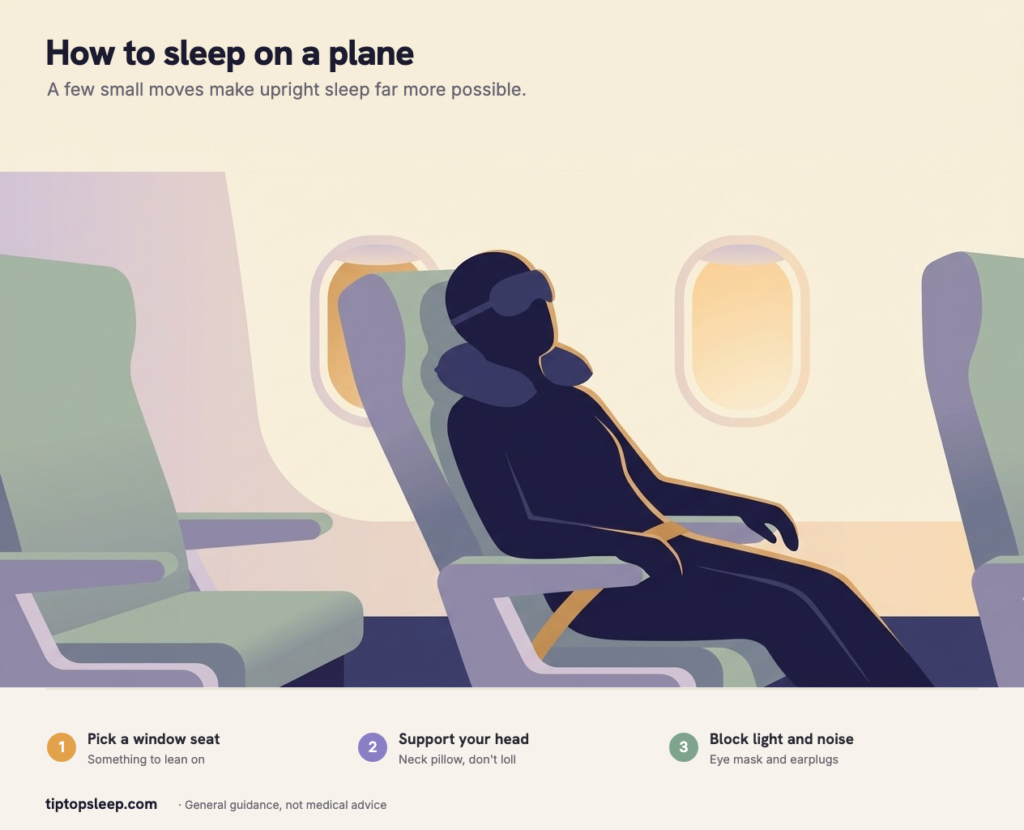
Book a window seat so you have something to lean on and control over the shade, bring a firm neck pillow so your head doesn't loll, and block the cabin with an eye mask and earplugs or noise-cancelling headphones. Skip alcohol and time your last coffee for hours before boarding, dress in layers against the dry air, and set your watch to your destination's time the moment you sit down. None of it guarantees a full night, but together it turns "impossible" into "actually got some rest."
I used to think I was just bad at sleeping on planes - like it was a skill other people had and I didn't. Turns out it's not a talent, it's a setup problem. Once I stopped trying to sleep like I do at home and started treating a flight like its own separate challenge, with its own gear and its own rules, red-eyes stopped wrecking me. Here's what I've learned, checked against what the sleep researchers say too.
Why sleeping on a plane is so hard
It isn't just you, and it isn't just the seat. A few things stack up against you the moment the doors close:
- Upright posture. Your body is used to lying flat. Reclined-but-not-flat is an in-between position your neck and back don't naturally settle into, so your head drifts and jerks you awake.
- Noise. Engine drone, the trolley, the person two rows back - constant low-level noise keeps your brain in a lighter, more easily disturbed stage of sleep.
- Light. Window shades up, reading lights on, screens flickering nearby - your brain reads that as "daytime," which fights against melatonin release.
- Dry cabin air. Aircraft cabins recirculate very dry air, and the Sleep Foundation notes that "breathing the dry, recirculated air in an airplane cabin can make you dehydrated," which leaves you groggy and uncomfortable rather than rested.
- Being on edge. Turbulence, unfamiliar sounds, worrying about missing a connection - your nervous system doesn't fully switch off, even if you're exhausted.
What actually works
You can't fix all of the above, but you can stack the odds in your favor. In rough order of impact:
- Choose a window seat. It gives you a wall to lean your head against and lets you control the shade instead of everyone else's light coming and going. The Sleep Foundation puts it plainly: "some sleep experts suggest booking a window seat because it provides a surface to rest your head, which can be more comfortable."
- Support your head and neck. A firm travel pillow stops your head from dropping forward the second you doze off - that jolt-awake moment is the single biggest reason upright plane sleep fails.
- Block the light. An eye mask does more for plane sleep than almost anything else in your bag. Cabin lighting, other people's screens, and sunrise through someone's open shade will all wake you without one.
- Block the noise. Earplugs or noise-cancelling headphones cut the drone that keeps you in light sleep. Even foam earplugs alone make a real difference.
- Dress in layers and stay warm. Cabins run cold, and getting chilly mid-nap wakes you up fast. A light scarf or wrap doubles as extra neck support.
- Time your caffeine and alcohol. Both work against you. It's tempting to have a glass of wine to relax before a night flight, but it backfires - "consuming alcohol can disrupt your sleep and affect your nighttime breathing." Cut caffeine several hours before boarding too.
- Lean into your natural sleep window. If the flight overlaps with your normal bedtime, try to sleep then rather than fighting to stay awake for the in-flight movie. Set your watch to your destination's time as soon as you board - it starts the mental adjustment early.
- Keep your seatbelt visible over the blanket. Cabin crew check for fastened seatbelts during turbulence, and if yours is hidden under a blanket, they'll wake you to check. Keep it buckled on top.
Before, during, and after the flight
Plane sleep goes better when you think of it as three separate stages, not one long slog:
- Before boarding: Skip the extra coffee, hydrate well (dry cabin air catches up with you fast), and if it's a long-haul overnight flight, start nudging your body clock toward destination time a day or two beforehand if you can.
- Settling in: Get your neck pillow, mask, and earplugs out before takeoff, not after the seatbelt sign goes off and everyone's up rummaging through the overhead bins. Recline as far as your seat allows - the Sleep Foundation notes "the more you are able to recline your chair, the more it may benefit your sleep" - and set your watch to your destination's time zone right away.
- After landing: Follow the local clock, not your body's. The CDC's guidance on jet lag is direct: if you're crossing more than a few time zones, "you should follow the sleep and waking routines of your destination when you arrive." Get some daylight, stay upright until a reasonable local bedtime, and save the deep catch-up sleep for that first night rather than a nap that runs too long.
Your plane sleep kit
You don't need much, but three small things do the heavy lifting: one to hold your head steady, and two to shut out the cabin. This is what actually earns its place in a carry-on.

Zionclicks Memory Foam Travel Neck Pillow
A firm memory-foam neck pillow stops your head from lolling forward and jerking you awake - the single biggest reason upright plane sleep fails.

MZOO Contoured Sleep Eye Mask
Cabin lights, open window shades and the seatbelt sign all keep your brain switched on. A contoured mask blocks the light without pressing on your eyes, so your body finally gets the "it's night" signal.

Loop Quiet 2 Ear Plugs
Engine roar, chatter and the drinks cart all pull you out of light sleep. Soft reusable earplugs take the edge off the constant cabin noise, and they're far comfier to sleep in than foam plugs.
See the full Sleep Toolkit for more of the small things that make travel sleep possible.
Common mistakes
- Having "just one" drink to relax. Alcohol makes you drowsy at first, then fragments your sleep and worsens breathing - you'll wake up more tired, not less.
- Fighting your body clock instead of using it. Trying to stay awake through your normal bedtime "to save sleep for later" usually backfires - you end up wired and overtired.
- Skipping water because you don't want to use the bathroom. Dehydration from dry cabin air makes sleep worse and landing rougher. Sip water regularly instead.
- Packing your sleep gear in checked luggage or the overhead bin. Keep your mask, earplugs, and neck pillow in the seat pocket or your personal item so you're not digging for them once the cabin lights go down.
- Not adjusting your watch until you land. Switching your mental clock to destination time as soon as you board helps you start winding down (or staying alert) at the right moments.
Frequently asked questions
Is it better to sleep on a plane or stay awake until you land?
It depends on the time of day at your destination. If the flight lines up with your normal sleep window or your destination's nighttime, sleep. If it lines up with destination daytime, try to stay awake and adjust once you land rather than napping through it.
What's the best seat for sleeping on a plane?
A window seat, generally. It gives you a surface to lean your head against and lets you control the window shade instead of relying on everyone else's preferences.
Why can't I fall asleep on planes even when I'm exhausted?
Upright posture, ambient noise, light, and low-level stress all keep your brain in a lighter sleep stage. Being tired doesn't override those factors - you need to address them directly with a pillow, mask, and earplugs.
Does alcohol help you sleep on a flight?
It might make you drowsy at first, but it disrupts sleep quality and affects your breathing overnight, so you tend to wake up feeling worse rather than rested.
Sources & review: Guidance here is general comfort advice, researched against travel sleep information from the Sleep Foundation and jet lag guidance from the CDC. It is general information, not medical advice, and doesn't replace guidance from your own doctor - especially if you have a health condition that affects travel or sleep.
📥 Free: The Post-Surgery Sleep Recovery Kit
Our 2-page PDF - the safe sleep position for your surgery, how to set up your bed, a night-by-night recovery timeline, and the red flags worth calling your doctor about. We'll email you the download link.
By subscribing you agree to our Privacy Policy.