

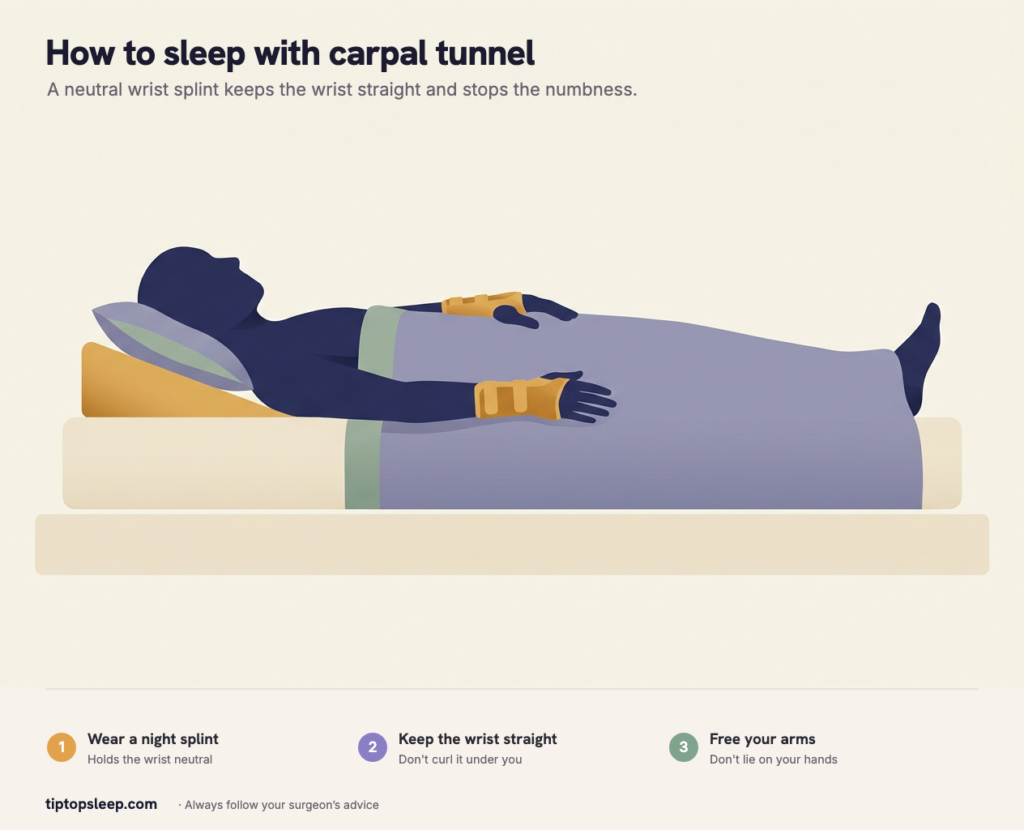
Wear a neutral wrist splint at night that holds your wrist straight, not bent. Most people curl their wrists in their sleep, which squeezes the nerve running through the carpal tunnel - that's why the numbness and tingling wake you up. Keep the wrist straight, don't tuck it under your pillow or your body, and give the splint a few weeks to work.
If you've ever woken up at 3am shaking a hand that feels like it's gone to sleep - properly asleep, pins-and-needles and all - you know how unsettling that is. It happened to me during a stretch of long nights writing at a laptop; I'd wake with my whole hand buzzing and numb and have to hang it off the side of the bed before it would settle. It's a strange thing to have your own hand wake you up. Once I understood why it was happening at night specifically, and made one change to how I slept, it stopped being a nightly event. Here's what actually helps.
Why it's worse at night, and the best sleep setup
The median nerve runs through a narrow passage in your wrist called the carpal tunnel, alongside tendons that flex your fingers. When that space gets crowded, the nerve gets squeezed, and you feel it as numbness, tingling or a burning feeling in the thumb, index and middle fingers, and often the ring finger (carpal tunnel typically spares the little finger). According to AAOS OrthoInfo, "because many people sleep with their wrists bent, symptoms may awaken you from sleep" - and nighttime symptoms are described as very common. Bending the wrist, in either direction, narrows the tunnel further and increases pressure on the nerve right when you're not around to notice you're doing it.
Here's the setup that helps most people get through the night:
- Wear a neutral wrist splint to bed. This is the single biggest change - it physically stops your wrist from curling while you sleep, so the nerve has room.
- Keep your arms out from under your body. Sleeping on your hand, or with your arm trapped under your pillow or your head, adds extra pressure on top of a bent wrist.
- Let your hand rest slightly elevated if that's comfortable - some people find resting the forearm on a pillow, rather than letting it hang or curl beneath them, eases the ache further.
- If you wake up with numbness anyway, gently shake or flex your hand and wrist. Many people find this brings quick, if temporary, relief until the feeling clears.
What helps, and how soon
Splinting is usually the first thing to try, and for good reason - it's simple, low-risk, and it's the first step both major health bodies referenced here recommend. As AAOS OrthoInfo puts it plainly: "wearing a brace or splint at night will keep you from bending your wrist while you sleep. Keeping your wrist in a straight or neutral position reduces pressure on the nerve in the carpal tunnel." It's usually the very first recommendation, before anything more involved is considered.
- First few nights: The splint may feel unfamiliar, and some people still wake once or twice while they adjust. Stick with it - the fit and the habit both take a little time.
- First 2-4 weeks: Many people notice fewer nighttime wake-ups as the wrist stays straighter for longer stretches. The NHS notes you "may need to wear a splint for up to 6 weeks before it starts to feel better," so give it a real trial rather than judging it after a few nights.
- No improvement, or symptoms creeping into the day: This is the point to loop in a doctor rather than persisting alone - see below.
Sleep habits and positions to avoid
- Curling your wrists under your pillow. It feels cozy, but it's close to the worst possible position - maximum wrist flexion, right against your face.
- Sleeping in a tucked, fetal position with bent wrists tucked to your chest. Comfortable for the rest of you, hard on the nerve.
- Lying on your hand or forearm. Body weight on top of an already-bent wrist compounds the pressure.
- Skipping the splint "just for tonight." The nights you skip it are often the ones you wake up.
The one thing that makes this easier
You can try to keep your own wrist straight through sheer force of habit, but nobody has that much control while asleep. A padded night splint does the work for you.

FUTURO Night Wrist Support
A padded night splint that holds the wrist in a neutral, straight position while you sleep - the one change most likely to stop the 3am numbness, and the first thing doctors recommend trying.
Want the full kit? See our Sleep Toolkit for more of the small things that make a real difference to sleep quality.
When to see a doctor
Occasional nighttime numbness that eases with a splint and a shake of the hand is common and usually manageable. These signs are not something to manage alone - they mean it's time to see a doctor:
- Numbness that's becoming constant, not just at night or after certain activities.
- Weakness in the hand - dropping things, or trouble with fine movements like buttoning a shirt.
- Visible wasting or flattening of the muscle at the base of your thumb.
- Symptoms not improving after several weeks of consistent night splinting.
This matters because untreated nerve compression can cause lasting damage. AAOS OrthoInfo is direct about this: it's important to diagnose and treat carpal tunnel syndrome promptly to help avoid permanent dysfunction of the hand. It's also worth being honest about what a splint does: it eases the symptoms and takes pressure off the nerve at night, but it isn't a permanent fix for everyone. For cases that don't settle, a doctor can talk you through other options, including a minor surgery the NHS describes as usually curing carpal tunnel syndrome. If in doubt, get it checked - it's a quick, low-drama appointment that rules out the worse possibilities.
Frequently asked questions
Why does carpal tunnel get worse at night specifically?
Most people bend their wrists while they sleep without realizing it, and that bending narrows the carpal tunnel and increases pressure on the median nerve. Add hours of stillness with no movement to relieve that pressure, and the numbness and tingling that would be minor during the day become the thing that wakes you up.
How long does a night wrist splint take to work?
Some people notice fewer wake-ups within the first couple of weeks, but full benefit can take up to about six weeks of consistent use. It's worth wearing it every night during a real trial period rather than judging it after just a few nights.
Should I splint one wrist or both?
Splint whichever wrist is giving you symptoms - many people only need one. If both hands are affected, a doctor can advise on wearing splints on both sides.
Can I just avoid the position that triggers it instead of using a splint?
You can try, but most people bend their wrists in their sleep without any conscious control over it, which is exactly why a splint helps - it does the job your sleeping brain can't manage on its own.
Sources & review: Guidance here is general comfort advice, researched against condition and treatment information from AAOS OrthoInfo and the NHS. It is not medical advice and does not replace an examination by your doctor - if symptoms are persistent, worsening, or include weakness or muscle wasting, see a doctor rather than managing it alone.
📥 Free: The Post-Surgery Sleep Recovery Kit
Our 2-page PDF - the safe sleep position for your surgery, how to set up your bed, a night-by-night recovery timeline, and the red flags worth calling your doctor about. We'll email you the download link.
By subscribing you agree to our Privacy Policy.