

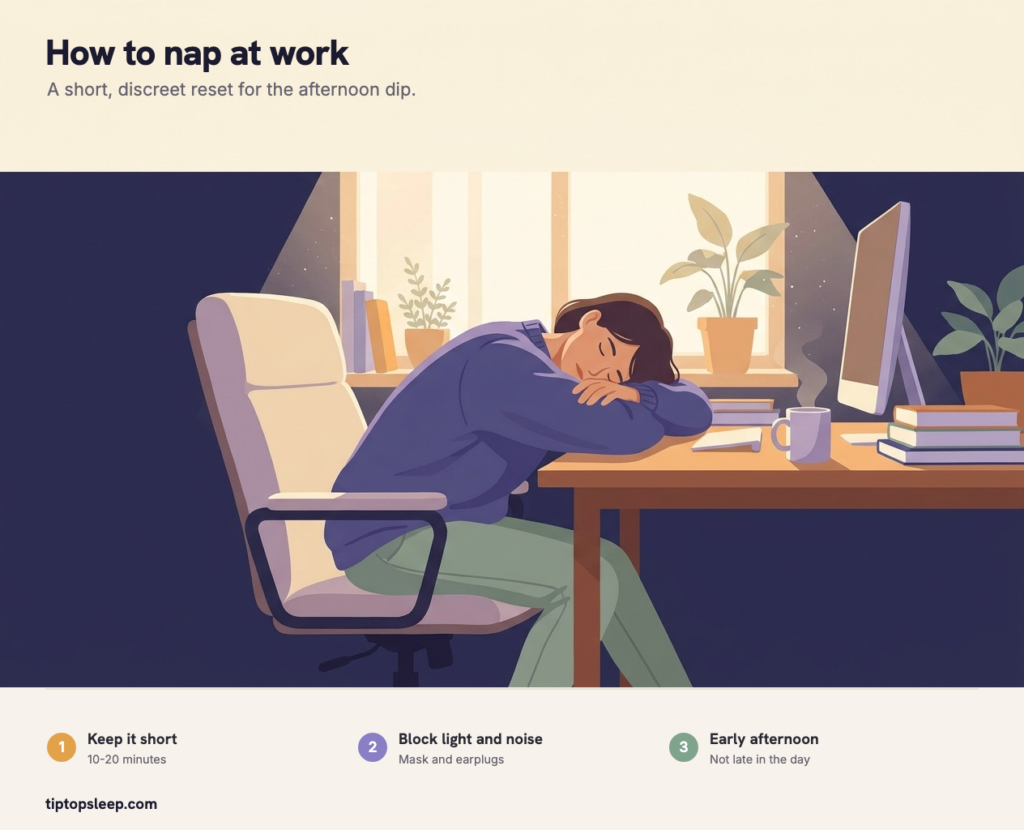
A short nap at work can genuinely help - 10 to 20 minutes, ideally in the early afternoon after the post-lunch energy dip. Keep it that short and you wake up clearer and more alert; go much longer and you risk grogginess that takes a while to shake off. The trick isn't hiding it dramatically, it's finding a quiet spot, blocking light and noise, and setting a timer so it doesn't turn into an accidental 45 minutes.
I used to think napping at work was something to be embarrassed about. Then I looked at what the sleep research actually says and started timing my own naps properly instead of just closing my eyes and hoping. The difference was night and day. A well-timed nap on a work day isn't a guilty secret - it's a normal, useful tool, as long as you do it right. Here's what I've learned about napping well during the day, without it becoming a whole production.
Does napping at work actually help?
Yes, for most people. A short daytime nap can lift alertness and mood and take the edge off the sluggish feeling that creeps in mid-afternoon. It won't replace a bad night's sleep, but it can genuinely improve how you feel and function for the rest of the day - fewer errors, less irritability, an easier time concentrating through a long afternoon. The Sleep Foundation notes that "a well-timed power nap can effectively relieve fatigue and increase focus for up to several hours," which matches what most people notice.
The catch is timing and length. A nap done badly - too long, too late, or in a spot where you can't relax - can leave you groggier than when you started. Done well, it's one of the cheapest productivity tools available.
How long should a work nap be?
Short. The sweet spot is 10 to 20 minutes, and it's worth protecting that window with an actual timer rather than "just resting my eyes for a bit." The Sleep Foundation suggests keeping a power nap to roughly 15 to 30 minutes, because pushing past that window lets you slide into deeper sleep - and "waking up from deep sleep can cause grogginess and actually worsen sleepiness." That grogginess is sleep inertia, the exact opposite of what you're napping to avoid. Set a timer, keep it under 20 minutes, and you sidestep the problem almost entirely.
What's the best time of day to nap at work?
Early afternoon, generally between about 1pm and 3pm. This lines up with the natural dip in alertness most people feel after lunch, and it's early enough that it won't interfere with falling asleep that night. As the Sleep Foundation notes, "power naps are unlikely to interfere with nighttime sleep if taken in the early or mid-afternoon" - so for most people with a normal workday, that means napping before mid-afternoon rather than later.
A 4pm or 5pm nap might feel tempting when you're dragging, but it's more likely to eat into your night's sleep than one taken right after lunch.
Where can you actually nap at work?
Not everyone has a private office, so the honest answer is: wherever you can get quiet and a bit of dark for twenty minutes.
- Your car. Reclining the seat in a parked car is one of the most private, low-effort options if you drive to work. Crack a window for air and set a timer first.
- An empty meeting or break room, if your workplace has one genuinely free during your nap window.
- Your own desk, head down for a short stretch during a genuine break, in workplaces where that's normal.
- A quiet corner - even a stairwell landing can work if it's calm enough to actually drop off.
Whatever the spot, blocking light and noise makes the biggest difference. A contoured eye mask handles the light in an ordinary chair or car seat; soft earplugs or noise-cancelling earbuds handle the rest.
What is a "coffee nap," and is it worth trying?
It's a genuinely useful trick if you already drink coffee: have your coffee right before you lie down, then nap for about 15-20 minutes. Caffeine takes roughly that long to be absorbed and start working, so you wake up just as it kicks in - getting the lift from both the nap and the caffeine at once, rather than one after the other. It sounds like a gimmick, but plenty of people (myself included) find it gives a noticeably bigger boost than either a nap or a coffee alone.
Is it okay to nap at work, or will it look bad?
It depends a lot on where you work. Some employers actively encourage short rest breaks because a rested employee makes fewer mistakes; shift workers and anyone doing safety-sensitive work are often told a short nap on a break is safer than pushing through fatigue. Other workplaces have a stricter culture where even a break-time nap could raise eyebrows.
The practical approach: nap during your actual break or lunch period, not on the clock, and keep it short enough that nobody notices you've been gone longer than usual. If your workplace has a wellness or quiet room, that's exactly what it's there for.
Getting the setup right
Most of my own bad naps were never really a timing problem - they were a comfort problem. Too much light, a chair that wasn't restful, no way to block out an open-plan office. A proper eye mask solves the biggest one, so you actually drop off in that narrow ten-to-twenty-minute window instead of lying there with your eyes shut, still awake.

MZOO Contoured Sleep Eye Mask
The molded eye cups block light without pressing on your eyes, so you can lean back in a car seat or an office chair and actually get to sleep in a short window, instead of squinting through the light with your eyes closed. Packs flat enough to keep in a desk drawer or bag for exactly this.
Want more of what's in my own nap-and-sleep kit? See the full Sleep Toolkit for the masks, earplugs and other gear worth keeping at your desk.
Frequently asked questions
Is it okay to nap during a work break?
Generally yes, as long as it's during your own break or lunch time rather than on the clock, and it's short enough not to run over. Many workplaces are increasingly relaxed about it, especially for shift work or long days, but read your own workplace culture before assuming.
How long should a nap at work be?
Aim for 10 to 20 minutes. That's long enough to feel a real benefit and short enough to avoid the groggy, disoriented feeling that comes from waking out of deeper sleep. Set an actual timer rather than guessing.
What's the best time to nap during a workday?
Early afternoon, roughly 1pm to 3pm, works best for most people. It matches the natural post-lunch dip in alertness and leaves enough hours before bedtime that it shouldn't disrupt your night's sleep.
Where can I nap if I don't have a private office?
A parked car, an empty meeting or break room, or your own desk during lunch are the most realistic options for most people. An eye mask and a pair of earplugs make almost any quiet spot workable for a short nap.
Related reading
- Does a Five-Minute Nap Actually Help?
- Is It Good to Have Naps After Lunch?
- The Truth About Sleep Hangover
- Sleep Toolkit - the gear I actually use
Sources & review: Nap length and timing guidance here is researched against the Sleep Foundation's power nap guide. It's general information, not medical advice - if you're dealing with ongoing fatigue or a sleep disorder, talk to your doctor rather than relying on naps alone.
📥 Free: The Post-Surgery Sleep Recovery Kit
Our 2-page PDF - the safe sleep position for your surgery, how to set up your bed, a night-by-night recovery timeline, and the red flags worth calling your doctor about. We'll email you the download link.
By subscribing you agree to our Privacy Policy.