

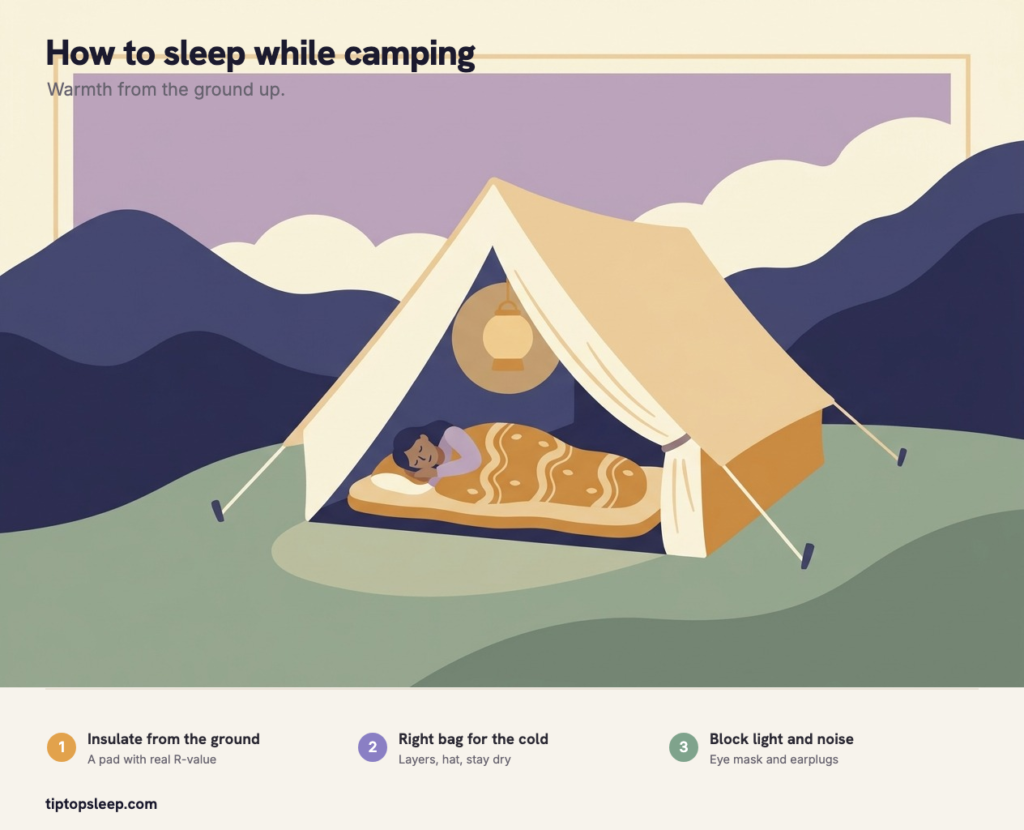
The single biggest fix for camping sleep is ground insulation - a sleeping pad with enough R-value, since cold ground pulls heat out of your body far faster than cold air does. Pair that with the right sleeping bag for the night's temperature, a flat cleared spot, an eye mask and earplugs for light and noise, and layers instead of overstuffing the bag. Get those right and everything else about camping sleep gets a lot easier.
I used to think a "good enough" sleeping bag was all that mattered for camping, until a June night in the mountains taught me otherwise. The air wasn't even that cold. I was still awake at 2am, shivering, wondering why a "30-degree bag" wasn't doing its job. It wasn't the bag. It was the thin foam mat underneath me doing nothing to stop the ground from quietly stealing my body heat all night. Once I understood that, camping sleep stopped being a gamble.
Why is the ground the real problem, not the air temperature?
Heat moves from a warmer object to a colder one, and the ground is almost always colder than you are, even on a warm night. Lying directly on it (or on a pad that's too thin) means your body is conducting heat straight into the earth the entire time you sleep. This is why campers can wake up cold even when the forecast says the night was mild - the culprit is under them, not around them.
The tool that fixes this is a sleeping pad's R-value, a rating of how well it resists that heat loss. REI's own gear guidance walks through this exact idea: sleeping pads are rated by R-value, and pads with a low R-value are fine for warm-weather trips while pads rated higher are built for cold ground and shoulder-season camping. In plain terms, the higher the number, the more insulation between you and the dirt. A summer pad might sit around R-1 to R-2. A pad built for cooler nights should be R-4 or higher, and serious cold-weather trips call for R-5.5 and up.
How do I match my gear to the night's temperature?
- Check the sleeping bag's temperature rating against the actual overnight low, not the daytime forecast - mountain and desert temperatures can drop 20-30 degrees after dark.
- Match your pad's R-value to the season. A high-R pad under a warm bag beats a warm bag alone, every time.
- Stack pads if you're unsure. R-value is additive, so a thin foam pad under an air pad adds warmth and also protects the air pad from punctures.
- Don't overfill the bag with clothes. Extra layers inside a mummy bag compress the insulation and can actually trap less warm air, not more. A hat and dry socks do more for warmth than an extra hoodie stuffed inside.
What's the best sleeping position and setup for a tent?
- Pick a genuinely flat, cleared spot before you pitch - clear sticks and stones now, because you will feel every one of them at 1am.
- Sleep with your head slightly uphill if the ground has any slope, to avoid the blood-rush, headachy feeling of sleeping downhill.
- Give the pad and bag time to loft - unroll and let a self-inflating pad expand for 10-15 minutes before you get in, so it's actually at full thickness.
- Keep a consistent pre-sleep routine even outdoors - the same wind-down cues (brushing teeth, changing into sleep clothes) that work at home still help your body recognize it's time to sleep, even in a tent.
How do I manage light, noise and condensation overnight?
- Block early light with an eye mask. Tents get bright fast at sunrise, often hours before you'd naturally wake up.
- Use earplugs for wildlife, wind and neighboring campers. Rustling tent fabric and unfamiliar outdoor sounds are a common reason people struggle to fall asleep the first night out, even in a quiet campground.
- Crack a vent or the rainfly slightly to reduce condensation - a fully sealed tent traps your breath and body moisture, and a damp bag interior is a cold bag interior.
- Keep the tent door zipped and food sealed away from your sleeping area, both for pests and peace of mind.

OGERY Self-Inflating Sleeping Pad
This is the piece of gear that actually solves the ground-heat problem above. A 9.5 R-value puts it well into cold-ground territory, the hybrid foam-and-air build cuts the "bouncy" feel of pure air pads, and the built-in foot pump means you're not light-headed from blowing it up after a long hike in. If you only upgrade one thing before your next trip, make it this.
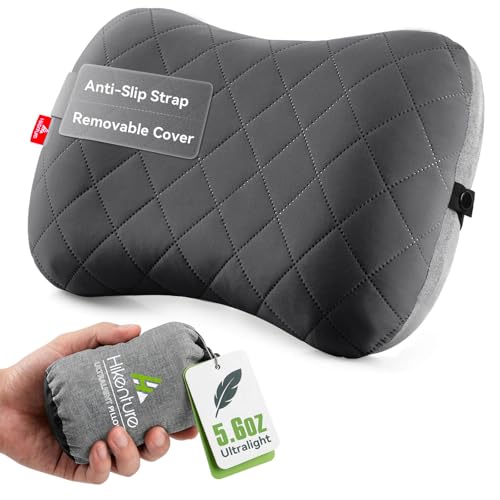
Hikenture Inflatable Pillow
A real pillow, even a small one, keeps your neck in a normal position instead of propped on a balled-up jacket. This one packs down to soda-can size, has a one-click valve so you're not fumbling with it half-asleep, and the strap lets you clip it to your sleeping pad so it doesn't slide off during the night.
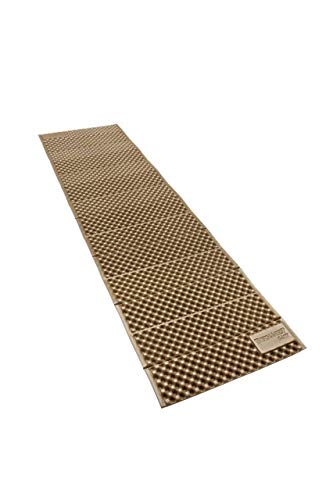
Therm-a-Rest Z Lite Original
A closed-cell foam pad, so there's nothing to inflate and nothing that can puncture on a rock. Its R-value is modest (around 1.7), which makes it honest 3-season, mild-weather gear rather than a cold-night solution - but as a first pad, a backup, or a layer stacked under a warmer air pad, it's hard to beat for the price.
Want the fuller kit we'd actually pack? Our Sleep Toolkit covers the gear we trust across sleep situations, camping included.
Frequently asked questions
What R-value do I need for summer camping?
For mild, warm-weather nights, an R-value of around 1 to 2 is usually enough. If you camp anywhere temperatures might dip toward the 40s Fahrenheit overnight, aim for R-3 or higher so the ground doesn't undo a perfectly good sleeping bag.
Why am I cold at night even with a warm sleeping bag?
Most of the time it's the ground, not the bag. A sleeping bag insulates the air around you, but it does very little to stop heat loss straight down into the earth. That's the sleeping pad's job, and a thin or low R-value pad leaves a gap the bag can't cover.
Should I sleep on top of or inside my sleeping bag?
Inside, zipped up, on cool nights - that's what traps warm air against your body. On genuinely hot nights, unzipping the bag and using it as a blanket (or lying on top of it) can be more comfortable, but pair that with a still-insulated pad underneath if the ground is cold.
How do I stop condensation from soaking my sleeping bag?
Leave a vent or window cracked rather than sealing the tent completely, avoid breathing directly into a mummy bag hood, and wipe down the tent's interior in the morning before you pack it away damp. A footprint or groundsheet under the tent also helps keep ground moisture from wicking up.
Related reading:
- How to Sleep When It's Hot
- Best Earplugs to Sleep With
- What Is the Best Temperature for Sleep?
- Sleeping in a Hammock Without Falling Out
- Sleep Toolkit - the gear we actually recommend for situations like this
Sources & review: Ground-insulation and R-value guidance here is checked against REI Co-op's sleeping pad buying guide, and sleep-temperature guidance is checked against the Sleep Foundation. It is not medical advice, and conditions vary a lot by trip - always check the specific weather and terrain for where you're headed before you go.
📥 Free: The Post-Surgery Sleep Recovery Kit
Our 2-page PDF - the safe sleep position for your surgery, how to set up your bed, a night-by-night recovery timeline, and the red flags worth calling your doctor about. We'll email you the download link.
By subscribing you agree to our Privacy Policy.