

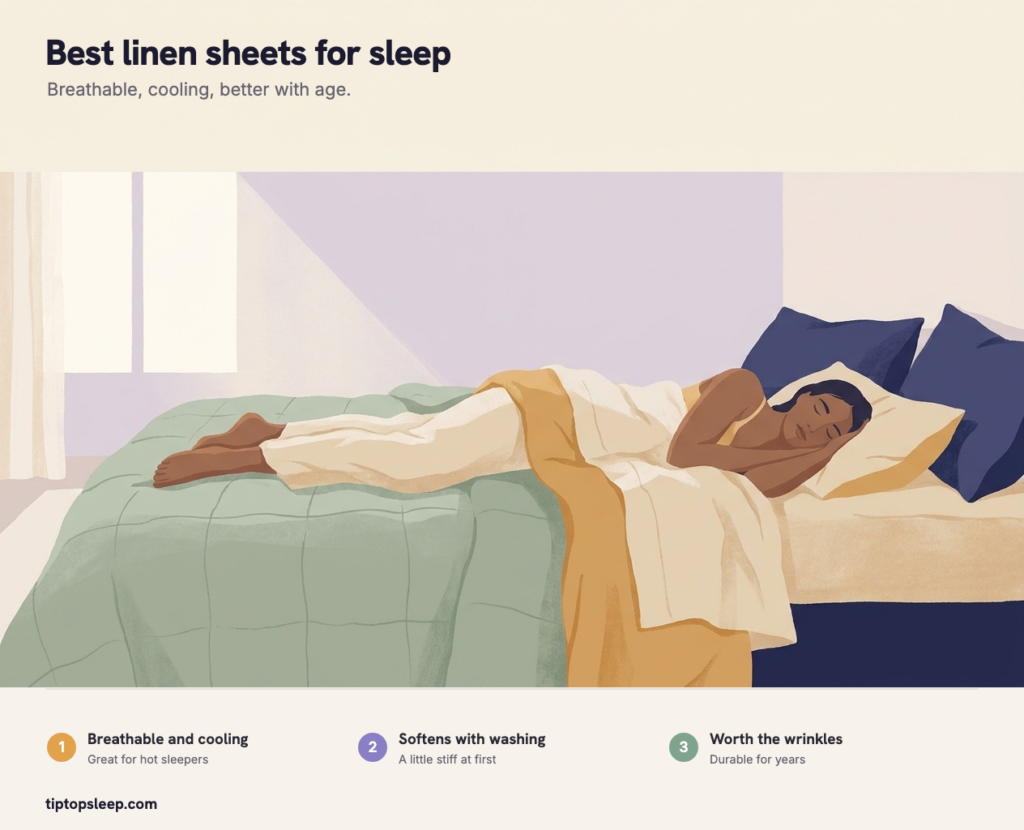
Linen sheets are worth it if you sleep hot or want bedding that lasts for years - the flax fibers are more breathable and better at wicking moisture than cotton, and they get softer with every wash instead of wearing out. The trade-off is real: linen costs more upfront, feels stiff for the first few washes, and wrinkles no matter what you do. Look for 100% flax linen (not a cotton-linen blend if you want the full cooling effect), and go stonewashed if you want it soft from night one.
I switched to linen sheets three summers ago after one too many nights waking up in a damp cotton sheet tangle, and I'll be honest, the first week almost put me off. They felt like a slightly softer burlap sack. Then I washed them a few times and something clicked - they went from "why did I spend money on this" to "I don't want to sleep on anything else." If you're on the fence, here's what actually matters before you buy.
Why do people switch to linen sheets for sleep?
Linen comes from the flax plant, and the fiber itself is hollow and irregular in a way that cotton isn't, which is the whole reason it behaves so differently in bed. According to the Sleep Foundation, "linen sheets offer excellent breathability and moisture-wicking abilities, making them a good choice for sleepers looking for effective temperature regulation." In practice that means:
- Breathable. Air moves through the weave more freely than through tightly spun cotton, so heat doesn't get trapped against your skin.
- Moisture-wicking. Linen pulls sweat away from your body and dries faster than cotton, which matters if you run warm overnight or live somewhere humid.
- Temperature-regulating. The same properties that keep you cool in summer trap a bit more warmth in winter, so it works across seasons instead of being a strictly "summer sheet."
- Gets softer with every wash. Unlike cotton, which tends to wear thin and pill over time, linen fibers relax and soften the more you launder them. The Sleep Foundation notes "new linen sheets may be slightly coarse to the touch, but the material softens after multiple washings."
- Durable. Flax fiber is naturally strong, and that strength is a big part of why linen sheets can outlast cotton sets by years with the same amount of washing.
If you're mainly chasing a cooler night's sleep rather than the linen texture specifically, it's worth reading how to sleep when it's hot too - sheet fabric is one lever, but room temperature and what you're wearing matter just as much.
What are the downsides of linen sheets?
Nobody selling you linen sheets is going to lead with this, so I will:
- They wrinkle. A lot. The Sleep Foundation is blunt about it: "sheets made from linen wrinkle easily, though they can be ironed if you're looking for a crisp, smooth appearance." Most people just let the rumpled look be part of the linen aesthetic and skip the iron entirely.
- They cost more. Per the Sleep Foundation, "linen sheets tend to be pricier than sheets made with other materials." You're paying for a slower-grown, harder-to-process fiber, and it shows in the price tag compared to a basic cotton set.
- They're stiff at first. Straight out of the packaging, unwashed linen can feel coarse or even scratchy. Stonewashed linen sidesteps most of this because the manufacturer has already broken the fibers in for you; raw or "garment-dyed" linen takes a few washes to soften up on its own.
- Not all "linen" is equal. Some cheaper sheets are linen-cotton blends, which soften the price but also dilute the breathability and moisture-wicking that make linen worth choosing in the first place. Check the fiber content, not just the word "linen" in the title.
How do I pick a good linen sheet set?
A few things separate a sheet set that actually performs from one that's linen in name only:
- 100% flax linen, ideally French or European flax. These regions are known for longer, stronger flax fibers, which is why so many linen brands mention Normandy or European flax on the label.
- Stonewashed or pre-washed finish if you want softness immediately instead of waiting through a break-in period.
- Deep pockets (14-16 inches). Linen has some give, but a fitted sheet that's too shallow will still pop off a thick mattress.
- OEKO-TEX certification if you want assurance the fabric was processed without harsh chemical residues, especially relevant if you have sensitive skin.
This is a different question than which sheet fabric fits your budget generally - if you want the wider comparison across cotton, bamboo, and linen, our best bed sheets for sleeping guide covers that ground.

SONORO KATE 100% French Pure Linen Sheets
Made from 100% French flax linen and pre-shrunk and stonewashed at the factory, so it arrives soft instead of stiff. The fitted sheet has all-around elastic and a 16-inch deep pocket, which matters for thicker mattresses. A solid choice if you want the real breathability and moisture-wicking benefits of linen without a rough break-in period.

Bedlifes 100% Linen Sheet Set, Stone-Washed
If softness on night one is your priority, this is the one - it's specifically stone-washed for an already-broken-in feel, so you skip the "why does this feel like a potato sack" phase entirely. It's OEKO-TEX certified, which is worth knowing if you have sensitive skin, and the moisture-wicking weave is aimed squarely at hot sleepers.

LBRO2M 100% Pure Linen Sheet Set
A simpler, no-frills 100% flax linen set that still delivers the core benefits - breathable, temperature-balancing, and softer with every wash - at a lower price point than the French-linen sets. The fully elasticized fitted sheet (up to 16-inch pockets) keeps it in place overnight. A sensible way to try linen without committing to the priciest option first.
Want the rest of what we actually recommend for a better bedroom setup? Our Sleep Toolkit rounds up the sleep gear we trust, not just sheets.
Frequently asked questions
Are linen sheets better than cotton for sleep?
It depends what you're optimizing for. Linen is more breathable and wicks moisture faster, so it's usually the better pick for hot sleepers or humid climates. Cotton, especially percale, is smoother and wrinkles less, so it's the easier "low maintenance" choice. Neither is objectively better across the board.
Do linen sheets need to be ironed?
No, and most linen owners don't bother. Wrinkles are part of how linen looks and most people let it be. Iron it only if you specifically want the crisp, hotel-bed look.
How often should I wash linen sheets?
About the same as any sheets, roughly once a week, more often if you sweat heavily at night. Linen actually improves with washing, so frequent laundering isn't something to avoid the way it might be with more delicate fabrics.
Why do my new linen sheets feel scratchy?
Unwashed or non-stonewashed linen is stiffer straight out of the packaging because the flax fibers haven't relaxed yet. A few wash-and-dry cycles softens it noticeably, or you can buy a pre-stonewashed set to skip the break-in period entirely.
Related reading:
- Best Bed Sheets for Sleeping
- How to Sleep When It's Hot
- The Best Cooling Pad for Bed
- How Often Should You Change Your Pillowcase?
- Sleep Toolkit - the gear we actually recommend for a better night's sleep
Sources & review: Fabric performance claims (breathability, moisture-wicking, softening, wrinkling, cost) are checked against the Sleep Foundation's guide to bed sheet materials. Product specifics (fiber content, pocket depth, finishing) come from manufacturer listings. This is general buying guidance, not medical advice.
📥 Free: The Post-Surgery Sleep Recovery Kit
Our 2-page PDF - the safe sleep position for your surgery, how to set up your bed, a night-by-night recovery timeline, and the red flags worth calling your doctor about. We'll email you the download link.
By subscribing you agree to our Privacy Policy.