

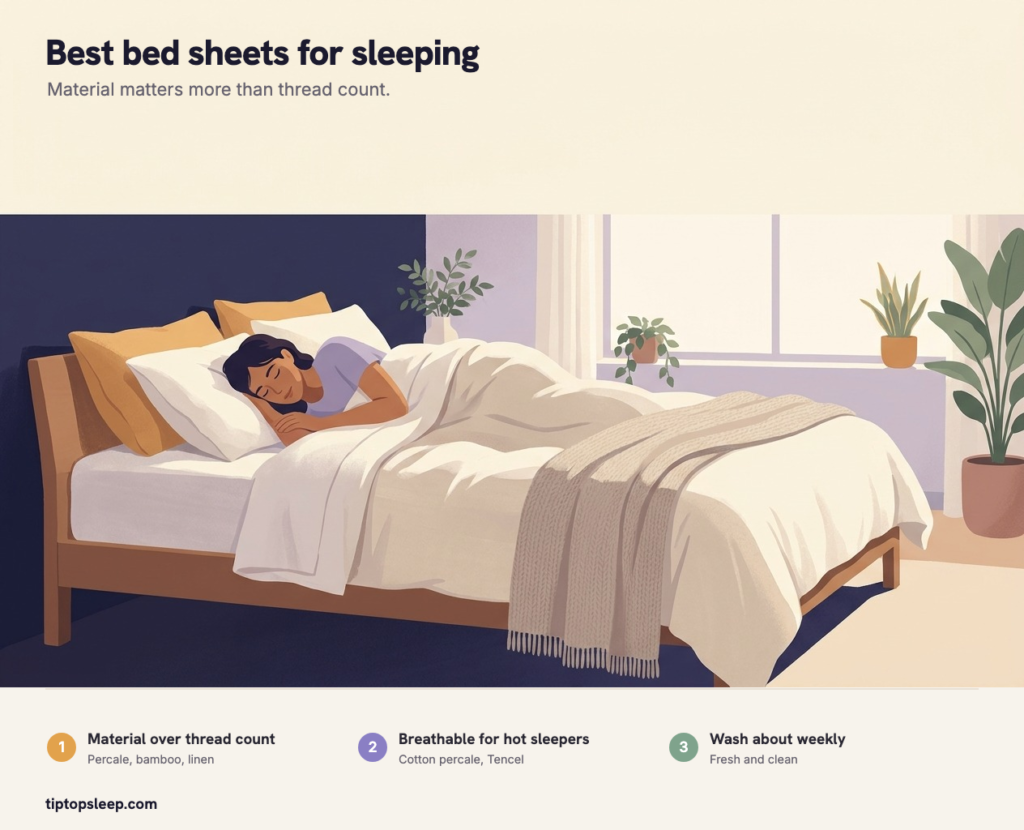
The best sheets for most people are a good cotton percale set - crisp, breathable, and durable through years of washing. If you sleep hot, look for bamboo or Tencel-style rayon, which wicks moisture and stays cool to the touch. A cotton sateen set gives you a softer, slightly warmer feel if you like sheets that lean plush rather than crisp. Thread count past around 400-600 stops making a real difference - fiber quality and weave matter more than the number on the package.
I've bought more sheet sets than I'd like to admit chasing the "hotel bed" feeling at home, and the thing that finally worked wasn't spending more money - it was understanding what the fabric and weave actually do. A high thread count on a bad label can still feel like sandpaper by month two. This guide covers what actually matters: material, weave, breathability, and care, so you can pick sheets that still feel good a year from now.
What's the difference between cotton percale and sateen sheets?
Both are cotton, but the weave changes everything about how they feel and wear.
- Percale is a simple, tight one-over-one-under weave. It produces a crisp, matte, cool-feeling sheet that holds its shape and softens gradually over years of washing - closer to the feel of a fresh hotel bed.
- Sateen uses a weave with more threads floating over the surface before going under, which is what gives it a smoother, slightly glossy feel right out of the package. It drapes closer to the body and traps a little more warmth because of how the fibers sit.
Neither is objectively better - it's a genuine preference call. If you run warm at night or like a fresh, structured feel, go percale. If you like sheets that feel soft and a bit silky from the first night, sateen is the better match.
Does a higher thread count actually mean better sheets?
This is the number most shoppers over-index on, and it's mostly marketing past a certain point. The Sleep Foundation's sheet-testing guide puts it bluntly: "If you see anything above 600, it's not going to launder itself, make you dinner, or do anything extra special for you."
- 200-400 is a normal, comfortable range for good percale sheets.
- 400-600 is where sateen and higher-end percale typically sit, and where quality gains are still noticeable.
- Above 600 often means manufacturers are counting multi-ply yarns as multiple threads, inflating the number without improving how the sheet actually feels or breathes.
Fiber quality and staple length (how long each cotton fiber is) matter more than the thread count printed on the packaging. A well-made 300-thread-count percale sheet from good long-staple cotton will outlast and outperform a cheap 800-thread-count set almost every time.
What are the best sheet materials for hot sleepers?
If you wake up sweaty or kick off the covers by 2am, material matters more than anything else on this list.
- Bamboo-derived rayon or viscose: processed from bamboo pulp into a soft, silky fabric that's genuinely good at moisture-wicking and feels cool to the touch. It's not "natural bamboo" by the time it reaches your bed - it's a regenerated cellulose fiber - but the cooling performance is real.
- Tencel/lyocell: a similar regenerated fiber (usually from eucalyptus) made with a more closed-loop, less chemical-intensive process than standard rayon. Similar cooling and moisture-wicking benefits.
- Linen: the most breathable natural fiber, with an open weave that moves air well. It's coarser and more textured than cotton or bamboo, and takes a few washes to soften up, but many hot sleepers find it worth the trade-off. If you specifically want linen, see our best linen sheets guide for picks.
- Cotton percale: still a solid hot-sleeper option because of its open, crisp weave, even though it isn't a specialty "cooling" fabric.
Avoid pure polyester or heavy microfiber if you sleep hot - synthetic fibers trap heat and don't wick moisture the way natural or regenerated-cellulose fibers do.
Which sheets should I actually buy?
These are three real picks by material, based on what each one is genuinely good at - not a top-10 list padded with near-duplicates.

RUVANTI 100% Cotton Percale Sheets
A straightforward, well-made percale set with the matte, hotel-crisp texture percale is known for. It softens with washing instead of pilling, and the deep pocket fits taller mattresses without the fitted sheet popping off mid-sleep.

Bedsure Bamboo Rayon Cooling Sheet Set
This is the set I'd point a hot sleeper or someone dealing with night sweats toward first. The rayon-from-bamboo fabric is silky rather than crisp, stays cool to the touch, and the 360-degree elastic keeps a deep-pocket fit without constantly re-tucking corners.

California Design Den 600 TC Sateen Sheets
If you want the smooth, slightly glossy feel of sateen without guessing on quality, this one is independently thread-count verified and OEKO-TEX certified, so you're not paying for an inflated number. It leans a little warmer than percale, so it suits people who run cold at night.
Want the rest of what's actually worth having in the bedroom? Our Sleep Toolkit rounds up the gear we trust, sorted by what problem it solves.
What about colored or dyed sheets - are they as good as white?
A colored or patterned sheet can be just as good as white in the same material and weave - dye itself doesn't change breathability or durability much when it's done properly. A few things to actually check before buying colored sheets:
- Look for OEKO-TEX certification on colored sets specifically. It confirms the dyes were tested for harmful substances, which matters more with color than with plain white.
- Wash dark or saturated colors separately for the first few washes - some dye bleed is normal even on quality sheets, and it's worse with cheap dye jobs.
- Expect slightly faster fading on deep, saturated colors versus white or pastel, especially with frequent hot washing. Cold water and low-heat drying extend the color life.
- Same weave rules apply. A colored percale sheet behaves like white percale; a colored sateen sheet behaves like white sateen. Pick by weave and material first, color second.
If green or another specific color was actually the reason you clicked in, the short version is: any of the percale, bamboo, or sateen picks above are typically available in colored or dyed versions from the same brands - the fabric performance doesn't change, just check for OEKO-TEX certification and expect to wash dark colors separately at first.
How do I keep sheets feeling good for longer?
- Wash weekly in most cases - more often if you sweat heavily, have pets on the bed, or live somewhere humid.
- Use cold or warm water, not hot, for most cotton, bamboo, and sateen sheets. Hot water breaks down fibers faster and fades color quicker.
- Skip the fabric softener. It coats fibers with a residue that actually reduces breathability over time, especially on percale and linen.
- Tumble dry low or line dry. High heat is the single biggest cause of premature wear and shrinkage.
- Rotate two sets if you can. It roughly doubles the lifespan of each set and means you're never stuck sleeping on a damp or unwashed sheet.
Pillowcases wear out faster than the rest of the set because they're closest to skin and hair oil - if you're only washing the full set every week or two, see our guide on how often you should change your pillowcase for a faster rotation on that piece specifically.
Frequently asked questions
Is a higher thread count always better?
No. Quality gains largely level off between 400 and 600. Numbers well above that are often inflated by counting multi-ply yarns as separate threads, without actually improving feel or durability.
What sheets are best for hot sleepers?
Bamboo-derived rayon, Tencel/lyocell, and linen are the strongest options for staying cool, thanks to better moisture-wicking and airflow. Cotton percale is a solid natural-fiber runner-up.
How many sheet sets should I own?
Two per bed is the practical minimum - one on the bed, one in the wash. It also roughly doubles how long each set lasts since you're not washing the same sheets every few days.
Are colored sheets lower quality than white?
Not inherently. Color and dye don't change the underlying weave or fiber. Look for OEKO-TEX certification on dyed sets and expect to wash dark colors separately the first few times to manage minor dye bleed.
Related reading:
- Best Linen Sheets
- How Often Should You Change Your Pillowcase?
- What Is the Best Temperature for Sleep?
- The Best Cooling Pad for Bed
- Sleep Toolkit - the gear we actually recommend for better sleep
Sources & review: Material and thread-count guidance checked against the Sleep Foundation's sheet testing and buying guide. This is general comfort and shopping guidance, not medical advice.
📥 Free: The Post-Surgery Sleep Recovery Kit
Our 2-page PDF - the safe sleep position for your surgery, how to set up your bed, a night-by-night recovery timeline, and the red flags worth calling your doctor about. We'll email you the download link.
By subscribing you agree to our Privacy Policy.