

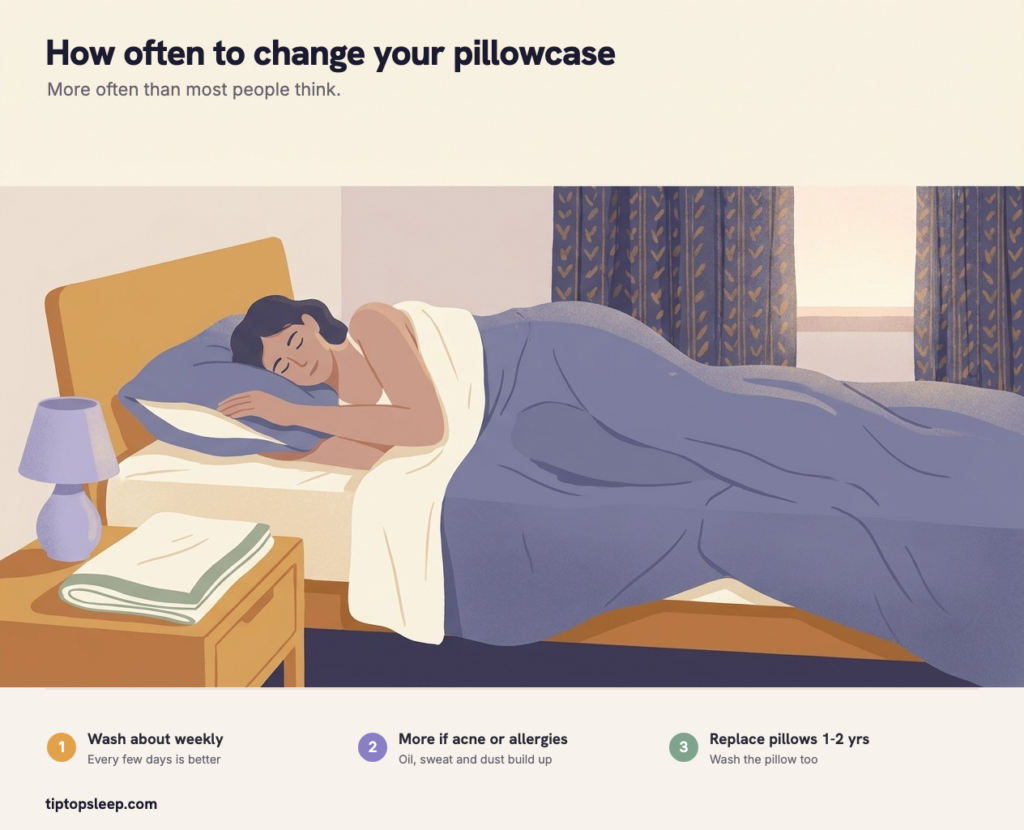
For most people, washing your pillowcase every week to ten days keeps things reasonably clean. If you have acne-prone or sensitive skin, allergies, oily hair, sweat heavily at night, share your bed with a pet, or have a fresh wound or piercing near your face, switch to every two to three days. It's a small habit that does more for your skin and sleep hygiene than most of the products marketed to fix the same problem.
I used to think pillowcases were a "change it when you change the sheets" kind of thing, until a stretch of unexplained jaw breakouts sent me down a rabbit hole that ended, embarrassingly, at my own pillow. I hadn't changed the case in over two weeks. Once I started swapping it more often, the breakouts calmed down within about ten days. It's not a miracle fix, but it's a free one, and it's worth understanding why it works.
Why does my pillowcase get so dirty so fast?
You spend roughly a third of your life with your face pressed into the same piece of fabric, and that fabric is absorbing more than you'd think overnight:
- Dead skin cells and body oil. Your face and scalp shed skin cells and produce oil all night, and both soak straight into the pillowcase.
- Sweat. Even mild night sweating adds moisture that bacteria and dust mites thrive on.
- Drool and saliva. More common than people admit, and another source of bacteria on the fabric.
- Hair product and skincare residue. Leave-in conditioner, dry shampoo, night creams, and serums transfer from skin and hair onto the case.
- Dust mites. They feed on shed skin cells and thrive in the warm, slightly damp environment a used pillowcase provides.
None of this is dramatic on its own, but it accumulates. According to Sleep Foundation, "Pillowcases easily collect dirt, sweat, and oil from your face and hair. Over time, this can become a breeding ground for bacteria or other allergens like dust and mildew."
How often should you actually change your pillowcase?
Sleep Foundation's baseline guidance is straightforward: "You should wash your pillowcase about once a week to reduce buildup and keep your sleep space clean." That's a reasonable default for most people with no particular skin or allergy concerns.
Wash more often, roughly every two to three days, if any of the following apply to you:
- You're acne-prone or have sensitive skin. Buildup on the pillowcase can contribute to "acne mechanica," breakouts caused by friction and clogged pores from repeated contact with a dirty surface.
- You have allergies or asthma. Dust mites and their waste are a well-documented trigger, and a cleaner pillowcase means less exposure right where you breathe for hours.
- You have oily skin or oily hair. More oil means faster buildup, full stop.
- You sweat heavily at night. Whether it's the room temperature, menopause-related night sweats, or just how your body runs, more moisture means a faster path to bacterial buildup - if this sounds familiar, our guide on sleeping through menopause and night sweats covers ways to manage the heat itself.
- A pet sleeps in your bed. Fur, dander, and outdoor dirt all end up on the same fabric your face is on.
- You have a healing wound, piercing, or tattoo near your face or that touches your pillow. Fresh skin is more vulnerable to the bacteria a used pillowcase carries. If that's you right now, see our guides on sleeping with a new piercing and sleeping with a new tattoo for more on keeping healing skin clean overnight.
What about washing the pillow itself, not just the case?
The case isn't the only thing that needs attention. Sweat, oil, and dust mites work their way through the fabric and into the pillow underneath, and a pillowcase alone can't fully protect against that.
Sleep Foundation notes that "most experts recommend replacing pillows every 1 to 2 years," and recommends washing the pillow itself periodically in between, with the exact schedule depending on the fill. For down and polyester-fill pillows, their guidance is to "wash these pillows every 3 to 6 months." Memory foam and latex pillows generally can't go in the washing machine at all - check the care label, since some can be spot-cleaned or lightly hand-washed instead.
A pillow protector (a zippered, washable cover that goes under the pillowcase) is a cheap way to extend the life of the pillow itself and cuts down on how often you need to deep-clean it.
Silk vs cotton vs bamboo: does the pillowcase material matter?
It does, mostly for comfort and how forgiving the fabric is on skin and hair, less so for raw hygiene (any fabric needs regular washing regardless of material):
- Silk. Per Sleep Foundation, "Silk pillowcases have an extremely soft feel, making them especially gentle on sensitive skin. Silk is also breathable, which helps wick away moisture and reduce the buildup of oils and sweat." It also creates less friction against hair and skin overnight, which some people find reduces creasing and hair tangling.
- Cotton. Widely available, machine-washable without fuss, and Sleep Foundation notes "the breathability and softness of cotton pillowcases may help prevent acne." A high thread count percale cotton tends to feel cooler than a heavier sateen weave.
- Bamboo (rayon derived from bamboo). Breathable and moisture-wicking, often marketed toward hot sleepers, and a solid budget-friendly middle ground between silk's softness and cotton's practicality.
Whichever material you pick, having two or three pillowcases in rotation makes it far easier to actually keep up with washing them, since you're not stuck sleeping on a bare pillow on laundry day.

Bedsure Cooling Pillowcase Set (Bamboo Rayon)
A set of two makes it genuinely easy to hit a two-to-three-day rotation without doing laundry every other day. The bamboo-derived fabric is breathable and moisture-wicking, which suits anyone switching to more frequent washing because of night sweats, oily skin, or hot sleeping, and it's gentler on hair and skin than a rougher cotton blend.
For more of the gear we actually trust for a cleaner, more comfortable sleep setup, our Sleep Toolkit is a good next stop.
Frequently asked questions
Can a dirty pillowcase actually cause acne?
It can contribute to it, especially a type called acne mechanica, which is triggered by repeated friction and pressure against skin along with clogged pores from buildup. It's rarely the sole cause of breakouts, but for acne-prone skin, a dirty pillowcase is an easy variable to fix.
Is it enough to just flip the pillowcase over?
No. Flipping only delays the moment both sides are equally soiled - it doesn't remove any of the oil, sweat, or bacteria already there. Wash it instead.
What water temperature should I wash pillowcases in?
Hot water (around 130°F/54°C or higher) is more effective at killing dust mites and bacteria, but check the fabric care label first - silk and some delicate blends need cold or warm water to avoid damage.
Do I need to wash a brand new pillowcase before using it?
Yes. New bedding is often treated with finishing chemicals and starches during manufacturing, and washing it first removes that residue along with any dust or dye transfer from packaging and shipping.
Related reading:
- How to Sleep With a New Piercing
- Sleeping With a New Tattoo
- How to Sleep After Keratin Treatment
- Sleep Hygiene Checklist
- Sleep Toolkit - the gear we actually recommend for a cleaner sleep setup
Sources & review: Guidance here is general sleep hygiene information, checked against Sleep Foundation's guide to pillowcases and acne and their guide to replacing and washing pillows. It is not medical advice. If you have persistent acne, allergies, or skin concerns, talk to a dermatologist or doctor about what's actually driving them.
📥 Free: The Post-Surgery Sleep Recovery Kit
Our 2-page PDF - the safe sleep position for your surgery, how to set up your bed, a night-by-night recovery timeline, and the red flags worth calling your doctor about. We'll email you the download link.
By subscribing you agree to our Privacy Policy.