

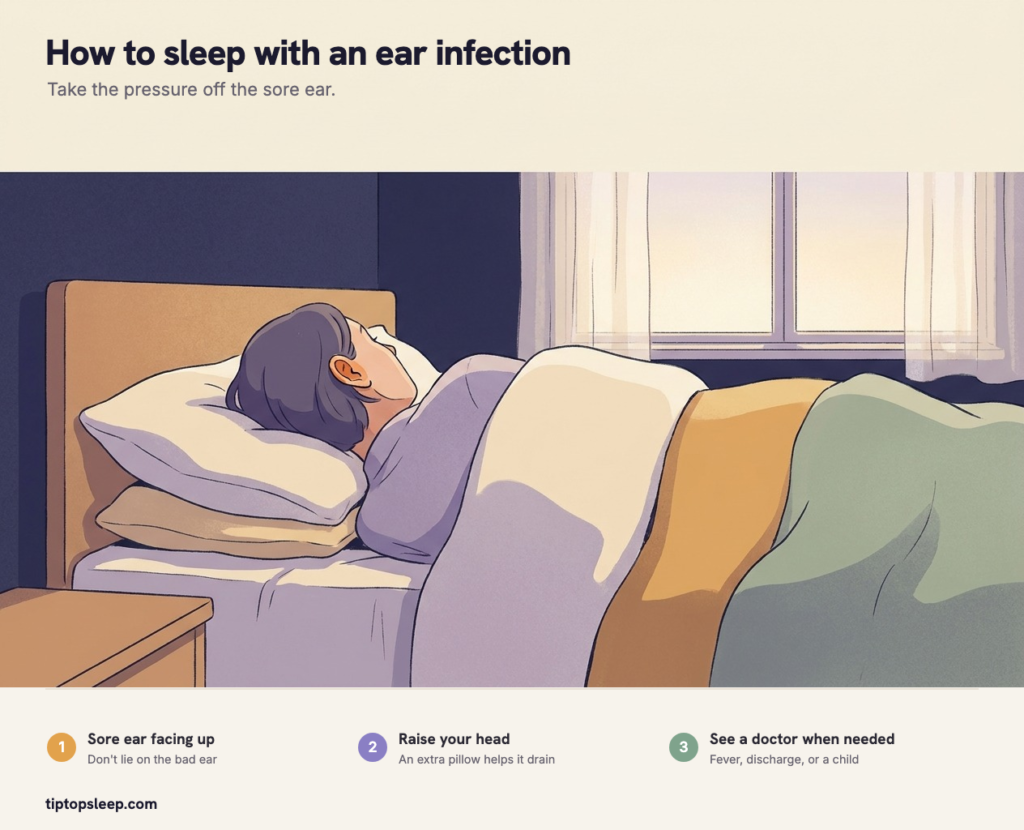
Sleep with the sore ear facing up, not pressed into the pillow - lying on the affected side adds pressure and makes the ache worse. Prop your head up a little with an extra pillow or a wedge so fluid can drain instead of pooling, try a warm (not hot) compress before bed, and stay hydrated. If the pain is severe, there's a fever, discharge, or it's a young child, get them seen by a doctor or pharmacist rather than just riding it out overnight.
Ear infections have a cruel sense of timing - they always seem to flare up right as you're trying to fall asleep. I remember my youngest waking up at 2am with her hand clamped over her ear, and the thing that helped more than anything else that night wasn't medicine, it was simply getting her upright and off that ear. There's a real reason lying flat makes ear pain worse, and once you understand it, the fixes are pretty straightforward.
Why does an ear infection hurt more at night?
It's not your imagination. A few things stack up against you once you lie down:
- Fluid pools instead of draining. Upright during the day, gravity helps fluid move out of the middle ear. Lying flat, it settles and builds up pressure against the eardrum.
- Pressure on the ear itself. If you roll onto the sore side, your own body weight presses the ear (and the pressure already inside it) even further.
- Fewer distractions. During the day, chewing, talking, and general movement all help relieve some pressure. At night, with nothing else going on, the ache is simply easier to notice.
The good news is that most ear infections are short-lived. The NHS notes that ear infections "are very common, particularly in children" and "often get better on their own within 3 days." That doesn't make tonight any easier, but it does mean the position and comfort tips below are usually about getting through a few rough nights, not a long-term problem.
What's the best sleeping position for an ear infection?
- Keep the sore ear up. Sleep on the opposite side, so the infected ear isn't pressed into the pillow.
- Elevate your head slightly. An extra pillow, a stack of two, or a wedge pillow raises your head enough to help fluid drain and take some pressure off the middle ear, rather than letting it pool while you're flat.
- Back-sleeping works too, as long as your head is propped up rather than flat - lying completely flat on your back can let pressure build the same way.
- If both ears are affected (more common in babies and toddlers), elevation matters more than which side you're on.
If you're not used to sleeping with your head raised, it can feel strange for the first night or two - similar to the adjustment period some people go through learning to sleep on their back for other reasons. Give it a couple of nights before deciding it's not working for you.
How do I take pressure off my ear overnight?
Even committed back-sleepers tend to drift onto their side by 3am without noticing, which is exactly when a sore ear gets pressed into the pillow again. A pillow with a cutout hole for the ear solves this directly - your ear rests in open air instead of against fabric, so you get the comfort of side-sleeping without any weight landing on the painful spot.
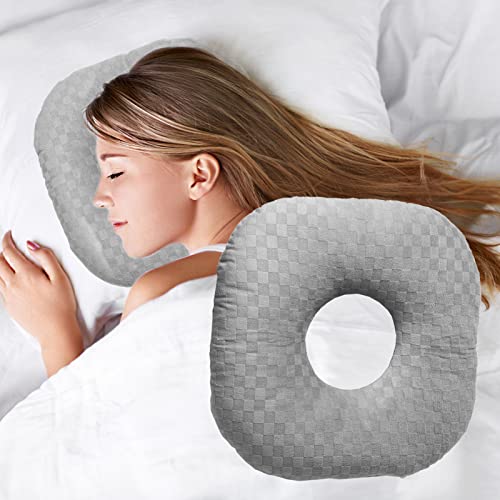
Wuronsa Ear Pain Relief Pillow
A cotton pillow with a hole built into the center, so a sore or infected ear rests in the gap instead of against the surface when you're lying on your side. It's a low-effort fix for exactly the problem that keeps ear-infection nights short - pressure on the one spot that hurts. Firmness is adjustable since you can add or remove filling through the zip.
If you'd rather go the head-elevation route instead, a simple wedge pillow does the job too. Our Sleep Toolkit rounds up the gear we trust for situations like this one.
What else actually helps before bed?
- A warm compress. A warm (not hot) flannel or heat pack held against the ear for a few minutes before bed can ease the ache. Test it against your wrist first so it's comfortably warm, not hot enough to burn.
- Stay hydrated. Drinking water and swallowing (a sip of water, gentle chewing) can help work the eustachian tube and relieve some pressure.
- Pain relief, per the label or your pharmacist. Over-the-counter pain relief can help with an earache, but dosing depends on age, weight, and what else you're taking - check the packet or ask a pharmacist rather than guessing, and always follow age guidance for children.
- Don't put anything in the ear. No cotton buds, no fingers, nothing to "clear" it yourself - that's more likely to irritate an already inflamed ear than help it.
The NHS is specific about what not to do: "do not put anything inside your ear to remove earwax, such as cotton buds or your finger" and "do not let water or shampoo get in your ear" while it's infected. Simple as it sounds, leaving it alone is part of the treatment.
When should I see a doctor about an ear infection?
Most ear infections settle on their own within a few days, but some need a proper look, and a few need same-day attention. The NHS advises getting urgent help "if you or your child have symptoms of an ear infection and: feel generally unwell," "have a very high temperature, or feel hot, cold or shivery," "have swelling around the ear," "fluid is coming out of the ear," or "have a change in hearing or new hearing loss." Call NHS 111 (or your own country's equivalent urgent line) or get seen the same day if any of that applies.
See a pharmacist or doctor sooner rather than waiting it out if:
- The earache hasn't improved after 3 days.
- There's discharge, pus, or blood coming from the ear.
- A child is under 12 months old and seems to have earache - the NHS recommends seeing a GP directly in this case.
- Ear infections keep coming back.
- Pain is severe, or there's a high fever alongside it.
Some ear infections clear up without any treatment at all, and others need antibiotic or antifungal drops, or tablets, from a doctor. There's no reliable way to tell which is which just by how the night feels, so when in doubt, get it checked rather than pushing through several uncomfortable nights in a row - especially for a young child who can't tell you exactly what's wrong.
Frequently asked questions
Should I sleep on the sore ear or the other side?
Sleep with the sore ear facing up, away from the pillow. Lying directly on an infected ear adds pressure and tends to make the pain worse.
Does elevating my head actually help an ear infection?
Yes, it's one of the more useful things you can do. Propping your head up with an extra pillow or a wedge helps fluid drain from the middle ear rather than pooling while you're flat, which is part of why lying completely flat tends to make earache worse at night.
Is it OK to give a child pain medicine for an ear infection?
Follow the dosing on the packet for their age and weight, or ask a pharmacist, and never give aspirin to children under 16. If a baby is under 12 months old, see a GP rather than just managing it with pain relief at home.
How long does an ear infection usually last?
Most clear up within about 3 days, though symptoms can sometimes last up to a week. If it's not improving after 3 days, or it's getting worse, get it checked rather than waiting longer.
Related reading:
- How to Sleep With Earrings Comfortably
- The Best Way to Sleep With a Cough and Cold
- How to Sleep After Wisdom Teeth Removal
- Learning to Sleep on Your Back (In 3 Easy Steps)
- Sleep Toolkit - the gear we actually recommend for situations like this
Sources & review: Guidance here is general comfort information, checked against the NHS page on ear infections. It is not medical advice and doesn't replace guidance from a doctor or pharmacist - always follow their specific instructions, and get a young child's ear infection checked rather than treating it at home alone.
📥 Free: The Post-Surgery Sleep Recovery Kit
Our 2-page PDF - the safe sleep position for your surgery, how to set up your bed, a night-by-night recovery timeline, and the red flags worth calling your doctor about. We'll email you the download link.
By subscribing you agree to our Privacy Policy.