

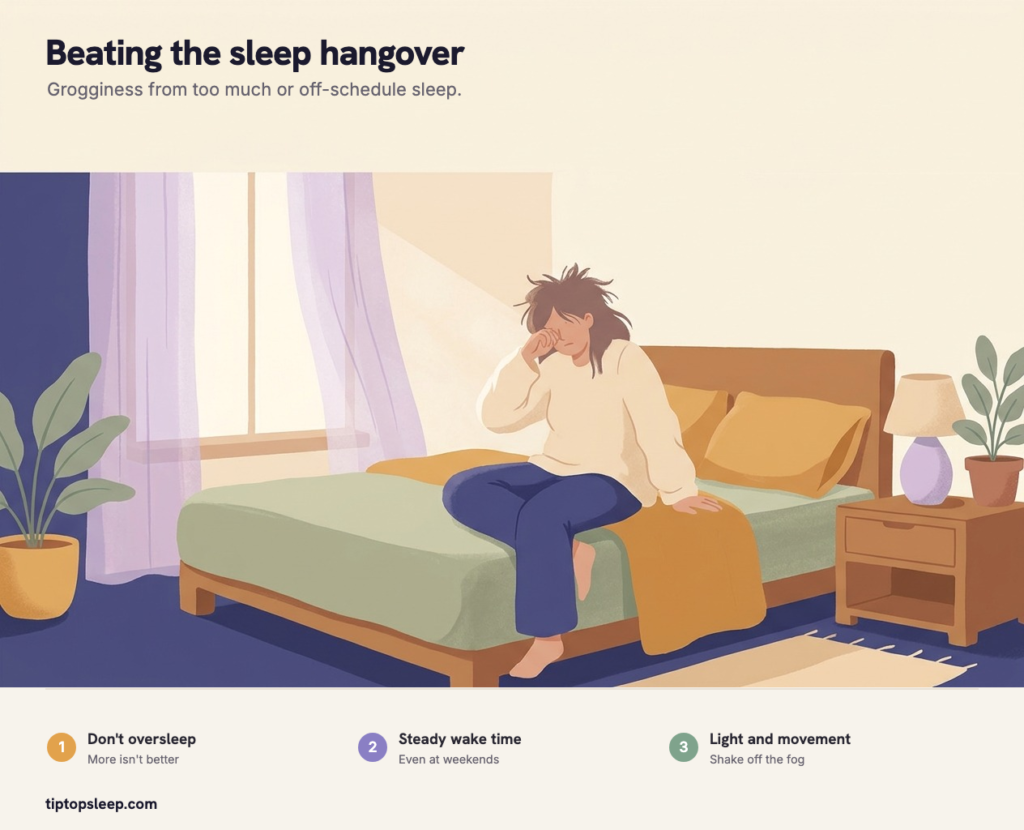
A "sleep hangover" is sleep inertia - the grogginess, heavy-headedness and mental fog you feel right after waking, made worse by oversleeping or an irregular sleep schedule. It happens because you've woken mid-cycle, often out of deep sleep, and your circadian rhythm hasn't caught up with the clock. It usually clears within 15-60 minutes, and the fastest way out is morning light, movement and water - not more sleep.
I get asked about this one a lot, usually by someone who slept in on a Saturday expecting to feel great and instead felt worse than if they'd got up at their normal time. I've had the same mornings myself. It feels unfair - you gave your body extra sleep and it repaid you with a headache and a fog you can't blink away. There's a real reason for it, and a few things that actually shift it faster than a second coffee.
What is a sleep hangover, exactly?
Sleep scientists call it sleep inertia: the transitional grogginess between sleep and full wakefulness. The Sleep Foundation defines it plainly: "Sleep inertia is the feeling of grogginess, disorientation, drowsiness, and cognitive impairment that immediately follows waking." Most of us feel a mild version every morning - it usually fades within 15 to 30 minutes. A "sleep hangover" is that same feeling turned up: heavier, foggier, and lasting longer, usually an hour or more, often with a dull headache and a heavy-limbed tiredness that no amount of blinking clears.
Why does oversleeping make it worse instead of better?
- You woke out of deep sleep. Sleep runs in roughly 90-minute cycles, with the deeper stages sitting earlier in the night. Sleep in past your normal wake time and there's a good chance your alarm (or your body) pulls you out of deep sleep instead of the lighter stage you'd normally surface from - the groggiest possible place to wake up.
- Your circadian rhythm gets confused. Your body clock expects light and activity at a certain time each day. Sleep two or three hours past that, especially on weekends, and you've effectively given your body a small dose of jet lag.
- The schedule was irregular, not just long. A weekday alarm followed by a weekend lie-in, repeated, unsettles your rhythm more than a single long night does - your body never quite locks onto one wake time.
Alcohol and screens before bed add to it: alcohol fragments sleep later in the night, and a dark, screen-lit bedroom makes it harder for your body to read the morning light that would normally help you surface cleanly.
Is oversleeping actually bad for you, or is it just an unpleasant morning?
An occasional groggy lie-in isn't something to worry about. But sleeping much longer than your usual need on a regular basis is worth paying attention to. Sleep Foundation notes that consistently sleeping too long is associated with "brain fog, poor memory, and sleep drunkenness (i.e., feeling confused or disoriented upon waking)" - and regularly needing far more sleep than you used to can also be a sign of an underlying sleep disorder, low mood, or another health issue rather than just "catching up." If you're routinely sleeping 9+ hours and still waking up groggy, that's worth mentioning to a doctor rather than just pushing through it.
How do I actually shake a sleep hangover?
Chasing more sleep is the instinct, but it's usually the wrong move. What works faster:
- Get light, fast. Open the curtains or sit by a bright window. Light is the strongest signal that tells your circadian rhythm the day has started, and it clears the fog faster than almost anything else.
- Move your body. A short walk or just moving around the kitchen shifts you out of the drowsy, half-asleep state faster than sitting still.
- Drink water before coffee. Grogginess and mild dehydration feel similar, and a long sleep is a long stretch without water.
- Time your caffeine. Coffee the moment you wake competes with your body's own cortisol rise. Waiting 30-45 minutes, after light and movement, tends to work better.
- Don't go back to sleep to "finish it off." A short second sleep almost always restarts the grogginess, because you risk dropping into another deep-sleep cycle you then have to climb back out of.
How do I stop it happening again?
The real fix isn't a morning routine, it's the night before and the wake time itself:
- Keep a consistent wake time, weekends included. This is the single biggest lever. Your body clock doesn't know it's Saturday - a steady wake time is what prevents the big weekend oversleep in the first place.
- Don't try to "bank" or "repay" sleep with a long lie-in. A rough week doesn't get fixed by three extra hours on Saturday - it usually just adds a sleep hangover to your Saturday too. An earlier bedtime for a night or two evens things out more gently.
- Watch the alcohol and screens before bed. Both interfere with the second half of the night, which is exactly the part that determines how you feel when you wake up.
- Let morning light do the work automatically. If mornings are dark, a gradual light source before your alarm can nudge your body toward waking in a lighter sleep stage, rather than being yanked out of deep sleep by sound alone.
The one change that helps most
Almost everyone who asks me about sleep hangovers has the same pattern underneath: an inconsistent wake time. A no-snooze alarm stops you fragmenting the last stretch of sleep, but a wake-up light goes a step further - it starts easing you toward the surface before the alarm sound even plays, which for a lot of people means waking from a lighter stage instead of being hauled out of deep sleep.

Philips SmartSleep Wake-up Light
Simulates a gradual sunrise for up to 30 minutes before the alarm sound plays, so your body starts stirring before you're jolted awake. Set it for the same time every day, weekends included, and it does a lot of the consistency work for you.
See our Sleep Toolkit for the rest of what's actually worth having in the bedroom.
Frequently asked questions
Why do I feel worse after sleeping in than after a normal night?
Sleeping in usually means waking out of deep sleep instead of a lighter stage, plus a delayed, confused signal to your circadian rhythm. Both add up to stronger sleep inertia than a normal wake-up at your usual time.
How long does a sleep hangover last?
Ordinary morning grogginess usually clears in 15 to 30 minutes. A stronger sleep hangover from oversleeping or an irregular schedule can drag on for an hour or more, especially without light and movement to help clear it.
Does a nap cause the same grogginess?
It can, especially a long nap that lets you drop into deep sleep. Keeping naps short (around five to twenty minutes) mostly avoids it, because you wake before deep sleep sets in.
Is it bad to sleep in on weekends?
An occasional lie-in isn't harmful, but a big gap between your weekday and weekend wake time unsettles your body clock, which is a large part of why "social jet lag" Mondays feel so rough. A smaller, more consistent gap is easier on your system.
Related reading
- Does a Five-Minute Nap Actually Help?
- Best No Snooze Alarm Clocks
- How to Avoid Sleep Problems After Surgery
- How to Beat Jet Lag
- Sleep Toolkit - the gear worth having
Sources & review: Researched and checked against Sleep Foundation - Sleep Inertia and Sleep Foundation - Oversleeping. This is general information, not medical advice, and does not replace guidance from your own doctor if grogginess or excessive sleep is a persistent problem for you.
📥 Free: The Post-Surgery Sleep Recovery Kit
Our 2-page PDF - the safe sleep position for your surgery, how to set up your bed, a night-by-night recovery timeline, and the red flags worth calling your doctor about. We'll email you the download link.
By subscribing you agree to our Privacy Policy.