

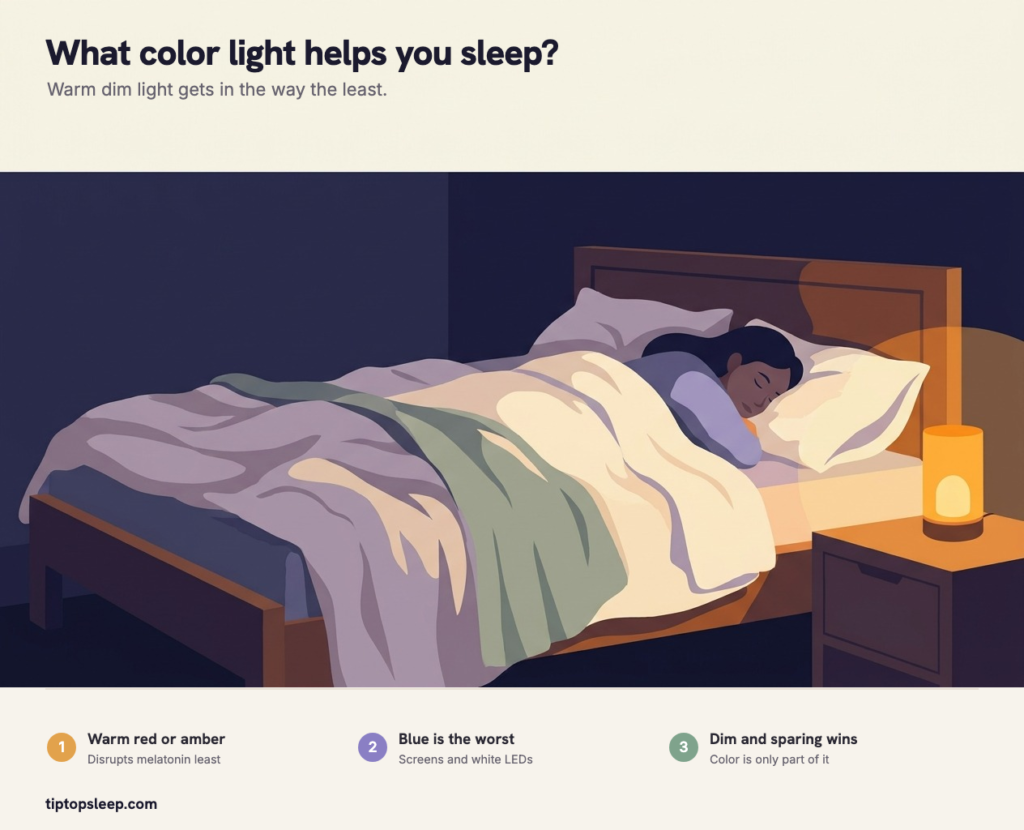
For winding down and any light you need overnight, warm red or amber is the best choice - it suppresses melatonin the least of any color. Blue light (screens, daylight-style LEDs, most white bulbs) is the worst, since it's the most alerting and the most disruptive to your body clock. But color is only part of it: dim, low, and used sparingly beats bright light of any color. Warm light doesn't "boost" sleep - it's simply the option that gets in your way the least.
I get asked some version of this constantly: "what color should my night light be?" It's usually from someone who's just read that red light is some kind of sleep hack, or a new parent trying to work out what to use for 3am feeds without waking the whole house up. So let's settle it properly - what the science actually shows, and how to use it in a real bedroom rather than a lab.
Why does light color even matter for sleep?
Your body reads light as its main signal for what time it is. Cells in your eyes feed that information straight to your circadian clock, which controls when your brain releases melatonin, the hormone that makes you feel sleepy. Bright light in the evening delays that release and pushes your whole schedule later - even if you still get into bed on time.
Not all wavelengths do this equally. Sleep Foundation is direct about it: "Blue light not only suppresses melatonin, it also enables the circadian rhythm to help the body maintain alertness." That's exactly the opposite of what you want at 9pm.
Which light color is worst for sleep?
Blue. It's the shortest wavelength of visible light your eyes are sensitive to, and it's everywhere in the evening without you necessarily noticing:
- Phone and laptop screens - the biggest source most people are exposed to right before bed.
- "Daylight" or "cool white" LED bulbs - common in kitchens and bathrooms, and easy to leave on too late.
- Overhead room lighting in general, especially anything bright and white.
Harvard Health's comparison found "the blue light suppressed melatonin for about twice as long as the green light and shifted circadian rhythms by twice as much (3 hours vs. 1.5 hours)" - and red sits even further down the disruption scale than green. That gap is the entire reason "avoid screens before bed" is such consistent advice.
Which light color is actually best for sleep?
Warm red or amber - not because it's doing anything positive for you, but because it interferes the least. Sleep Foundation's advice is plain: "Warm hues of red, orange, and yellow are better for preparing the mind and body for sleep." Their sleep medicine physician puts the practical version simply: "For a better sleep, keep your room dark, but if you need light, choose warm colors like red or amber."
Harvard Health frames the same idea from the night light angle: "Use dim red lights for night lights. Red light is less likely to shift circadian rhythm and suppress melatonin." That's a specific, practical recommendation, not a stretch - and it lines up with what I found when I actually swapped a bright bathroom bulb for a red one during a stretch of frequent night wake-ups. Falling back asleep afterward stopped feeling like starting over.
I want to be honest about the limits here, though. I used to write about red light like it was an active sleep booster - "proven to help you sleep." That's an overstatement, and it's worth correcting directly (I go deeper on this in why not to have red lights on at night). Red light isn't doing anything for you positively. It's just the color that does the least damage when you genuinely need light on.
What about a night light for kids or night feeds?
This is where the color choice earns its keep the most. If you're up at 2am with a baby, or a kid needs a hallway light to get to the bathroom, a bright white light will wake everyone up far more thoroughly than necessary - sometimes for 20 to 30 minutes once melatonin gets suppressed. A warm red or amber light gives you enough visibility to move around safely without that jolt.
Look for one that's genuinely red or amber LED, not a white bulb behind a tinted filter - filtered white light still lets meaningful blue wavelength through. Dimmable and low-brightness options matter more than color alone; a blinding red light isn't much gentler than a dim white one.

YUNLEX Red Night Light (0% Blue Light)
A true red LED, not a filtered white bulb, with a soft indirect glow and a dusk-to-dawn sensor so it turns on by itself. Three brightness levels mean you can keep it low for a hallway or bathroom without fully waking yourself - or a baby - up. Good pick for night feeds, bathroom trips, or anyone who wakes up mid-sleep and needs to see without starting the alarm-clock effect over again.
For the fuller list of what's actually worth having in your bedroom setup, see our Sleep Toolkit.
How do I cut blue light exposure in the evening without sitting in the dark?
- Dim everything as bedtime gets closer. Swap bright overhead lighting for a low lamp in the hour or two before bed - intensity matters as much as color.
- Use night mode or a warm color filter on screens if you must use one, but treat it as a smaller help than actually putting the screen away. Sleep Foundation's advice is to "avoid using electronic devices that emit blue light at least one hour before bed."
- Switch bathroom and hallway bulbs to warm or red for anything you'll flip on during the night.
- Cover stray LEDs - chargers, smoke detectors, routers, and TVs on standby are often small, bright, and blue-white, and easy to forget about.
- Aim for full darkness once you're actually asleep. Blackout curtains or a sleep mask do more for uninterrupted sleep than any night light color - warm light is for the in-between moments, not for sleeping through.
None of this needs to be perfect. Getting the two or three biggest sources of blue light out of your last hour before bed - phone, overhead lights, bathroom bulb - covers most of the benefit. If you also want a fuller routine, our sleep hygiene checklist walks through the rest of the evening, not just the lighting.
Does light color matter in the morning too?
Yes, in the opposite direction. Bright, blue-rich light in the morning is what tells your body clock it's time to be alert - it's part of why getting outside or into daylight soon after waking helps you feel more awake, and why some people use a sunrise-simulating alarm clock instead of a jarring buzzer. If mornings are the harder part of your routine, how to wake up without an alarm covers how to use light and a consistent schedule to make waking up less of a fight.
Frequently asked questions
What color light is best for sleep?
Warm red or amber, because it suppresses melatonin the least of any light color. It's not a sleep booster - it's the color that interferes the least when you need light on.
What color light is worst for sleep?
Blue and bright white light. They suppress melatonin the most and shift your circadian rhythm furthest, which is why phones, laptops, and daylight-style LED bulbs are the biggest things to dim or avoid before bed.
Is a red night light actually better than a regular night light?
For sleep, yes - a genuinely red or amber LED is less likely to fully wake you (or a baby) up compared with a white light of the same brightness. It won't help you fall asleep faster than darkness, but it's the better option when you need visibility.
Does red light actually help you sleep, or does it just not hurt as much?
The second one. Red light isn't proven to actively improve sleep quality. The honest claim, backed by Sleep Foundation and Harvard Health, is that it's less disruptive to melatonin than blue or white light - a smaller downside, not an upgrade.
Related reading:
- Why Not to Have Red Lights On at Night, Myth Debunked
- Best Alarm Clock for Sleep
- Sleep Hygiene Checklist
- How to Wake Up Without an Alarm
- Sleep Toolkit - the gear we actually recommend for situations like this
Sources & review: Checked against published guidance from Sleep Foundation on light color and melatonin, and Harvard Health on blue light's effect on circadian rhythm. This is general information, not medical advice, and doesn't replace guidance from your own doctor.
📥 Free: The Post-Surgery Sleep Recovery Kit
Our 2-page PDF - the safe sleep position for your surgery, how to set up your bed, a night-by-night recovery timeline, and the red flags worth calling your doctor about. We'll email you the download link.
By subscribing you agree to our Privacy Policy.