

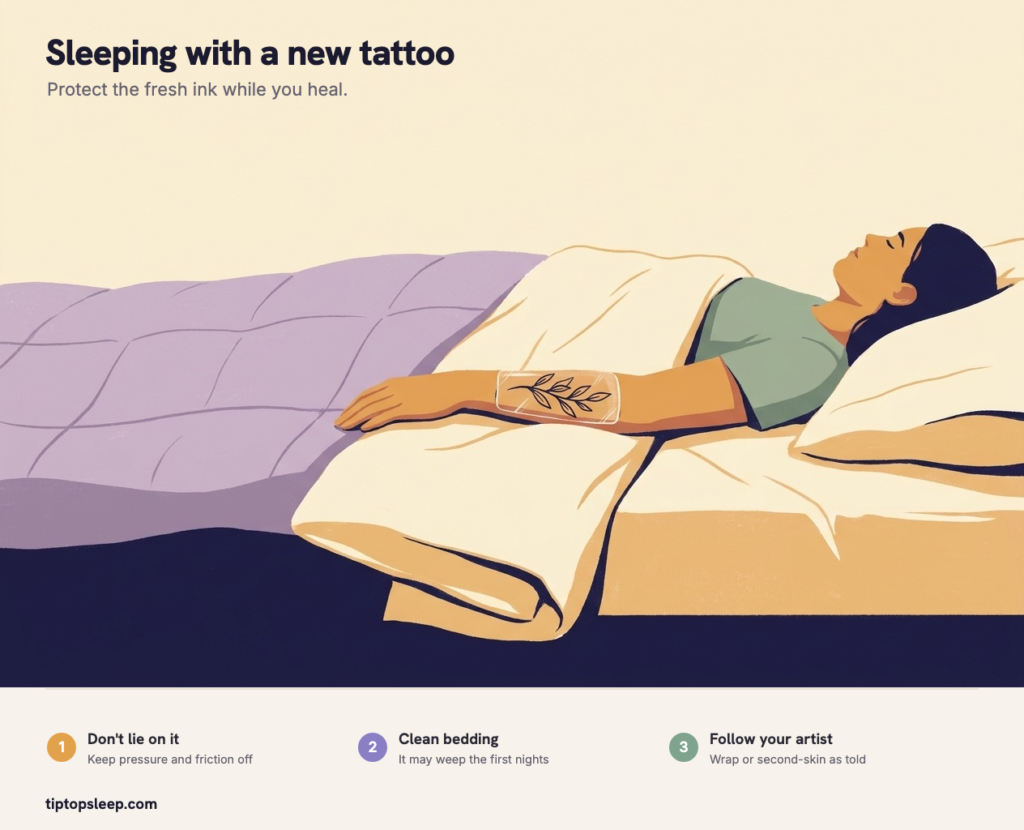
Follow your tattoo artist's instructions on whether to sleep in the initial wrap or a breathable second-skin film - they know exactly how your specific tattoo was done. Beyond that, the sleep-specific rules are the same for almost everyone: don't lie directly on the fresh tattoo, put a clean dark towel or old sheet under it in case it weeps overnight, and never re-seal it in ordinary plastic wrap to sleep in. A new tattoo is an open wound, and how you treat it for the first few nights matters more than people expect.
I remember a friend texting me at 1am after her first tattoo, panicking because she'd rolled onto it in her sleep and woken up stuck to the sheet. Nobody warns you that the hardest part of a new tattoo isn't the needle, it's the next three or four nights of trying to sleep like a normal person while treating a patch of your own skin like broken glass. It's manageable once you know what's actually going on underneath the ink.
What should I sleep in the first night, wrap or second skin?
This is the one question you shouldn't guess your way through. Ask your artist and do exactly what they say, because different studios use different aftercare systems and mixing advice from the internet with your artist's actual instructions is how healing goes wrong.
- Plastic cling wrap: some artists use this only for the first few hours to protect the tattoo on the trip home, and expect you to remove it before bed so the skin can breathe overnight. If that's your instruction, don't re-wrap it in plastic to sleep - the point is to take it off.
- Second-skin film (Saniderm, Derm Shield and similar): many artists now apply a breathable adhesive film designed to stay on for 3 to 6 days, sleep included. It's not the same as household cling wrap - it's a medical-grade barrier that lets air and moisture vapor through while keeping bacteria and friction out.
- No cover at all: some artists prefer dry healing with nothing on it after the first wash, in which case your job overnight is just to keep it clean and unobstructed.
Whichever method you're on, the underlying goal is the same: the tattoo needs to breathe and stay clean, and it should not be sealed under ordinary plastic wrap for hours while you sleep. Trapped moisture and heat under non-breathable plastic is exactly the environment bacteria like.
What's the best sleeping position for a new tattoo?
Simple rule: don't lie on it, in whatever position that requires.
- Tattoo on the front of your torso, arms, or legs: sleep on your back if you can. A small pillow or rolled towel under your knees helps you stay there instead of drifting.
- Tattoo on your back or side: you'll need to sleep on the opposite side, or on your back if the tattoo runs along your spine or shoulder blade. This is uncomfortable for a stomach or side sleeper, and adjusting to back-sleeping for a few nights takes some getting used to.
- Tattoo on a leg or foot: keep it away from fabric where you can, and a pillow between or under the legs helps you hold position without pressing the area into the mattress.
If you're a restless sleeper and worry about rolling onto it without noticing, propping pillows on the side you're trying to avoid works better than willpower alone.
How do I keep bedding clean while a tattoo heals?
A fresh tattoo can weep a mix of ink, plasma, and a little blood for the first night or two, especially with larger pieces. That's normal, but it means your sheets take the hit if you're not prepared for it.
- Use old or dark sheets for the first few nights. Ink stains do not come out of light fabric, so don't sacrifice anything you care about.
- Lay a clean towel over the pillow or sheet under the tattooed area. It's easier to swap a towel than to strip the whole bed at 2am.
- Change bedding often while the area is uncovered or weeping - every day or two is reasonable in the first week.
- Keep pets off the bed for the first few nights if you can manage it. Their hair, paws, and saliva carry bacteria your open tattoo doesn't need.

Saniderm Original Tattoo Aftercare Bandage
This is the brand a lot of studios actually apply in the chair, not a random drugstore substitute. It's a breathable, waterproof second-skin film that lets you sleep, shower, and move without exposing the tattoo to sheets, bacteria, or friction for several days at a stretch. Worth having on hand if your artist recommends this healing method, or as a backup roll for touch-ups later. Always confirm with your artist that this is the right aftercare approach for your specific tattoo before applying it yourself.
For more of what actually earns a spot on the nightstand during recovery, our Sleep Toolkit rounds up the gear we trust.
What should I avoid completely while sleeping with a new tattoo?
- Sleeping directly on it, even for one night - sustained pressure for hours is very different from a brief daytime knock.
- Re-wrapping it in household plastic wrap to sleep. It traps heat and moisture against the skin, which encourages the bacteria you're trying to avoid.
- Letting it stick to the sheet and pulling the fabric off. If it sticks, wet the fabric in the shower first and let it release on its own instead of tearing it away.
- Tight clothing or bedding rubbing against the area overnight. Cleveland Clinic's aftercare guidance recommends you "wear loose clothing" and specifically "avoid wearing tight clothing" so the area can air out without unnecessary friction.
- Sharing a bed with a restless partner or a pet for the first couple of nights if you can avoid it.
What are the signs of infection I shouldn't sleep through?
Some redness, mild swelling, and a little clear or slightly colored oozing in the first day or two is normal healing, not infection. the warning signs worth acting on are the classic ones for any wound infection: a fever or chills, skin that feels hot, redness or swelling that spreads or worsens rather than settling, increasing pain instead of easing, and pus or foul-smelling drainage. Cleveland Clinic notes that an infected tattoo can bring on "Chills," "Fever," "Inflammation," and "Pain that worsens," along with soreness and swelling around the area.
Their guidance is direct about what to do next: "If you notice signs of an infection, seek medical treatment right away." Don't wait out a bad night hoping it looks better by morning - contact your tattoo artist or a doctor if something seems off. They can tell the difference between normal healing and a real problem far faster than searching it yourself at 3am.
Frequently asked questions
Should I sleep with cling film on my new tattoo?
Only if your artist specifically told you to keep it on overnight. Many artists use cling film just for the trip home and want it removed before bed, since it doesn't let the skin breathe the way a proper second-skin film does. When in doubt, ask your artist rather than guessing.
How long do I need to be careful sleeping with a new tattoo?
The highest-risk window is roughly the first week, while the surface is still open or freshly closed. Most tattoos are visibly healed within two to three weeks, though deeper healing continues for longer. Go by how the area looks and feels, and your artist's specific timeline.
Can I sleep on my side if my tattoo is on my back?
Yes, sleeping on your side (away from the tattoo) or on your stomach are usually your best options for a back piece, since lying directly on your back would press the tattoo into the mattress all night.
What if my tattoo sticks to the sheet overnight?
Don't peel it off dry. Wet the stuck fabric thoroughly, ideally in the shower, and let it release on its own. Pulling it away dry risks tearing the healing skin and disturbing the ink.
Related reading:
- How Often Should You Change Your Pillowcase?
- Learning to Sleep on Your Back (In 3 Easy Steps)
- How to Sleep With Carpal Tunnel
- How to Avoid Sleep Problems After Surgery
- Sleep Toolkit - the gear we actually recommend for situations like this
Sources & review: Guidance here is general comfort and aftercare information, checked against Cleveland Clinic's tattoo aftercare guidance and their page on tattoo infection signs and symptoms. It is not medical advice and doesn't replace your tattoo artist's specific instructions - always follow their aftercare plan first, and contact them or a doctor directly if anything looks or feels wrong.
📥 Free: The Post-Surgery Sleep Recovery Kit
Our 2-page PDF - the safe sleep position for your surgery, how to set up your bed, a night-by-night recovery timeline, and the red flags worth calling your doctor about. We'll email you the download link.
By subscribing you agree to our Privacy Policy.