

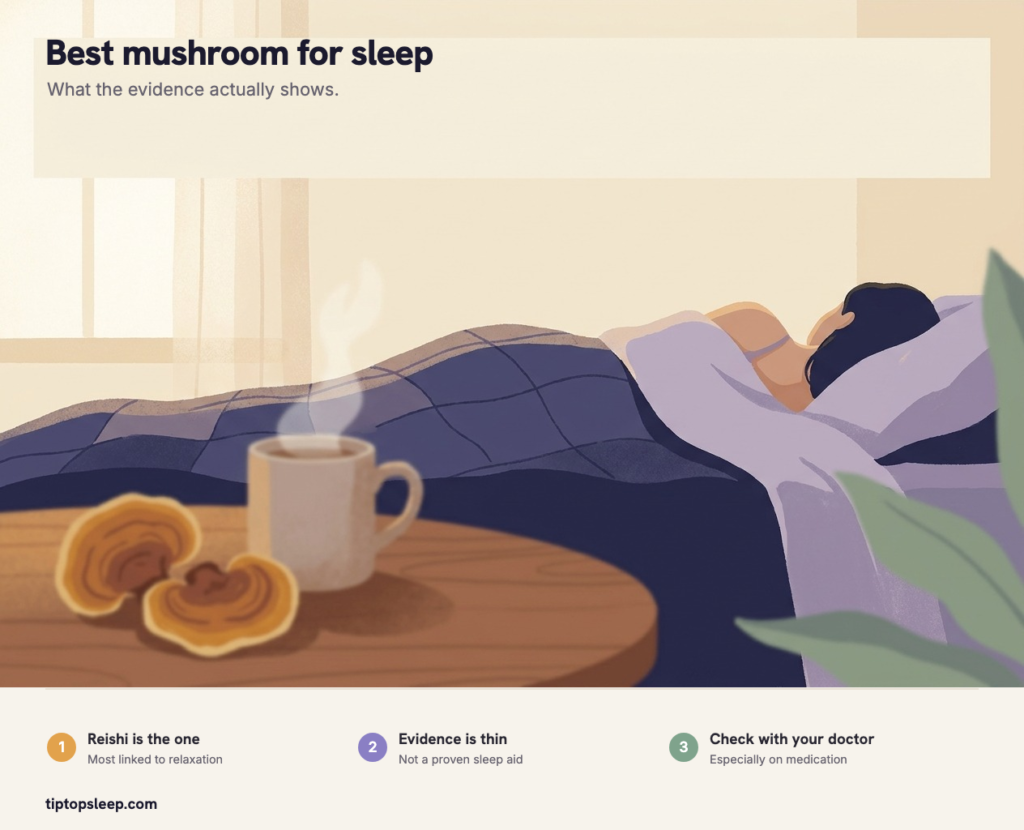
Reishi (Ganoderma lucidum) is the mushroom most associated with relaxation and sleep in traditional use, and some animal research suggests a calming, sedative-like effect - but robust human clinical trials on reishi for sleep are still lacking. Lion's mane has early, mixed evidence for mood and stress rather than sleep directly. Cordyceps is the opposite of a bedtime mushroom - it's used for energy, not rest. None of these are proven sleep aids, and they're not a substitute for good sleep habits or a doctor's advice, especially if you're on medication.
I get asked about "sleep mushrooms" a lot these days, usually by someone who's seen reishi hot chocolate or a mushroom gummy on Instagram and wants to know if it actually works. I'll be honest with you the way I'd want someone to be honest with me: the mushroom-and-sleep world is mostly built on centuries of traditional use and a handful of small studies, not the kind of solid clinical proof you'd get for something like melatonin. That doesn't mean it's worthless. It means you should know exactly what you're getting into before you spend money on it.
Which mushroom is actually linked to sleep?
If you filter out the marketing noise, one mushroom keeps coming up for sleep and relaxation specifically: reishi, also called Ganoderma lucidum or lingzhi. It's been used in Chinese and other Asian traditional medicine for centuries "to increase energy, boost the immune system, and for general health," according to Memorial Sloan Kettering Cancer Center's herb database, which is one of the more careful, evidence-graded resources on supplements available to the public.
- Reishi (Ganoderma lucidum): the one most tied to calm and sleep in traditional use. Some animal studies suggest it may have a sedative or sleep-promoting effect, but that hasn't been confirmed in well-designed human trials.
- Lion's mane (Hericium erinaceus): marketed more for mood, focus, and stress than sleep directly. A few small human studies have found lower anxiety, depression, or stress scores after weeks of use, but researchers themselves describe this research area as still in its infancy.
- Cordyceps: traditionally used for energy and stamina, not rest. If a supplement blend leans heavily on cordyceps, it's not a bedtime formula - save it for daytime.
- Turkey tail and other "functional" mushrooms: studied mostly for immune support, not sleep. They show up in blends because mushroom supplements sell well together, not because there's a sleep case for them.
None of this adds up to "mushrooms cure insomnia." It adds up to "one mushroom has a plausible, traditional, and partly animal-tested reason to be marketed for relaxation, and the rest are riding along."
How strong is the actual evidence for reishi and sleep?
Thin, honestly. Most of what exists falls into three buckets: centuries of traditional use in East Asian medicine, laboratory and animal studies showing possible calming or sleep-related effects, and a small number of human clinical studies that mostly look at things other than sleep, like fatigue, immune markers, or general wellbeing in cancer patients.
Memorial Sloan Kettering's review of the clinical research is measured about reishi. It notes the mushroom has been used traditionally to boost energy and the immune system, that small studies found it "increased plasma antioxidant capacity," and that some cancer patients reported subjective improvements in fatigue, mood and appetite alongside their conventional treatment. But it is blunt about the limits: for specific medical claims, such as reducing the cardiovascular risk factors tied to type 2 diabetes, "randomized controlled trials do not support the use of reishi," and MSK concludes that "further research is needed to determine the safety and effectiveness" of reishi as an adjunctive cancer treatment. None of that adds up to solid trial evidence that reishi is a reliable sleep aid.
In plain terms: there's enough traditional and preliminary signal that reishi isn't a scam, but not enough clinical proof to call it a sleep aid the way you'd call melatonin or a prescription drug a sleep aid. If you try it, go in expecting "might help me unwind a little," not "should knock me out."
What about lion's mane, cordyceps, and mushroom blends?
Lion's mane gets pulled into sleep conversations because poor sleep and anxiety often travel together, and lion's mane has some early research behind it for mood and stress. A handful of small trials have found reduced anxiety or stress scores after several weeks of supplementation, but the effect sizes are modest and the studies are small - this is not settled science.
Cordyceps is worth calling out specifically because it gets lumped into "mushroom sleep blends" that don't always make sense. Cordyceps is traditionally and commercially positioned as an energy and endurance mushroom. Taking it right before bed works against what it's typically used for. If you see it high on the ingredient list of a "sleep" blend, that's a reason to read the label more carefully, not less.
If you're drawn to a blend rather than reishi alone, check what's actually dominant in the formula and in what dose. "Mushroom sleep blend" on the front of the bottle doesn't tell you much - the ingredient panel does.
Is it safe to try a reishi supplement?
For most healthy adults, reishi is generally well tolerated in the short term, but it isn't automatically safe for everyone, and quality control across brands varies a lot since mushroom supplements aren't standardized the way medications are. A few things worth knowing before you consider it:
- Blood thinners: Memorial Sloan Kettering's guidance is direct here: "Talk to your healthcare provider if you're on blood thinners such as warfarin (Coumadin, Jantoven). Reishi mushroom can increase your risk of bleeding."
- Immunosuppressants: the same source advises, "Talk to your healthcare provider if you're on immunosuppressants. Reishi may not be safe for you."
- Blood pressure medication: reishi has been studied for mild effects on blood pressure, which means combining it with blood pressure medication could compound effects in ways that haven't been well studied. Mention it to your doctor if you're on any BP medication.
- Pregnancy and breastfeeding: there isn't good safety data here, so it's best avoided unless your doctor specifically says otherwise.
- Dosing and quality: reishi supplements are not standardized the way drugs are. Two bottles labeled "reishi" can have very different amounts of the actual active compounds, which is part of why results vary so much between people and between studies.
If you're managing a sleep disorder rather than the occasional restless night, a mushroom supplement isn't the place to start. Something like our sleep hygiene checklist addresses the habits that move the needle most reliably, and it costs nothing to try first.
Should you actually try a reishi supplement for sleep?
My honest take: if you like the idea of a low-key, traditional-medicine-rooted addition to your evening routine, and you don't have a condition or medication that makes reishi risky, there's little harm in a modest trial - as long as you keep your expectations realistic. Think of it the same way you'd think of a cup of chamomile tea: possibly a small, pleasant part of winding down, not a treatment for a sleep problem.

Force Factor Reishi Mushroom Supplement
A straightforward, single-ingredient reishi capsule rather than a crowded "sleep blend" with unclear dosing - useful if you want to try reishi specifically and see how your body responds. This is not a proven sleep aid and isn't a substitute for good sleep habits or your doctor's advice, particularly if you take blood thinners, immunosuppressants, or blood pressure medication.
Prefer to start with the basics instead of a supplement? Our Sleep Toolkit covers the honest, well-evidenced options - including where melatonin and magnesium actually fit in.
Frequently asked questions
Does reishi mushroom actually make you sleepy?
Not in the way a sedative does. Some animal studies suggest reishi may promote relaxation or sleep-related effects, and it has a long history of traditional use for calm, but there isn't strong human clinical evidence proving it induces sleep. Most people who like it describe a mild, gradual sense of ease rather than drowsiness.
Is lion's mane good for sleep or just for focus?
It's studied mainly for mood, stress, and cognition, not sleep directly. A few small studies have found lower stress or anxiety scores after weeks of use, and one study in overweight adults reported improved sleep disorder scores alongside those changes, but the research is early and any sleep benefit looks indirect, through reduced stress, rather than a direct sedative effect.
Can I take cordyceps at night for sleep?
It's not the mushroom for that. Cordyceps is traditionally and commercially used for energy and stamina, and taking it close to bedtime could work against winding down. If a sleep blend leans heavily on cordyceps, check the label before assuming it's meant for nighttime.
Are mushroom supplements safe to combine with sleep medication?
Don't combine supplements and prescription sleep medication without talking to your doctor first. Reishi in particular can interact with blood thinners and immunosuppressants, and combined sedative-type effects from stacking supplements and medications aren't well studied. When in doubt, ask your pharmacist or doctor before adding anything new.
Related reading:
- Best Magnesium for Sleep
- Sleep Hygiene Checklist
- Best Foods to Eat Before Bed
- Best CBD Gummies for Sleep
- Sleep Toolkit - the honest, evidence-checked picks we actually stand behind
Sources & review: Evidence notes on reishi mushroom, including direct quotes on clinical research limits and interaction warnings, are drawn from Memorial Sloan Kettering Cancer Center's herb database. This article is general information, not medical advice, and doesn't replace guidance from your doctor or pharmacist - talk to them before starting any supplement, especially if you're pregnant, on medication, or managing a health condition.
📥 Free: The Post-Surgery Sleep Recovery Kit
Our 2-page PDF - the safe sleep position for your surgery, how to set up your bed, a night-by-night recovery timeline, and the red flags worth calling your doctor about. We'll email you the download link.
By subscribing you agree to our Privacy Policy.