

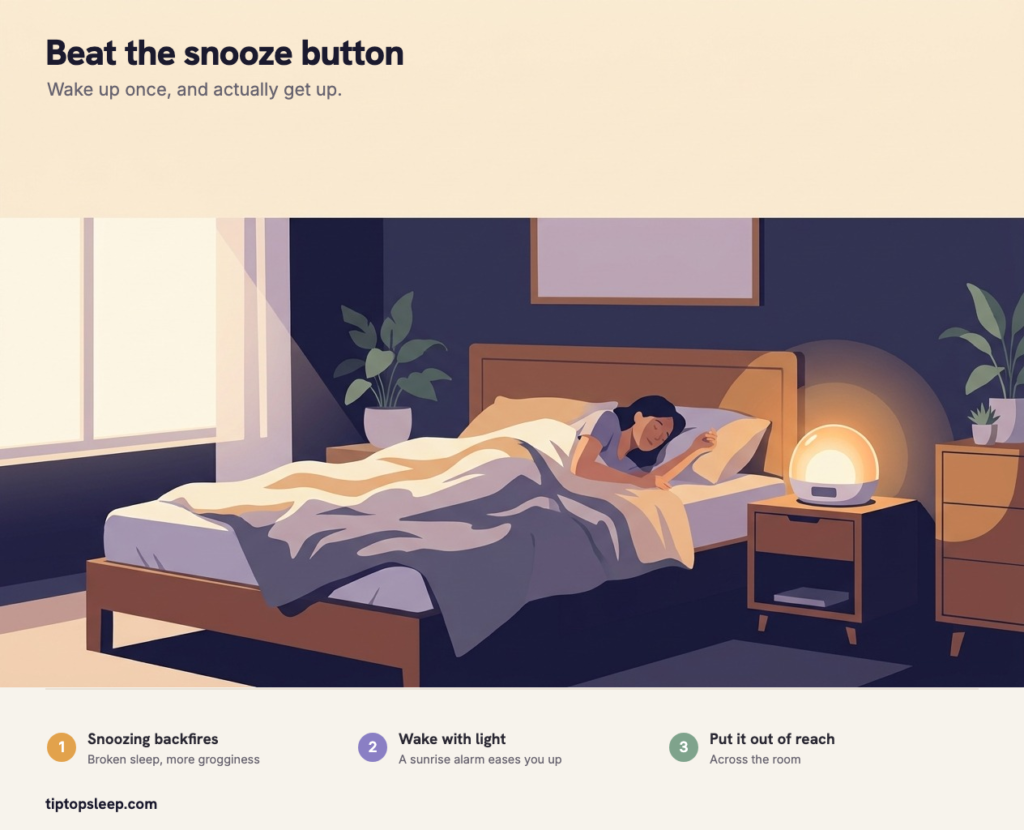
A no-snooze alarm clock helps because it removes the easy option of drifting back into a few fragmented minutes of sleep, which is what actually makes mornings feel worse. The most reliable fixes are an alarm placed across the room (so you physically have to get up), a sunrise or wake-up-light alarm that eases you awake with gradually increasing light, and a consistent wake time so your body needs the alarm less in the first place.
I used to think the problem was that I needed a louder alarm. It wasn't. The problem was the snooze button itself - every extra nine minutes I "won" left me groggier than if I'd just got up the first time. Once I understood why that happens, choosing the right alarm clock got a lot simpler. Here's what I've learned, and what I'd actually buy.
Why does hitting snooze make me feel worse, not better?
Because that extra sleep isn't real, restorative sleep. The Sleep Foundation puts it plainly: "Although it may be tempting to hit the snooze button to get an extra few minutes of sleep, any additional sleep will be fragmented." Fragmented sleep doesn't let you finish a sleep cycle, so you're waking up mid-cycle a second (or third) time - which is exactly when sleep inertia, the groggy, foggy feeling right after waking, tends to be at its worst.
Every snooze cycle is a small, repeated jolt: drift off, get yanked back out, drift off, get yanked back out. By the time you're actually up, you've had several mini wake-ups instead of one clean one, and that's what leaves you dragging through the morning rather than sharper for having "rested a bit more."
What actually gets you out of bed instead of snoozing?
A few approaches consistently work better than a phone alarm you can silence half-asleep:
- Put the alarm across the room. If you have to physically get out of bed to turn it off, you've already broken the drift-back-to-sleep cycle. It's blunt, but it works.
- Use a sunrise or wake-up-light alarm. These simulate a gradually brightening sunrise before the sound kicks in, so your body starts easing out of sleep before the alarm even goes off. It's a gentler wake-up than a sudden beep, and for a lot of people that gentleness means less temptation to fight it by snoozing.
- Try a vibrating alarm or gradual-volume alarm. A clock that starts quiet and builds, or one that vibrates under your pillow, wakes you in stages rather than all at once - useful if a sudden loud alarm leaves you startled and irritable.
- Fix your wake time, not just your alarm. This is the one people skip. A consistent wake time (weekends included, as much as life allows) trains your body to start surfacing from sleep on its own before the alarm even goes off, so you need the alarm less as a jolt and more as a backup.
What should I actually look for in an alarm clock?
- No snooze button, or a genuinely hard-to-reach one. Some clocks put snooze on top where a sleepy hand finds it in the dark - look for one where snoozing takes a deliberate action, not a lazy tap.
- Light simulation, if mornings are dark. A wake-up light is especially useful in winter or if you wake before sunrise, since there's no natural light doing the job for you.
- A dimmable display. A screen glowing at full brightness at 3am is its own small sleep disruptor.
- Physical distance from your pillow. Even the best alarm doesn't help if you can reach it without opening your eyes.
Our pick for a gentler wake-up
If sudden noise is what sends you straight for the snooze button, a wake-up light changes the whole experience - you're stirring before the sound even starts.

Philips SmartSleep Wake-up Light
Simulates a gradual sunrise before your alarm sound plays, with a tap-snooze that's far less tempting to abuse than a phone's. Also doubles as a bedside reading lamp, which is a nice bonus if you like to read before lights-out.
For the rest of what's actually worth having in the bedroom, see our Sleep Toolkit.
Will a no-snooze alarm fix bad sleep on its own?
No, and it's worth being honest about that. An alarm clock only controls the last five minutes of your night. If you're chronically short on sleep, going to bed later than your body wants, or drinking caffeine too late in the day, no alarm design fixes that - you'll just be groggy at a fixed time each morning instead of a random one. Think of the right alarm as removing a bad habit (snoozing), not as a substitute for the sleep itself.
Frequently asked questions
Is it bad to hit snooze every morning?
Doing it occasionally isn't a health crisis, but it does mean the extra sleep you're getting is fragmented rather than restorative, which is why you often feel groggier after several snoozes than if you'd got up on the first alarm.
Do sunrise alarm clocks actually work?
Many people find them a gentler way to wake, since the gradual light exposure starts nudging your body out of sleep before the sound goes off. They work best alongside a consistent wake time, not as a standalone fix for poor sleep.
What is the best alarm for heavy sleepers?
A loud alarm placed across the room, or a vibrating alarm under the pillow, tends to work better for heavy sleepers than a phone on the nightstand, simply because it forces you to move to silence it.
Why do I feel more tired after sleeping in and using snooze?
That grogginess is sleep inertia, and it's usually worse after fragmented, repeatedly interrupted sleep than after one clean wake-up - even if the fragmented version technically added a few extra minutes in bed.
Related reading
- Benefits and Risks of Using a Humidifier While Sleeping
- What Is the Best Color Noise for Sleep?
- Best Magnesium for Sleep
- The Truth About Sleep Hangover
- Sleep Toolkit - the gear worth having
Sources & review: Researched and checked against Sleep Foundation - Tips to Wake Up Easier and Sleep Foundation - Sleep Inertia. This is general information, not medical advice, and does not replace guidance from your own doctor for any underlying sleep problem.
📥 Free: The Post-Surgery Sleep Recovery Kit
Our 2-page PDF - the safe sleep position for your surgery, how to set up your bed, a night-by-night recovery timeline, and the red flags worth calling your doctor about. We'll email you the download link.
By subscribing you agree to our Privacy Policy.