

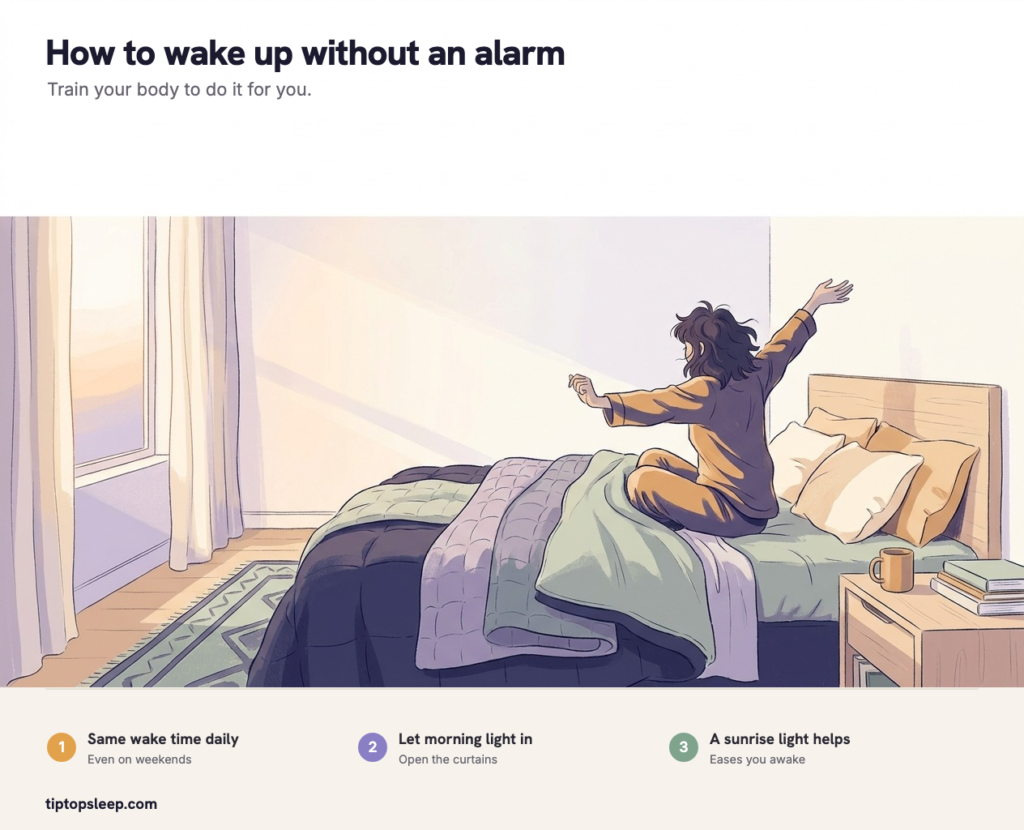
Waking up without an alarm comes down to training your body clock, not willpower. Go to bed and wake up at the same time every day (yes, weekends too), get enough total sleep so you're not fighting a sleep debt, and let bright light hit your eyes soon after you wake. Do that consistently for a couple of weeks and your body starts predicting your wake time on its own. A dawn-simulating light can speed the process along, especially in a dark bedroom or winter mornings.
I used to think waking up without an alarm was one of those things other people were just lucky enough to do, like never getting seasick. Turns out it's less luck and more routine. Once I stopped changing my wake time by two hours every weekend, my body started doing something it had apparently wanted to do the whole time: wake me up on its own, a few minutes before the alarm even went off. Here's what actually makes that happen.
Why do I wake up with an alarm instead of naturally?
Two systems run your sleep, and an alarm clock overrides both of them. The first is your sleep drive - the pressure to sleep that builds the longer you're awake and resets overnight. The second is your circadian rhythm, an internal roughly-24-hour clock that governs when you feel alert and when you feel sleepy, largely by tracking light.
- Irregular schedules confuse the clock. If you go to bed and wake up at wildly different times, your circadian rhythm never gets a clean signal for when "morning" is supposed to start.
- Sleep debt masks natural waking. If you're chronically short on sleep, your body will happily sleep through its natural wake window because it's still catching up. An alarm is often just cutting a nap short, not interrupting a full night.
- Not enough morning light. Darkness delays the drop in melatonin that should be nudging you awake. Heavy curtains and dim bedrooms work against you here.
Fix those three things together and the alarm often becomes a backup you rarely need, rather than the thing doing the actual waking.
What is the cortisol awakening response?
In the hour or so before you naturally wake, your sleep gets lighter and your body releases a burst of cortisol - not the "stress hormone" villain it's made out to be, but a normal part of transitioning you from sleep to alertness. This is also roughly when your body temperature starts rising and melatonin production winds down. If your alarm goes off in the middle of a deep sleep stage instead of during this lighter, closer-to-waking window, you get that groggy, dragged-out-of-a-hole feeling known as sleep inertia. A consistent schedule helps this natural wake-up process land at the same time every day, which is exactly what lets you wake up before the alarm rather than being yanked out by it.
How do I train my body to wake up naturally?
- Keep a consistent sleep and wake time, weekends included. This is the single biggest lever. The Sleep Foundation's guidance on circadian rhythm is direct about it: "Maintain a regular schedule: To the extent that it's possible, eat your meals, go to bed, and wake up at the same time every day." Sleeping in on Saturday and Sunday resets your clock, which is part of why Monday mornings feel brutal.
- Get enough total sleep for your body. You cannot wake up refreshed on 5 hours no matter how consistent your schedule is. Figure out your real sleep need (most adults land between 7 and 9 hours) rather than the number you wish were true.
- Get morning light as soon as you can after waking. Open the curtains, step outside, or sit near a window with your coffee. The Sleep Foundation puts it simply: "In the morning, open the curtains, and if you feel tired during the day, spend a few moments outside." Light is the strongest signal your circadian clock uses to know it's daytime.
- Dim the lights in the evening. Bright light at night pushes your circadian rhythm later, which makes the next morning harder regardless of what you do at wake time.
- Give it real time. Your body clock doesn't reset in one night. Expect one to two weeks of consistent timing before natural waking starts to feel reliable.
If mornings are consistently a fight even after weeks of a steady schedule, it's worth ruling out something else going on - poor sleep quality, an undiagnosed sleep disorder, or simply not budgeting enough hours in bed. A body clock can't fix a sleep debt on its own.
Can a sunrise alarm clock help me wake up without a beeping alarm?
Yes, particularly if your bedroom stays dark in the morning or you're waking up before actual sunrise for work. A wake-up light gradually brightens over 20 to 30 minutes before your set time, mimicking a natural sunrise instead of jolting you awake with sound. It won't replace consistent sleep timing, but it gives your circadian clock the light signal it's looking for even when the sky outside isn't cooperating.

Philips SmartSleep Wake-up Light
This is the wake-up light most sleep writers end up recommending, and for a good reason - it simulates a proper sunrise over 20 to 30 minutes instead of just flashing on, plus a sunset mode to help you wind down at night too. Genuinely useful for dark winter mornings or a bedroom with blackout curtains, where your body otherwise gets zero light cue until you're already up.
Want more gear that actually earns a spot on your nightstand? Our Sleep Toolkit rounds up what we trust for specific sleep problems, this one included.
Is it safe to stop using a regular alarm completely?
For some people, yes. For others, honestly, no - and it's worth being straight about that instead of pretending everyone can just wing it. Keep a backup alarm if:
- You work shifts, have an early flight, or any other morning where oversleeping has a real consequence.
- You're a naturally heavy sleeper who doesn't stir easily even with light and noise in the room.
- You're still building the consistent schedule - your body clock isn't reliable yet in week one.
- You're dealing with a sleep disorder, chronic sleep debt, or medication that affects how deeply you sleep.
A gentler middle ground works well here: keep a traditional alarm as backup, but pair it with a sunrise light set a little earlier. Most mornings, you'll wake with the light and never hear the beeping at all - but the safety net is still there for the mornings your body clock doesn't cooperate.
Frequently asked questions
How long does it take to train yourself to wake up without an alarm?
Most people notice a difference within one to two weeks of keeping a truly consistent sleep and wake time, including weekends. It takes longer if you're also paying off a sleep debt at the same time.
Why do I wake up a few minutes before my alarm sometimes?
That's your circadian rhythm and cortisol awakening response doing their job - your body has learned roughly when to expect wake time and starts the waking process slightly ahead of it. It tends to happen more often the more consistent your schedule is.
Does waking up at the same time on weekends really matter that much?
Yes. Sleeping in by even 2 to 3 hours on weekends is sometimes called "social jet lag" because it has a similar effect to crossing time zones, and it can undo a week of consistent weekday timing.
Will a sunrise alarm clock work if I already sleep with an eye mask?
Not well, since the whole mechanism relies on light reaching your eyes. If you need an eye mask for other reasons, morning light exposure right after you remove it will do more for your circadian rhythm than the wake-up light alone.
Related reading:
- Best No Snooze Alarm Clocks
- Why Not to Have Red Lights On at Night, Myth Debunked
- How to Beat Jet Lag: A Practical Plan to Reset Your Body Clock
- Sleep Hygiene Checklist
- Sleep Toolkit - the gear we actually recommend for situations like this
Sources & review: Guidance here is checked against the Sleep Foundation's page on circadian rhythm. It is general sleep information, not medical advice, and doesn't replace guidance from a doctor - if mornings stay a struggle after weeks of a consistent schedule, or oversleeping has real consequences for you, talk to your doctor rather than relying on habit changes alone.
📥 Free: The Post-Surgery Sleep Recovery Kit
Our 2-page PDF - the safe sleep position for your surgery, how to set up your bed, a night-by-night recovery timeline, and the red flags worth calling your doctor about. We'll email you the download link.
By subscribing you agree to our Privacy Policy.