

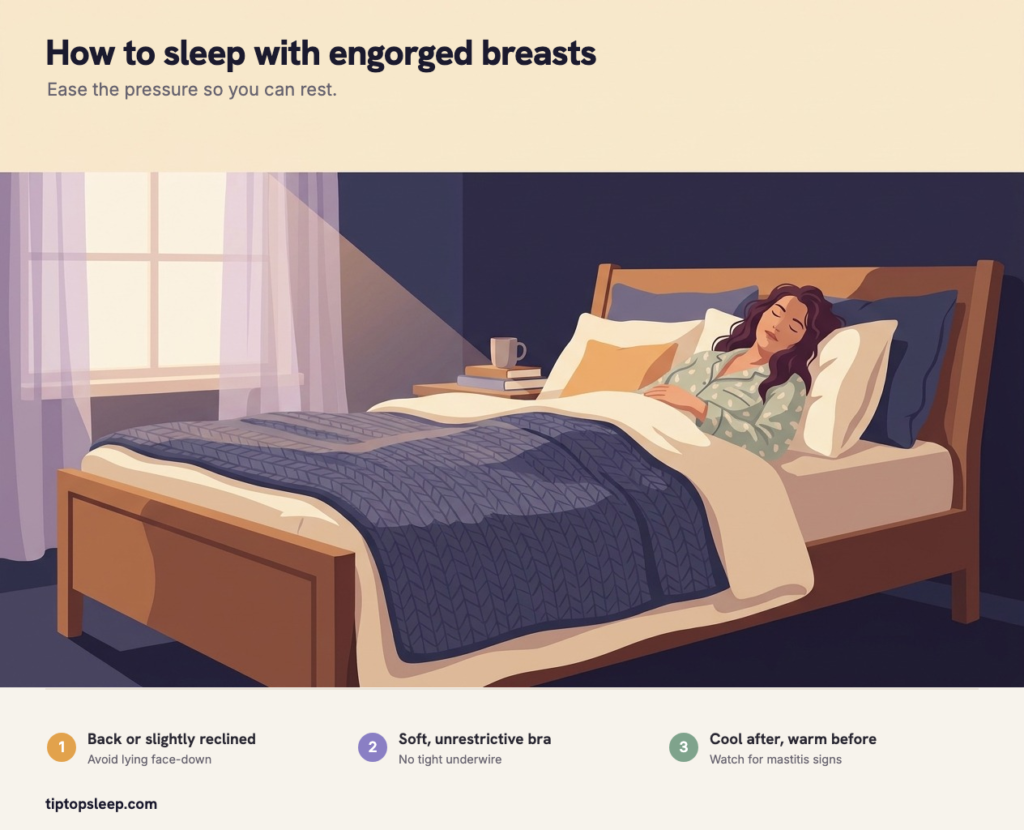
Sleep on your back or slightly propped up rather than on your stomach, and use extra pillows if side-sleeping so nothing presses directly on your breasts. Wear a soft, supportive (not tight) sleep or nursing bra, feed or hand-express just enough to feel comfortable before bed, and try a cool compress afterward to calm the swelling. Engorgement almost always eases within the first couple of weeks as your milk supply settles - but watch for fever, redness, or flu-like aches, which need a same-day call to your doctor or midwife.
Nobody warns you how much engorgement can hijack your sleep. You're already running on fumes with a newborn, and then your breasts turn rock-hard and throbbing right around the time you're finally trying to close your eyes. I remember watching my own daughter-in-law wince every time she rolled over those first weeks home with the baby. It's miserable, but it's also temporary and very manageable once you know what actually helps at night.
Why does engorgement get worse at night?
Engorgement happens when your breasts fill with milk faster than it's being removed. It's most common in the first days after birth, when your milk "comes in," but it can also flare up any time you go longer than usual between feeds - a long stretch of nighttime sleep for baby, a skipped pump session, or the start of weaning.
- Longer gaps between feeds. If your baby sleeps a longer stretch overnight, or you're weaning and cutting feeds, your body hasn't caught up yet and milk builds.
- Lying down changes the pressure. Full breasts feel heavier and more tender once you're horizontal, especially if anything - a pillow, a bra seam, your own arm - presses against them.
- You notice it more when everything else is quiet. Daytime distractions mask a lot of discomfort that becomes very obvious the moment you're trying to fall asleep.
The good news: this is a supply-and-demand problem, and it corrects itself. The NHS explains it plainly: "Breast engorgement is when, for whatever reason, your breasts become overly full." It's common, it's uncomfortable, and for most people it settles down within one to two weeks as your body learns how much milk your baby actually needs.
What's the best sleeping position when your breasts are engorged?
- Back-sleeping or a slight recline is usually the most comfortable option. Sleeping propped up on a couple of extra pillows, or even in a recliner for a night or two, keeps weight off your chest entirely.
- Avoid stomach-sleeping completely while you're engorged. Direct pressure on full, tender breasts is not just uncomfortable, it can also contribute to blocked ducts.
- If you sleep on your side, tuck a pillow against your chest so your arm and the mattress aren't squashing the breast underneath you, and switch sides through the night if you can.
- Loosen anything tight before bed - underwire, tight sports bras, and snug pajama tops can all press on milk ducts in ways that make engorgement worse overnight.
If you're recovering from a C-section on top of new-parent exhaustion, side-sleeping comfort matters even more - our guide on how to sleep after a C-section covers positioning for that specifically.
Does bra choice actually matter for sleeping?
Yes, more than most people expect. A bra that's too tight, especially anything with underwire, can dig into breast tissue and press on the ducts closest to your chest wall - and the NHS specifically recommends you "wear a well-fitting breastfeeding bra that does not restrict your breasts." The goal at night is gentle, even support, not compression.
- Choose a soft, wire-free nursing or sleep bra that supports without squeezing.
- Size up if you're between sizes - engorged breasts are temporarily larger than your usual cup, and a snug daytime bra can feel very different once you lie down.
- Skip underwire for now. It's one of the more avoidable pressure points, and pressure on a duct is exactly what you don't want when things are already backed up.
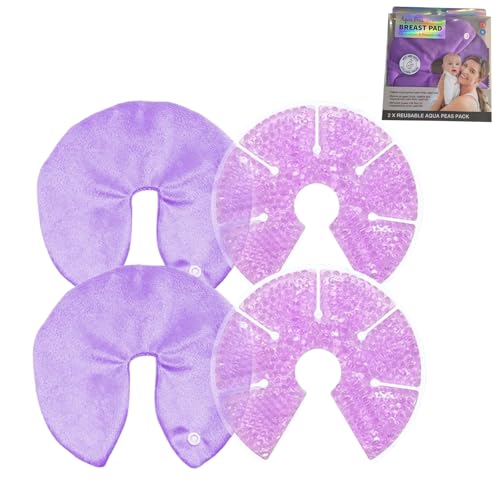
PandaEar Reusable Hot & Cold Breast Therapy Pads
These gel pads do double duty: chilled in the fridge, they take the edge off swelling and throbbing right before bed; warmed briefly, they can help with letdown before a feed. The soft velvet covers mean they sit comfortably against sensitive skin instead of an ice pack straight from the freezer. Simple, reusable, and genuinely useful for the specific discomfort of engorgement rather than a general aches-and-pains product.
For more gear we actually trust for specific sleep situations like this one, take a look at our Sleep Toolkit.
What should I do right before bed to make engorgement more bearable?
- Feed or hand-express just enough to feel comfortable - not a full pump session. Emptying completely tells your body to make more milk, which can make the cycle worse. The idea is to relieve pressure, not drain the tank.
- Try a warm compress just before a feed to help milk start flowing more easily, then switch to something cool afterward.
- Use a cold compress or chilled cabbage leaves after feeding to calm swelling before you settle in for the night. Both are old tricks, but the cooling effect is what actually helps, and a cabbage leaf tucked in a soft bra can feel surprisingly good.
- Ask about pain relief. The NHS notes it's fine to "take some paracetamol or ibuprofen at the recommended dose" for engorgement pain - check with your midwife, GP, or pharmacist about what's appropriate for you, especially if you're breastfeeding.
When is engorgement actually something to worry about?
Ordinary engorgement is uncomfortable but not dangerous, and it improves with the steps above. Mastitis is different - it's an inflammation (sometimes with infection) that needs prompt attention, so it's worth knowing the difference before you're trying to figure it out at 2am.
The NHS lists the symptoms clearly: "a breast that feels hot and tender," "a swollen area on your breast that may feel hot and painful to touch," where "the area may become red," along with "a general feeling of illness, as if you have flu," "feeling achy, tired and tearful," and "a high temperature."
If any of that sounds familiar, don't wait it out overnight. Their guidance is direct: "Contact your GP or NHS 111 if you feel worse at any time, or if you're no better within 12 to 24 hours." A lactation consultant or your midwife can also help if engorgement keeps recurring or feeding itself has become painful - that's not something you need to just push through.
Frequently asked questions
Is it safe to sleep through the night with engorged breasts?
Yes, for ordinary engorgement. It's uncomfortable rather than dangerous. Feed or hand-express enough to feel comfortable before bed, avoid stomach-sleeping, and use a cold compress if needed. If you develop fever, chills, or a hot red area, that's a reason to contact your GP rather than wait until morning.
Should I pump before bed to prevent engorgement overnight?
A little hand-expression or a normal feed is usually enough. Fully draining with a pump can signal your body to make even more milk, which can make engorgement worse over the following days rather than better.
How long does breast engorgement usually last?
For most people it's most intense in the first one to two weeks after birth, as milk supply and baby's feeding pattern find their rhythm, then it settles. Engorgement can also flare briefly during weaning or if you skip feeds.
Can a tight bra make engorgement or blocked ducts worse?
It can contribute, yes. Underwire and overly snug bras can press on ducts near the chest wall. A soft, well-fitting nursing or sleep bra that supports without squeezing is the safer choice while you're engorged.
Related reading:
- Surviving Newborn Sleep Deprivation
- How to Sleep After a C-Section
- Best Toddler Pillow
- How to Sleep With an Ear Infection
- Sleep Toolkit - the gear we actually recommend for situations like this
Sources & review: Guidance here is general comfort information, checked against the NHS page on breast pain and breastfeeding. It is not medical advice and doesn't replace guidance from your midwife, GP, or a lactation consultant - contact them directly if you notice fever, redness, or symptoms that feel like they're getting worse rather than better.
📥 Free: The Post-Surgery Sleep Recovery Kit
Our 2-page PDF - the safe sleep position for your surgery, how to set up your bed, a night-by-night recovery timeline, and the red flags worth calling your doctor about. We'll email you the download link.
By subscribing you agree to our Privacy Policy.