

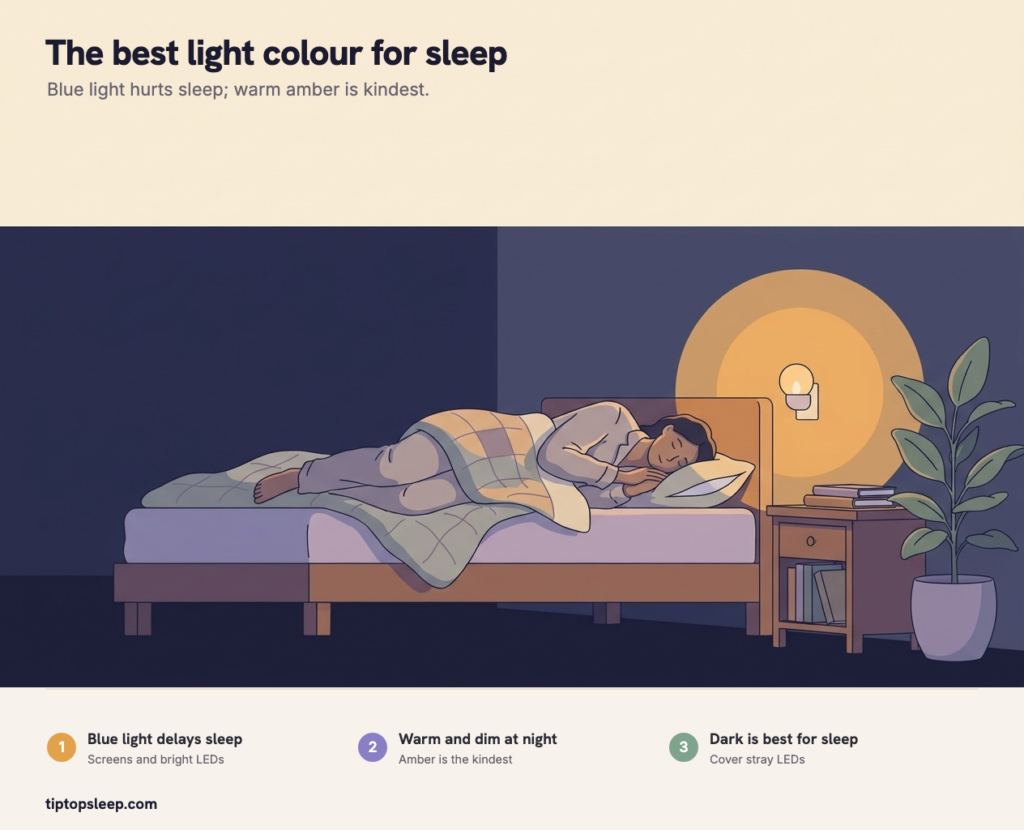
Red and amber light are generally the least disruptive light colors to have on at night - not because red is uniquely good for you, but because it suppresses melatonin far less than blue or bright white light does. Any light at night can interfere with sleep to some degree, and total darkness is still best for actually sleeping. But if you need a light on - for a nightlight, a nighttime feed, or a trip to the bathroom - warm red or amber is the smarter choice over a phone screen or a white bulb.
I want to correct something I got wrong here before. This post used to argue that red light is actively good for you at night, almost like a health hack backed by "US scientists." That's an overstatement. The honest version is simpler and still useful: it's not that red light helps you sleep - it's that it hurts you the least. Here's what the science actually says, and how I'd use that at home.
Does light really affect your sleep?
Yes, and more than most people realize. Your body reads light as its main cue for what time it is. A part of your brain called the suprachiasmatic nucleus uses light hitting your eyes to set your circadian rhythm - the internal clock that tells your brain when to release melatonin, the hormone that makes you feel sleepy. Bright light in the evening delays that melatonin release, which pushes your whole sleep schedule later, even if you still go to bed at your usual time.
This is why a bedroom that's still lit up with a screen, a bright overhead bulb, or a hallway light leaking under the door can leave you lying there wide awake despite feeling tired. It's not just about brightness, either - the color of the light matters just as much.
Why is blue light the real problem, not red?
Not all light suppresses melatonin equally. Blue wavelengths - the kind that come from phone and laptop screens, LED bulbs, and daylight-style lighting - are the most disruptive to your body clock. Harvard Health explains it plainly: "The blue light suppressed melatonin for about twice as long as the green light and shifted circadian rhythms by twice as much (3 hours vs. 1.5 hours)." That comparison came from a Harvard-led experiment testing blue light against green light of similar brightness - and red sits even further down the disruption scale than green.
Red and amber light have longer wavelengths and much less of the blue component your eyes are especially sensitive to at night, so they interfere with melatonin production far less. That's the entire basis for the "use red light at night" advice you see everywhere. It just doesn't mean red light is doing anything positive for you - it's the color that gets out of your body's way the most, which is a different claim than the one this post used to make.
So is it bad to have red light on at night?
Not particularly - and it's a reasonable choice if you need some light. A dim red or amber nightlight is unlikely to meaningfully delay your melatonin or shift your body clock the way scrolling your phone or leaving a white lamp on would. That makes it a sensible pick for:
- A hallway or bathroom nightlight for nighttime trips, so you're not flipping on a bright overhead light and waking yourself up fully.
- A nursery or nighttime feeding light, where you need enough visibility to be safe without fully rousing the baby - or yourself.
- A bedside reading or wind-down light in the last half hour before sleep, instead of a bright lamp or a screen.
That said, "less disruptive" isn't "harmless." Any light can reduce how quickly and deeply some people fall asleep, especially if it's bright or aimed at your eyes. If you sleep best in total darkness, red light isn't a workaround for that - it's just the better option among imperfect ones.
What should you actually do in the evening?
A few practical habits matter more than the color of any single bulb:
- Dim things down as bedtime gets closer. Swap bright overhead lighting for a warm, low lamp in the hour or two before bed.
- Put screens away before you're actually trying to sleep. If you must use one, use night mode or a warm color filter, but cutting screen time in the last hour helps more than any filter does.
- Use red or amber, not white, for anything that has to stay on. A dim red nightlight in a hallway or bathroom is a small, easy swap that avoids jolting your system awake.
- Cover stray LEDs. Chargers, smoke detectors, TVs on standby, and router lights are often bright white or blue and easy to forget about. A bit of electrical tape or a cloth over them can help more than you'd expect.
- Aim for full darkness when you're actually sleeping. Blackout curtains or a sleep mask beat any night light for the hours you're meant to be properly asleep - light only earns its place for the in-between moments when you genuinely need to see.
The easiest fix: a proper red/amber night light
If your current "night light" is really just a phone screen or a bright white lamp, swapping in a dedicated warm light is one of the simplest changes you can make. Look for one that's dimmable and genuinely red or amber, not a white LED behind tinted plastic.

ZEQIDOU Amber & Red Dimmable Night Light
Switches between warm amber and red, and dims down low enough for a hallway, nursery or bedside - a simple way to have light on hand at night without the white-light wake-up jolt. Rechargeable and portable, so it works just as well for nighttime feeds or a bathroom trip.
For the fuller list of what's actually worth having in your bedroom setup, see our Sleep Toolkit.
Frequently asked questions
Is red light actually better for your health, or just less disruptive to sleep?
Just less disruptive. Red light isn't doing anything actively beneficial for your body - it simply contains far less of the blue wavelength that suppresses melatonin, so it interferes with your sleep signal less than white or blue light does.
Can red light help you fall back asleep faster if you wake up at night?
It's a reasonable choice if you need light for a bathroom trip or a feed, since it's less likely to fully wake you or a baby up compared with a bright white light. It won't help you fall asleep faster than darkness would, though - it's the better compromise, not an upgrade.
What color light is worst for sleep?
Blue and bright white light are the most disruptive, since they suppress melatonin the most and shift your body clock furthest. That's the light coming from most phones, laptops, and standard LED bulbs in the evening.
Do I need a special red light bulb, or does any red light work?
A genuinely red or amber LED works best - some products use a white LED behind a red or amber filter, which lets more blue light through than a true red/amber diode does. Look for one described as low-blue or specifically designed as a red/amber night light.
Related reading
Sources & review: This article was corrected and reviewed against published guidance from Harvard Health on blue light and melatonin. It is general information, not medical advice, and does not replace guidance from your own doctor.
📥 Free: The Post-Surgery Sleep Recovery Kit
Our 2-page PDF - the safe sleep position for your surgery, how to set up your bed, a night-by-night recovery timeline, and the red flags worth calling your doctor about. We'll email you the download link.
By subscribing you agree to our Privacy Policy.