

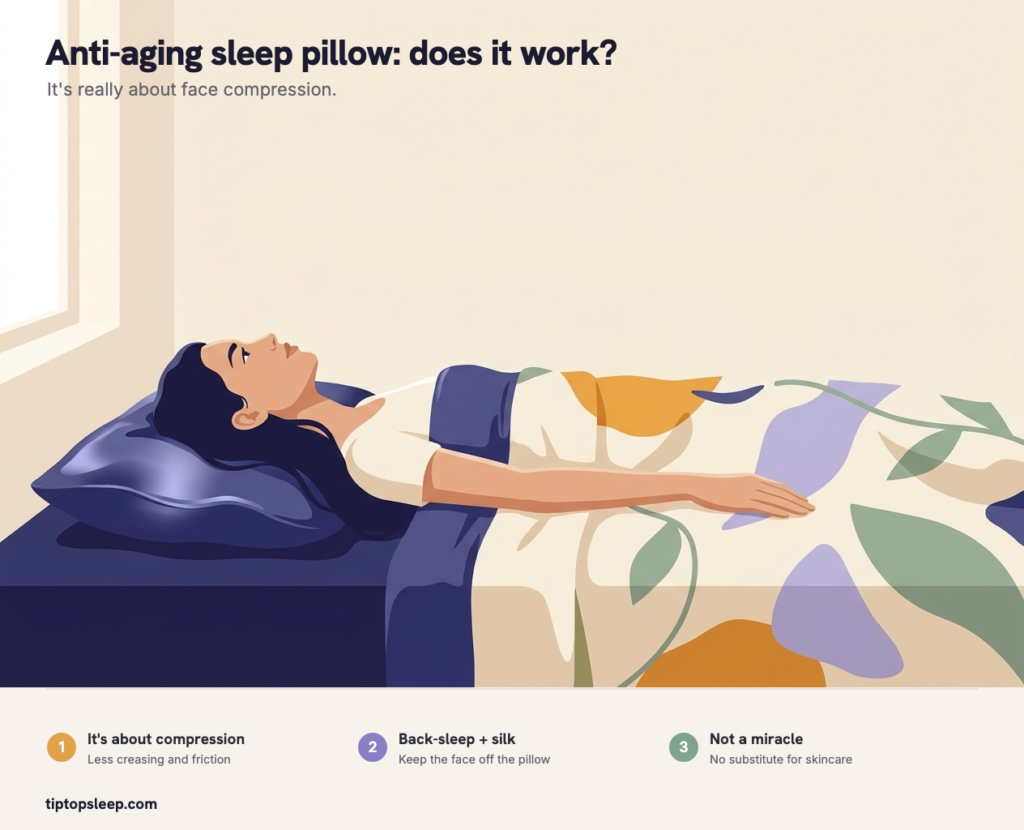
An "anti-aging sleep pillow" won't reverse wrinkles, but it can reduce the mechanical creasing that comes from pressing your face into a pillow all night. The two levers that actually do something: sleeping on your back so your face never touches the pillow, and switching to a silk or satin pillowcase, which creates less friction and tugging on skin than cotton. Shaped "beauty" pillows try to combine both by keeping your face suspended even if you're a side sleeper. None of this replaces sunscreen or skincare - it just removes one small, repeatable source of skin stress.
I'll be honest with you upfront: I was skeptical the first time I saw "anti-aging pillow" as a product category. It sounded like the kind of thing that promises a lot and delivers a fancier pillowcase. But once I looked into what actually happens to skin overnight, the core idea held up better than I expected - it's just a lot more modest than the marketing suggests. This isn't about erasing wrinkles. It's about not adding to them every single night.
Does sleeping position actually cause wrinkles?
There's more to this than folk wisdom. Sleep Foundation explains the mechanism plainly: when you sleep on your stomach or side, "one side of your face is pressed into the pillow, [and] it stretches, pulls, and compresses your skin throughout the night." Do that for hours, most nights, for years, and those repeated creases can turn into lines that stick around during the day too.
Back sleeping avoids this almost entirely. As Sleep Foundation puts it, "when you lie on your back, your face doesn't press against the pillow. This reduces the risk of your face's skin creasing and compressing, which may lead to wrinkles over time." That's the whole mechanism in one sentence - no product required, just a position change.
To be fair about the evidence, this isn't settled science. Sleep Foundation is upfront that "there are limited studies on sleep wrinkles" and that "some research has found few differences in the faces of people who sleep on their side." They also note that "many other factors affect the development of wrinkles, including things unrelated to your sleep position, such as sun exposure and genetics." So think of sleep position as one small, controllable variable among many, not the main event.
Can switching sleep position really help?
If you can train yourself to sleep on your back, that's the single biggest lever here, since it removes facial pillow contact almost entirely. It's genuinely one of the harder habits to build though - most side and stomach sleepers roll back over within the hour without noticing. If you want a real plan for making the switch stick, learning to sleep on your back walks through it step by step rather than just telling you to "try harder."
If back sleeping isn't realistic for you (it isn't for plenty of people, including anyone dealing with snoring or reflux), the next best thing is reducing friction and pressure where your face does make contact.
Do silk pillowcases actually reduce wrinkles?
This is the one part of the "anti-aging" pillow world with genuine backing, though it's still a modest claim, not a miracle one. Sleep Foundation is direct about the limits: "silk pillowcases are not a miracle cure for wrinkles, and their benefits for skin have not been proven by rigorous clinical studies." But they also note that "you may notice fewer creases when you wake up in the morning, especially if you are a side or stomach sleeper with prolonged facial contact against your pillow."
The reason comes down to texture. As Sleep Foundation explains, "silk pillowcases cause fewer wrinkles because the smooth quality of the fabric produces less friction, which means it won't tug at your skin as much as a fabric like cotton." Cotton has more texture and grip, so as you shift positions overnight, it drags slightly against skin. Silk lets your face glide instead of catch. The same smoothness is why silk pillowcases get recommended for hair too - "the smooth texture allows the fabric to glide against your hair cuticles, producing less friction than coarser fabrics that are more likely to snag hair," which is worth knowing if you're also trying to cut down on frizz and breakage, not just skin creasing. If you've had chemical services done, this matters even more - see our guide on how to sleep after a keratin treatment for how friction affects treated hair specifically, and how to protect your hair while sleeping for the fuller routine.
What about shaped "anti-wrinkle" beauty pillows?
These take the friction-reduction idea further with a structural fix: a cutout or U-shaped design that suspends your face in open air instead of letting it rest flat on a surface at all. If back sleeping isn't working for you and a plain pillowcase swap doesn't feel like enough, this is the middle option - you still sleep on your side, but your face isn't taking the weight or the friction.
Here's what I'd actually put money on, based on the honest mechanism rather than the marketing copy:

FITHUGOO Face Pillow for Wrinkles
A memory foam pillow with a hollow, U-shaped cutout that lets your face sit off the sleep surface instead of pressing flat into it, so side sleeping doesn't mean full facial contact all night. It comes with a removable, washable cooling silk pillowcase, which covers both levers in this article (friction reduction and pressure relief) in one product. It won't undo existing lines, but it's a reasonable way to stop adding new pressure creases if you're not ready to retrain yourself into back sleeping.

Mulberry Silk Pillowcase (Hidden Zipper)
If you're not ready to change pillows entirely, this is the lowest-effort upgrade: a mulberry silk cover for the pillow you already own. Both sides are silk, so it doesn't matter which way you flip it, and the hidden zipper keeps it in place overnight instead of bunching up. The honest pitch here is smoother skin contact and less hair friction, not fewer wrinkles by morning.
Want more of what's actually worth having on your nightstand? Our Sleep Toolkit rounds up the gear we trust, with the same honest-about-the-evidence approach.
How often should I wash or change a silk pillowcase?
- Once a week is a reasonable baseline for a silk pillowcase, same as any other pillowcase - oil, product residue, and sweat build up regardless of fabric.
- Wash it more often if you use heavy skincare products at night, sweat a lot, or have acne-prone skin.
- Use a gentle, cold-water cycle or hand wash to protect the fibers - check the care label, since silk care varies by weight and weave.
If you're unsure how this compares to your regular pillowcase rotation, how often should you change your pillowcase covers the general guidance in more depth.
Frequently asked questions
Can a pillow actually prevent wrinkles?
Not prevent, no. A pillow can reduce one specific, repeatable source of skin creasing (pressure and friction from facial contact overnight), but wrinkles come from many factors, especially sun exposure, genetics, and age. Think of it as removing one small stressor, not a treatment.
Is silk or satin better for anti-aging?
Silk is the more established option and what most of the evidence discusses, largely because of its smoother, lower-friction surface. Satin (often polyester-based) can offer a similar smooth feel at a lower price, though it doesn't have the same moisture-wicking or temperature-regulating properties as natural silk.
Do these pillows work for stomach sleepers too?
Shaped beauty pillows are generally designed with side sleepers in mind. If you sleep on your stomach, a silk pillowcase still helps reduce friction, but the compression from a full face-down position is harder to offset with a pillow shape alone. Working toward side or back sleeping will do more for you than the pillow itself.
How long before I'd notice any difference?
Any reduction in morning creasing from a smoother fabric can be noticeable within days, since that's about temporary compression easing, not new collagen. Any effect on longer-term wrinkles, if there is one, would take months to years to even begin to assess, and isn't something a single product can promise.
Related reading:
- How to Sleep After Keratin Treatment
- The Secrets of How to Protect Your Hair While Sleeping
- How Often Should You Change Your Pillowcase?
- Learning to Sleep on Your Back (In 3 Easy Steps)
- Sleep Toolkit - the gear we actually recommend, evidence-checked
Sources & review: Claims about sleep position, friction, and facial skin creasing are checked against Sleep Foundation's guide to sleeping positions, their page on stomach sleeping, and their silk pillowcase review. This is general comfort and skincare information, not medical or dermatological advice, and it won't replace sunscreen, a skincare routine, or guidance from a dermatologist. Product picks reflect our own editorial judgment; check current pricing and availability on Amazon.
📥 Free: The Post-Surgery Sleep Recovery Kit
Our 2-page PDF - the safe sleep position for your surgery, how to set up your bed, a night-by-night recovery timeline, and the red flags worth calling your doctor about. We'll email you the download link.
By subscribing you agree to our Privacy Policy.