

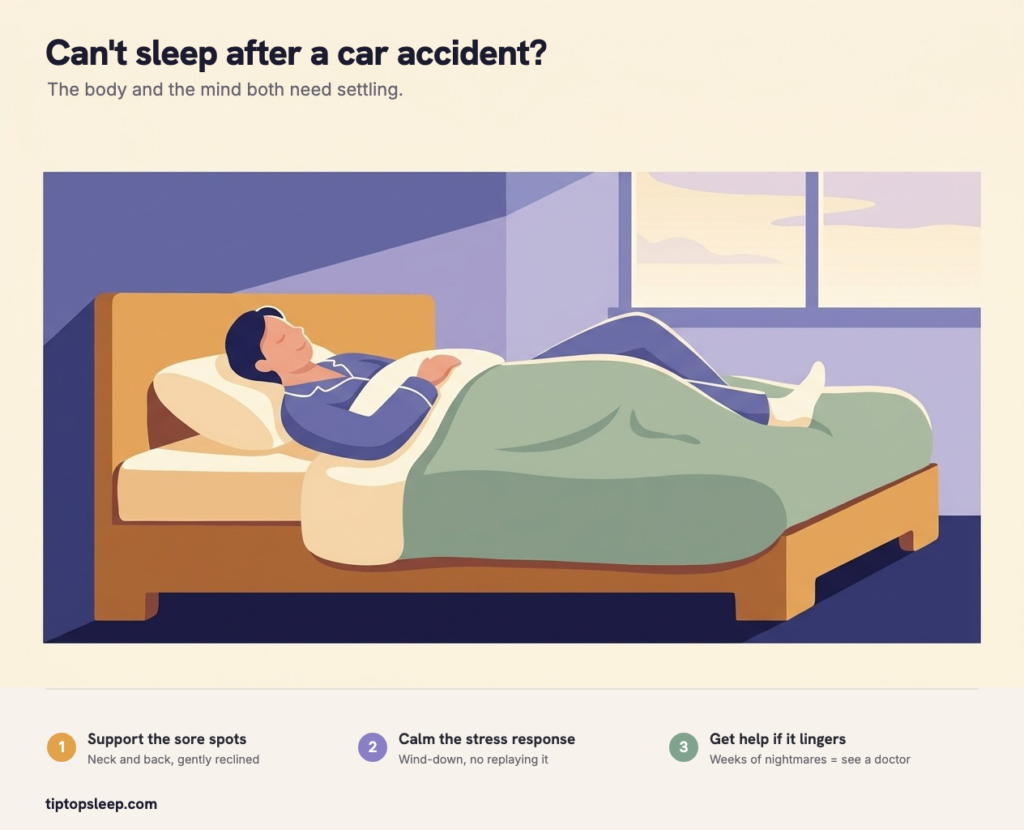
Not being able to sleep after a car accident is common, and it usually has two causes working together: physical pain from whiplash or bruising that makes lying flat uncomfortable, and a nervous system that's still on high alert from the fear of the crash. Sleeping slightly reclined with neck and back support helps with the physical side. For the mental side, expect some replaying of the event and a few rough nights - but if nightmares, flashbacks, or insomnia are still going strong after several weeks, that's worth talking to a doctor about, not something to push through alone.
I remember a friend telling me she kept "hearing" the crash the second she closed her eyes, days after the accident, even though physically she was fine. That's a strange thing to sit with when nobody warned you sleep might be the hardest part of recovering. If you're lying awake tonight wondering why your body won't settle down, you're not broken and you're not alone - this is one of the most common things people report after a crash, and there are real reasons for both the physical discomfort and the mental replay keeping you up.
Why can't I sleep after a car accident?
Two separate things are usually happening at once, and it helps to tell them apart.
- Physical pain and stiffness. Whiplash, sore muscles, bruised ribs, or back pain from the impact make most sleeping positions uncomfortable. Lying flat can pull on a stiff neck in ways that sitting or standing doesn't.
- A nervous system stuck in alert mode. A car accident is a genuine shock to the body. Adrenaline and stress hormones that spiked in the moment don't always switch off right away, which can leave you feeling wired, jumpy, or unable to settle even when you're exhausted.
Either one alone can wreck a night's sleep. Together, they're a big reason why "I can't sleep after my accident" is such a common search in the days and weeks after a crash.
How do I sleep comfortably with whiplash or accident-related pain?
Follow whatever your doctor or physiotherapist has told you about positioning, especially if you've been given specific instructions about a neck brace or restricted movement. In general, though, people recovering from whiplash and accident-related soreness tend to find these adjustments helpful:
- Sleep slightly reclined rather than flat. Propping yourself up with pillows, or using an adjustable base if you have one, takes some of the pull off a stiff neck and can ease lower back pain too.
- Support the natural curve of your neck. A pillow that cradles the neck instead of just the head can stop it from dropping into an awkward angle overnight.
- Choose side or back sleeping based on where it hurts. If your back took the brunt of it, side-sleeping with a pillow between your knees often feels better. If your neck is the main issue, back-sleeping with proper support usually causes the least strain. Test gently and go with what your body tolerates, not what you "should" prefer.
- Avoid stomach sleeping for now - it twists the neck into a position that's rarely kind to whiplash.
- Give yourself permission to move. Waking up to adjust isn't a failure. A body that's healing often needs to shift more than it used to.
If pain is the main thing keeping you up night after night, that's worth flagging to your doctor rather than just managing around it - persistent pain that disrupts sleep for more than a couple of weeks deserves a proper look, especially after a crash.

Royal Therapy Contour Cervical Pillow
A contoured memory foam pillow built to cradle the neck rather than just the head, with a removable layer so you can adjust the loft to whatever feels least aggravating right now. Works for side, back, or stomach sleepers, which matters when you're not sure which position your body will tolerate this week.
For more gear that actually helps with recovery sleep, our Sleep Toolkit rounds up what's worth having on the nightstand.
Is it normal for sleep to be disrupted after a frightening crash?
Yes, and more than people expect. A car accident happens fast and violently, and the body's stress response doesn't always get the memo that the danger has passed. In the days and weeks afterward, it's common to experience:
- Trouble falling asleep because your mind keeps circling back to the moment of impact.
- Waking up frequently, sometimes with a jolt, sometimes for no clear reason.
- Nightmares or vivid dreams that replay the crash or contain related imagery.
- Feeling "on edge" - jumpy at sudden noises, tense in the car as a passenger, hyperaware in ways you weren't before.
The Sleep Foundation describes this pattern plainly: "After a traumatic event, many people have difficulty falling asleep, wake up more often during the night, and have trouble falling back asleep." They also note why it happens: "Alertness and hyperarousal related to the effects of the body's trauma response often contribute to the symptoms of insomnia." On the nightmares specifically, they add: "Distressing dreams and nightmares are common to trauma. Survivors often have dreams about the traumatic event that either directly replay the experience or contain trauma-related emotion, details, and symbols." None of that means something has gone wrong with you. It means your nervous system is still processing something genuinely frightening, and for most people, this settles down gradually over the following weeks.
When does this become something more than normal stress?
Most people's sleep and sense of safety improve steadily over the first few weeks after a crash. It's worth paying closer attention, and reaching out for support, if any of the following are true:
- It's been several weeks and things aren't improving, or they're getting worse instead of better.
- Nightmares or flashbacks are frequent rather than occasional, and they're interfering with your ability to function during the day.
- You're avoiding driving, being a passenger, or even leaving the house because of anxiety connected to the accident.
- You feel persistently on edge, numb, or disconnected, not just tired.
- Insomnia is affecting your work, relationships, or ability to cope day to day.
The Sleep Foundation puts it this way: "If these symptoms persist over time, or if they begin to interfere with work, school, or relationships, they may be a sign of more severe post-traumatic stress." This pattern of symptoms, ongoing nightmares, flashbacks, avoidance, and disrupted sleep, is also how the NHS describes post-traumatic stress disorder: "The main symptom of PTSD (post-traumatic stress disorder) is when you keep having distressing thoughts about a traumatic event or experience. You may experience this as flashbacks, vivid or intrusive images or thoughts, and recurring dreams or nightmares." The NHS also notes that symptoms can appear straight away or emerge later: "You may experience symptoms straight after the traumatic event or many months, or even years, later." Their guidance is simple: see a GP if you recognize these symptoms in yourself. This isn't something to self-diagnose off a blog post, and it isn't something to be embarrassed about either - a doctor or trauma-informed therapist can help far more effectively than trying to white-knuckle your way through it.
What can help in the meantime?
- Keep some kind of routine. Going to bed and waking at roughly consistent times helps your body find its footing again, even when sleep itself is broken up.
- Talk about it, if that feels right for you. Some people find that talking through what happened, with a friend, family member, or professional, takes some of the charge out of the memory and eases the nighttime replay.
- Ease back into normal activity at your own pace, with your doctor's clearance if you were physically injured. Staying completely still and isolated tends to prolong both the physical and emotional recovery.
- Be patient with a few rough nights. Expecting yourself to "just get over it" and sleep normally right away usually backfires. Give the process the time it needs.
- Don't self-medicate with alcohol to fall asleep. It might knock you out faster but it fragments sleep later in the night and tends to make anxiety worse over time.
Frequently asked questions
How long does insomnia after a car accident usually last?
For most people, sleep gradually improves over the following weeks as both the body and nervous system settle. If it drags on with no improvement, or symptoms are getting worse rather than better, it's a good time to talk to a doctor rather than wait it out.
Is it normal to keep replaying the accident when trying to sleep?
Yes, this is one of the most commonly reported experiences after a crash. The mind often tries to process a frightening event by revisiting it, especially in the quiet of trying to fall asleep. It's uncomfortable but not unusual, and it typically fades as the days pass.
Should I sleep on my back or side after whiplash?
There's no single right answer - it depends on where you're injured and what your doctor or physiotherapist has advised. Many people with neck-focused whiplash find back-sleeping with proper support easiest, while those with back pain often prefer side-sleeping with a pillow between the knees.
When should I see a doctor about sleep problems after an accident?
If pain is preventing sleep for more than a couple of weeks, or if you're having frequent nightmares, flashbacks, or anxiety that isn't easing after several weeks, it's time to bring it up with a doctor. These are treatable, and there's no benefit to waiting until things feel unmanageable.
Related reading:
- Best Sleeping Position for Lower Back Pain
- How to Sleep After Septoplasty
- How to Avoid Sleep Problems After Surgery
- Fear of Not Sleeping
- Sleep Toolkit - the gear we actually recommend for recovery sleep
Sources & review: Guidance here is general comfort and information, checked against the Sleep Foundation's page on trauma and sleep and the NHS page on post-traumatic stress disorder. It is not medical advice and doesn't replace a proper evaluation from your doctor, physiotherapist, or a trauma-informed mental health professional - please see one directly for pain that isn't improving or for sleep problems, nightmares, or anxiety that persist beyond a few weeks.
📥 Free: The Post-Surgery Sleep Recovery Kit
Our 2-page PDF - the safe sleep position for your surgery, how to set up your bed, a night-by-night recovery timeline, and the red flags worth calling your doctor about. We'll email you the download link.
By subscribing you agree to our Privacy Policy.