

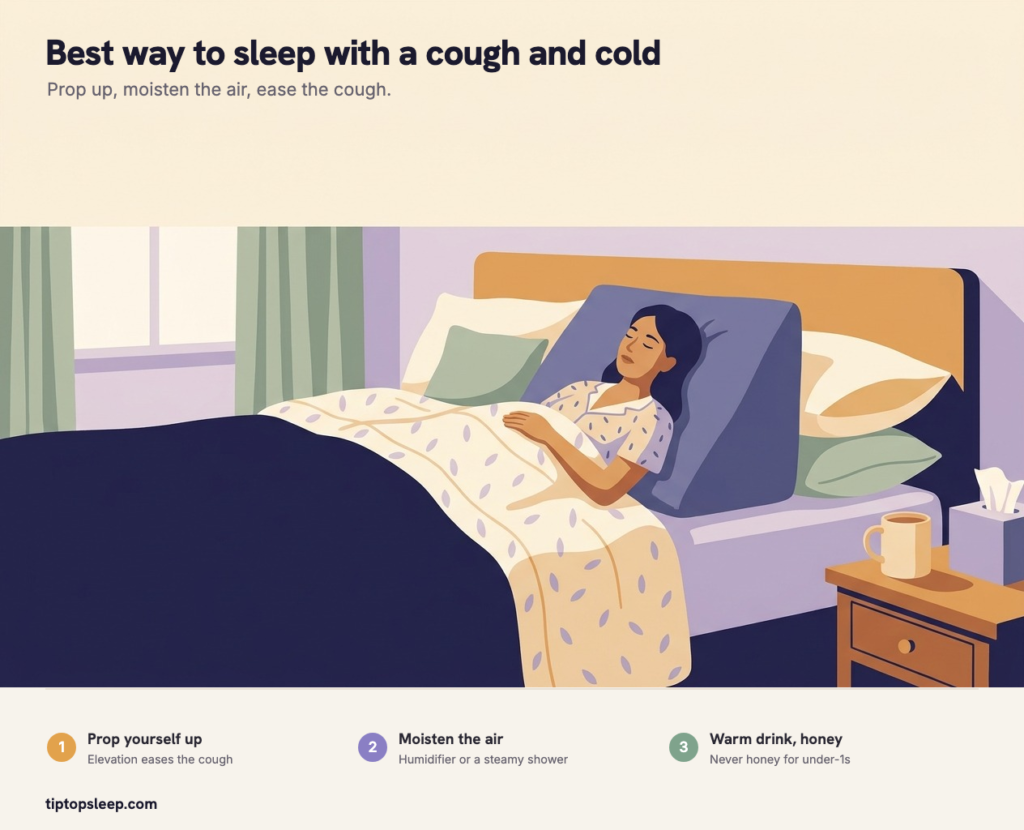
Elevate your head and upper body - stacked pillows or a wedge, not just one flat pillow - so mucus drains instead of pooling in the back of your throat and triggering that lying-down cough. Pair it with a cool-mist humidifier or a warm shower before bed, drink plenty of fluids, and try warm honey and lemon for the cough itself (never honey for a baby under 1). Most colds ease within a week to ten days; see a doctor if you're struggling to breathe, running a high fever, coughing up blood, or still coughing after three weeks.
There's a specific kind of misery that comes with lying down the moment you're sick. You feel almost normal sitting on the sofa, then you get horizontal and within minutes your nose is running, your throat is tickling, and you're wide awake coughing at 2am. I've spent enough rough nights propped against a stack of pillows to know it's not bad luck, it's basic anatomy, and there's a lot you can do about it before you even reach for medicine.
Why does lying down make a cough and cold worse?
When you're upright, mucus from a cold drains down the back of your throat gradually and you swallow it without noticing. Lie flat, and gravity stops helping you. Mucus pools at the back of the throat instead of draining, which irritates the airway and triggers a cough reflex right when you're trying to fall asleep. Congestion works the same way - lying flat increases blood flow and pressure in the nasal passages, which is why a blocked nose often feels worse at night than during the day.
That's the whole reason elevation works as well as it does. It's not a trick, it's just letting gravity do the drainage job it does for you all day while you're upright.
What's the best sleeping position for a cough and cold?
- Elevate your head and chest, not just your head. One thick pillow tips your neck at an angle without lifting your upper body, which can actually kink the airway further. Stack two or three pillows, or use a wedge, so your back and neck rise together in a gentle incline.
- Sleep on your side if congestion is one-sided. Elevating the head of the bed and lying slightly on your side can help one nostril drain while you sleep, which matters if you keep waking up blocked on one side.
- Avoid sleeping flat on your back with no elevation. It's the position most likely to let mucus sit at the back of your throat and set off a coughing fit right as you're drifting off.
If elevation alone doesn't fully settle a stubborn cough, some people find a slight side-lean combined with the incline works better than either alone - it's worth experimenting over a couple of nights rather than assuming one fixed position has to work for everyone.
Does a humidifier actually help you sleep with a cold?
Yes, for most people. Dry air makes a scratchy throat scratchier and can thicken mucus, which makes it harder to clear. Adding moisture back into the air - either with a humidifier running overnight or a hot shower before bed - loosens congestion and eases the throat irritation that triggers coughing.
- Aim for 30-50% relative humidity. Too much moisture encourages mould and dust mites, which can make breathing worse, not better.
- Clean it regularly. A humidifier that isn't cleaned can grow bacteria and mould and blow them straight into the air you're breathing all night.
- A warm shower before bed works as a low-tech alternative - the steam loosens mucus and can make it easier to breathe for an hour or two afterward, even without a machine running.
We've gone deeper on choosing and running one safely in our guide to humidifiers for sleep, including the risks of overdoing it.

Kolbs Bed Wedge Pillow
A firm foam wedge that lifts your back and neck together instead of just your head, which is the elevation that actually helps mucus drain overnight. It stays under your existing pillow, so you're not stacking a wobbly pile that slides apart by 3am. Useful again later for reflux or a stuffy nose long after this cold is gone.
Want more of what's actually worth having on your nightstand when you're under the weather? Our Sleep Toolkit rounds up the gear we trust.
What should I eat or drink before bed with a cough or cold?
- Warm honey and lemon. The NHS notes that hot lemon and honey "can have a similar effect to cough syrup" - it's simple, soothing, and worth trying before bed. Never give honey to a baby under 12 months old; it can cause infant botulism.
- Plenty of water. Staying hydrated keeps mucus thinner and easier to clear, which means less pooling at the back of the throat overnight.
- Warm soup or tea in the evening does double duty - it hydrates and the steam helps loosen congestion right before you head to bed.
- Go easy on alcohol and heavy, late meals. Both can disrupt sleep and dehydrate you, which works against everything else you're doing to feel better.
When should I see a doctor about a cough or cold?
Most colds run their course in a week to ten days without needing medical care. But the NHS is clear about when it's time to get checked. For a persistent cough, get help urgently if "your cough is very bad or quickly gets worse," "you find it hard to breathe," or "you're coughing up blood."
Other reasons to see a GP rather than wait it out:
- A high temperature that lasts more than three days.
- Shortness of breath or chest pain.
- A cough that's lasted more than three weeks.
- Symptoms that are getting worse instead of gradually improving after the first week.
Over-the-counter cold and cough remedies can help with symptoms, but check the label or ask a pharmacist before combining anything, especially if you're already taking other medication - it's not something to guess your way through at midnight.
Frequently asked questions
Why do I cough more at night with a cold?
Lying flat lets mucus pool at the back of your throat instead of draining the way it does when you're upright, and that pooling triggers the cough reflex. Elevating your head and chest is the single biggest fix.
Is it better to sleep with a humidifier or without one when you have a cold?
For most people, a clean humidifier kept at 30-50% humidity helps by loosening congestion and easing a dry, irritated throat. Just avoid over-humidifying, and clean the unit regularly so it isn't circulating mould or bacteria.
Can honey really help a cough?
Yes, it's one of the few home remedies with real backing - warm honey and lemon can work similarly to cough syrup for easing throat irritation. It should never be given to a baby under 12 months old because of the risk of infant botulism.
How many pillows should I use when I have a cold?
Enough to lift your back and neck at a gentle incline together, not just tilt your head. Two or three stacked pillows or a wedge pillow both work better than one flat pillow under your head alone.
Related reading:
- Benefits and Risks of Using a Humidifier While Sleeping
- How to Sleep With an Ear Infection
- How to Sleep After Septoplasty
- How Often Should You Change Your Pillowcase?
- Sleep Toolkit - the gear we actually recommend for situations like this
Sources & review: Guidance here is general comfort information, checked against the NHS pages on the common cold and cough. It is not medical advice and doesn't replace guidance from a doctor or pharmacist - if your symptoms are severe or lasting, get checked rather than waiting it out.
📥 Free: The Post-Surgery Sleep Recovery Kit
Our 2-page PDF - the safe sleep position for your surgery, how to set up your bed, a night-by-night recovery timeline, and the red flags worth calling your doctor about. We'll email you the download link.
By subscribing you agree to our Privacy Policy.